Funny Man (1994)

Directed by Simon Sprackling [Other horror films: N/A]

For the right audience, Funny Man could be quite the enjoyable experience. It has a good sense of humor, and is overall quite a unique experience. Personally, the movie is too goofy for me – it’s just too over-the-top for me to get into. If you’re into the type of humor Funny Man focuses on, though, it’s perhaps worth seeing.

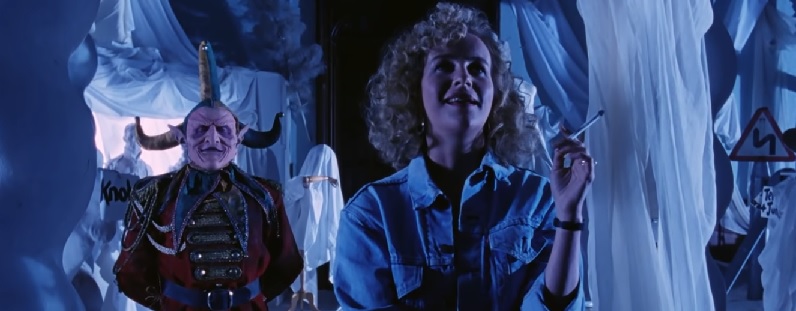
The story is marginally interesting, and there are a few standout scenes. After a man wins an ancestral home in a card game, he checks the place out, and shortly thereafter, he and his family are stalked by a jester-demon. It’s somewhat similar to Leprechaun, as this jester (called Funny Man, hence the title) makes a lot of one-liners, but it’s also fundamentally different, as this movie is rather silly, and oftentimes, the Funny Man will look directly into the camera, addressing the audience.

It’s that breaking of the fourth wall that’s partially my issue. If it were only that, it might be okay, but some of the scenes here are just way too silly for me, such as the Funny Man having a gun showdown with one character (the character in question is somehow just using her hand as a gun – no idea how an injection can do that), or doing a strip show for another victim, or having a guy try on a bunch of wigs that each play a different style of music. Oh, and a guy becomes a star or something. It’s just too goofy, and you add that to the breaking of the fourth wall, and it’s really not my thing.

As I said, though, the film isn’t without a few decent scenes and ideas. A fortune-teller character finds a spiral staircase that winds down and down (and sideways, so I don’t know if that’s the safest staircase I’ve ever seen) which leads down to a small village called Sod’s Law (population: 1). I guess this is where the Funny Man usually lives when he’s not mucking about the castle above, and it’s sort of a cool visual.

There’s a kill in which the Funny Man is doing a bit of a ballet dance beforehand – it’s silly, like most of the other death scenes, but it was shorter and more to the point, and while the kill itself (electrocution) wasn’t stellar, the set-up was more fun. Lastly, the final shot is somewhat haunting, so that’s another plus.

Only two performances really stood out, one being the titular Funny Man, played by Tim James. I didn’t care for his humor most of the time, but he did well with the character he was supposed to play. The film also has Christopher Lee (The Gorgon, Horror Express, Nothing But the Night), and he’s occasionally fun. Oh, there’s also a character named Themla, played by Rhona Cameron, who dresses up in a skirt, an orange turtleneck, glasses, and has a cropped haircut. She doesn’t do that much, like many of the other characters, but that distinctive look (almost, just almost, like they were mimicking Scooby-Doo’s Velma) was fun.

For the right audience, this British film might be a lot of fun. It also might help if said audience was either high or drunk, as I imagine if I had seen it in that frame of mind either time I’ve watched this, it would have made for a better experience. The movie isn’t without promise, but personally, it’s just too goofy for me, and that’s what it really comes down to.

5/10
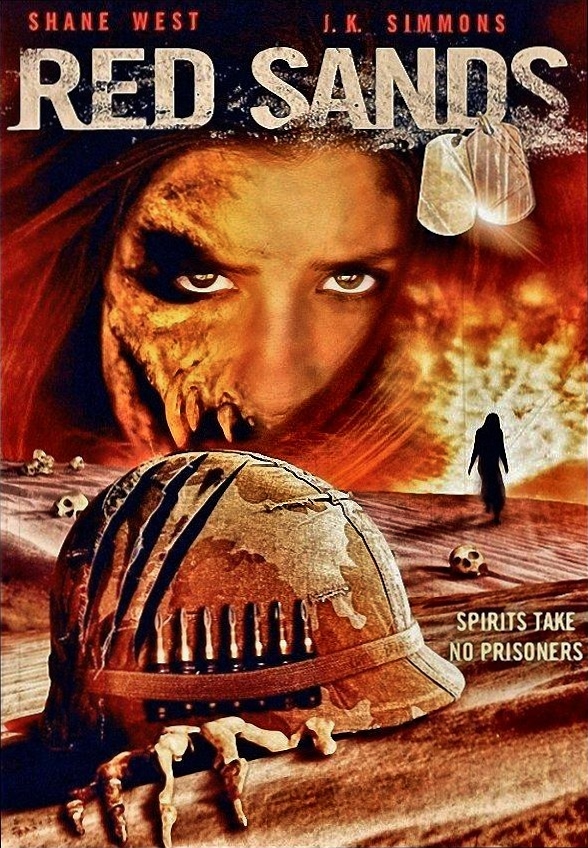
Red Sands (2009)

Directed by Alex Turner [Other horror films: Dead Birds (2004)]

It’s been a good eight years since I’ve seen Red Sands, and I have to say, I was quite looking forward to revisiting this one. I don’t remember it being all that good, but I always thought the plot had potential, and seeing it again, I can say that when it comes down to it, the movie’s at best okay.

Part of the issue, I think, is that there’s a bit of build-up before anything happens that’s all that exciting. In some ways, this may have been necessary, as we’re given seven characters who are all quite similar, so we need some time to learn a bit about them, but at the same time, it’s still a bit of a drag early on.

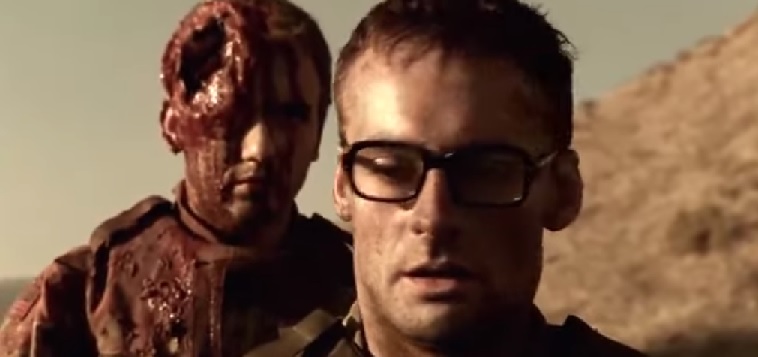
One thing I think this movie has going for it is that the plot is quite unique, dealing with soldiers over in Afghanistan who run amok of a Djinn in a remote, isolated farmhouse. The location is quite beautiful and sparse, and seeing soldiers deal with a situation like this isn’t overly common (I always thought military-themed horror was under-utilized, and, as a matter of fact, so are Djinn-themed films). It’s a fun idea, and they do get some things right, but the overall execution isn’t the best.

It did take a little while for any of the performances to stand out. After a bit, though, I was enjoying Callum Blue, Aldis Hodge, and Leonard Roberts. Shane West, despite being the focus, wasn’t really that fleshed out, and while Mercedes Mason (Quarantine 2: Terminal) was a nice change of pace, she also didn’t have that much going for her (which, to be fair, was sort of the point). Though he only gets a few scenes, we also get some J.K. Simmons, who gives a bit of funny dialogue at times.

Brendan Miller played a rather horrible character (he casually suggests gang-raping an Islamic woman seeking shelter from a sandstorm – you know, because she wouldn’t have anyone to tell, and that makes rape okay). Given that sexual abuse of prisoners of war isn’t at all unheard of by the US military (looking at pictures of the abuse and torture prisoners faced in Abu Ghraib prison should make everyone second guess supporting the troops), having a character with a similar mindset, while sickening, is at least accurate.

The special effects mostly show up toward the finale, and they’re not great. I think more than the effects or gore, the film relies on the growing tension around the isolated farmhouse, as some of the soldiers are more and more concerned their staff sergeant may not be in the best mindset. It’s okay as far as the tension goes, but we only know so much about these characters, and while some are decent, it’s hard to really care for any of them (especially given they’re invading another country to begin with).

Red Sands is a film I wish was a bit better. In truth, it’s not a terrible time – it’s below average, but not disastrously so. Even so, it’s a movie with only so much rewatchability, and I suspect many who spend a night with it won’t be going back to it any time soon afterwards, if they even happen to remember it.

6/10

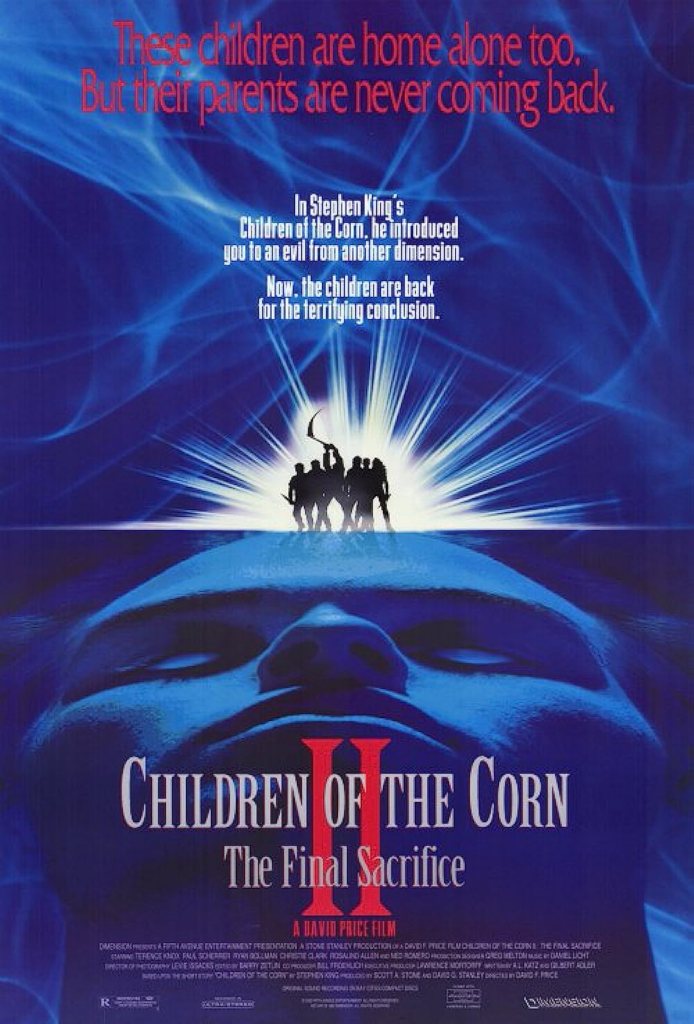
Children of the Corn II: The Final Sacrifice (1992)

Directed by David Price [Other horror films: Son of Darkness: To Die for II (1991), Dr. Jekyll and Ms. Hyde (1995)]

I have to say, I have an actively hard time disliking The Final Sacrifice. It’s not a good movie, and it’s nowhere as classic as the first movie, but it’s so damn funny at times, and if you can deal with a somewhat iffy story, at least the film can offer some quality deaths.

As it is, the story here is just so wonky. It apparently takes place shortly after the first film (so I’m guessing 1984), with the children of Gatlin being largely adopted by a neighboring community of Hemingford (based on Hemingford Home, where, as I’m sure we all know, Mother Abigail lived in The Stand). Well, you can take the children out of Gatlin, but you can’t take the Gatlin out of the children, and so they reform their religious separatist movement. Also, while I appreciated them mentioning Isaac, the fact that they didn’t mention Malachi, or the fact that come the end, they followed Malachi as opposed to Isaac, sort of bothered me.

Oh, and there’s also a subplot about a town conspiracy to sell spoiled corn for economic gain (the poisoned corn being set up as one potential explanation for why the kids went crazy in Gatlin), and there’s another thing going on about how there’s a Native American spirit of the land that gets revenge of those polluting it, or something like that.

Here’s the thing – all of this over-complicates things. The first movie wasn’t innocent of this – I really think the first film should have avoided showing anything supernatural during the conclusion. The reason being is that I find a growing commitment to Old Testament Biblical values among the youth, causing them to turn on adults, far more interesting than the idea that the kids were just victims of bad corn. One deals with interesting sociological issues, and the other is just bad luck.

The story here really should have been streamlined. I think that would have benefited the film greatly (and that way, they also could have gotten rid of that God-awful CGI, as it gave me bad flashbacks to Hideaway), and I don’t see how adding in the Native American legends did much to make the film better (aside from giving Ned Romero’s character a reason to exist). Overall, the story isn’t great.

Also, the characters aren’t that great. I liked Ned Romero, as he was quite funny at times (“No, what happened in Gatlin is that those kids went ape-shit and killed everyone”), and while he was no Isaac or Malachi, Ryan Bollman was decent as a younger preacher of He-Who-Walks-Behind-The-Rows. Terence Knox (The Hunters) didn’t strike me as that likable a character, nor did Paul Scherrer. Rosalind Allen (Ticks, Son of Darkness: To Die for II) got so little personality, I’m surprised she existed, and Christie Clark (The Mummy’s Dungeon) looked cute, but I don’t think she added much either.

Even if the story and characters aren’t great, though, you still have a lot of amusing kills, and I mean a lot. Some are simpler, such as a house being lowered on an old woman, or another old woman who gets killed in her powerchair (the innocent children of Gatlin used a remote control and drove her into a busy intersection), or even a meeting house getting sent up in flames, surely killing most people at the town meeting.

The better ones include a freak storm which sends a corn stalk flying through a van window and impaling someone in the neck. The other guy there got his throat slit by corn stalk leaves. There was a guy caught under a corn harvester. Someone was stabbed to death with syringes. And perhaps my favorite, using a voodoo doll (which is something that is never once brought up again or alluded to), a kid carves into a man’s nose during a church service, causing one of the worst nosebleeds imaginable.

Save for the nosebleed death, none of these are particularly brutal or gory, but most of them are either quite amusing or just entertaining. There is an occasional darkness to the film – the movie opens with people finding quite a few decomposing corpses in the basement of a house in Gatlin, and later in the film, people run into the scattered remains of human beings in a cornfield, things such as hands and feet. The Final Sacrifice isn’t a gory movie, but honestly, as far as kills go, it’s decent.

I’ve seen most of the movies in the Children of the Corn series, and only a handful are films I actually find poor. As for Children of the Corn II: The Final Sacrifice, I don’t delude myself into thinking the movie’s good, but I’ve been pretty entertained by it in the past, and that hasn’t changed with this most recent viewing.

7/10

Phenomena (1985)

Directed by Dario Argento [Other horror films: L’uccello dalle piume di cristallo (1970), Il gatto a nove code (1971), 4 mosche di velluto grigio (1971), Profondo rosso (1975), Suspiria (1977), Inferno (1980), Tenebre (1982), Opera (1987), Due occhi diabolici (1990, segment ‘The Black Cat’), Trauma (1993), La sindrome di Stendhal (1996), Il fantasma dell’opera (1998), Non ho sonno (2001), Il cartaio (2003), Ti piace Hitchcock? (2005), La terza madre (2007), Giallo (2009), Dracula 3D (2012), Occhiali neri (2022)]

Earlier this month, I watched Tenebre for the first time, leaving Phenomena as one of Dario Argento’s most popular works that I’d not yet seen, and now that I have, I can say that Phenomena was a very solid time, which, if I’m being honest, sort of surprised me.

It’s not that I was expecting to hate it, but I thought mixing in some subplot of the central character being able to control insects (which isn’t exactly what’s going on, but my limited knowledge of the film did lead to that misconception) would be too off-putting. Well, as my parents said, I’m wrong 95% of the time, and so was the case here, as this was a delightfully fun film for it’s hour and 50 minute runtime, partially due to the solid performances.

Jennifer Connelly (Dark Water) did a fantastic job as the lead, and her character was wonderfully brave and strong throughout the film. Of course, seeing Donald Pleasence (Halloween, The Flesh and the Fiends, The Mutations) warmed my bitter heart, and seeing him with a monkey was even better. Other than these two, both Daria Nicolodi (Deep Red) and Federica Mastroianni did well also.

The story here was about what you’d expect from a giallo – mysterious killings are happening in Switzerland, and insects lead to identifying the killer. Okay, well, the second part might be more unique, and I was skeptical myself, but I dug how they approached it (because if Pleasence was involved, how could it be a bad idea?), and though the movie is a lengthy one, it never really felt like it was dragging at all.

Also, the soundtrack is killer. I’ll be honest – when I saw both Iron Maiden and Motörhead among the “special musical artists,” in the opening credits, I wasn’t sure. I love Iron Maiden, but I didn’t know if their music would suit a movie like this, and again, I was wrong, as the soundtrack is just excellent, especially the piece titled ‘Phenomena’ by Claudio Simonetti, which is just insanely catchy, and definitely going onto my iTunes.

I will say I made a mistake attempting to eat during portions of the film. Somewhat early on, police detectives brought a rather maggotty decomposed head to be examined, and it didn’t shy away from showing the head in detail. In fact, larvae and maggots were a common sight, especially toward the end – that bathroom scene was hard enough, what with maggots on a bar of soap and a towel – and especially with that pit. You know the pit. I know the pit, and I wish I didn’t. In fact, I’ll go ahead and say I’d rather be thrown into the syringe pit in Saw II rather than the pit at the end of Phenomena.

So yeah, the movie can be a bit off-putting at times, but it never fails to be entertaining, and given the length of the film, the fact that it never once felt as though it was dragging is an impressive feat itself. The kills were somewhat scarce at times, but when they did pop up, we got some quality decapitations and stabbings, and though it’s not as impressive as past Argento works, it wasn’t shabby whatsoever.

In fact, I think this ranks pretty highly for me when it comes to the films I’ve seen by Dario Argento. I still need to see some of his films, of course – The Bird in the Crystal Plumage, The Cat o’Nine Tails, and The Stendhal Syndrome are among them. I’ve seen most of his major works, though, and I think this is pretty good. It may not be as flashy as Suspiria, but I liked the plot more. Tenebre is a movie I personally expected to like more than I did (I enjoyed it, but I was hoping to love it), and though I’d usually enjoy the straight-up giallo more, Phenomena had a better finale.

All of this is to say that among the Argento works I’ve seen, I think Phenomena is my second-favorite. Let’s be real – I gave Deep Red a 10/10, so that’d be exceptionally difficult to beat. Phenomena is a great movie, though, and I enjoyed it far more than I’d have anticipated.

8.5/10

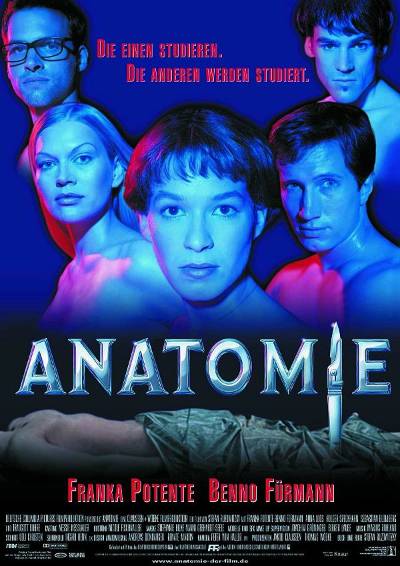
Anatomie (2000)

Directed by Stefan Ruzowitzky [Other horror films: Anatomie 2 (2003), Patient Zero (2018)]

I’ve always enjoyed this German film, provided it’s in German with English subtitles. Anatomie (or Anatomy) has a pretty decent story, some good suspense at times, and quality brutality here and there.

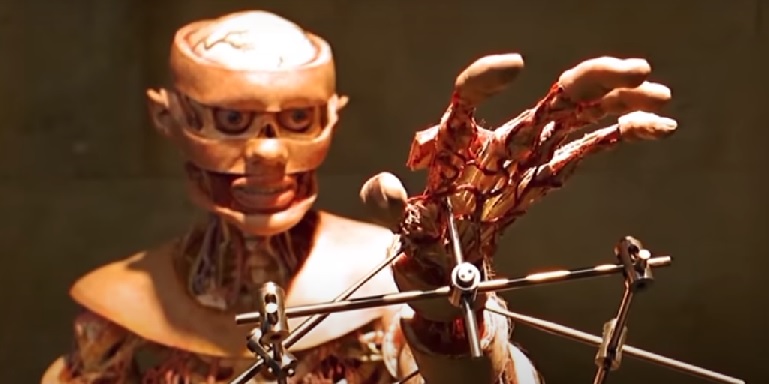
Of course, the brutality is more sterile in nature. During the opening, an individual wakes up on a mortuary table, and finds, among other things, that the fingers on one of his hands are stripped to the bone, as you might see on some anatomical models. A few people are stabbed with a chemical that sort of hardens their blood, and that doesn’t lead to great things. This movie isn’t at all gory save a few scenes, but those scenes are quite solid when they come up.

Another important note: I’ve always been a subtitles guy. I can watch dubbed movies if I have to, and often I do, but if I have the choice, I’ll always go with subtitles. I think this movie a good demonstration why – I tried watching this dubbed (I rented it off Amazon Prime for $3.99), but quit after five minutes, because I’ve seen the movie before in German with English subs, and I knew if I revisited the film in a dubbed version, it wouldn’t do the movie justice. Unable to find it online through less reputable sites, I just bought the DVD, and was then happy.

I’m a big fan of the story, dealing with a medical student (Franka Potente) who discovers the existence of an ancient cult of doctors called the Anti-Hippocratic Society, an organization focused on research and discovery, no matter the harm that may come to a few patients. It’s a fun idea, dealing with doctors and medical students who ignore commonly-accepted ethics, and when you throw in some members who are maybe a bit too extreme for the base group, it adds an extra element.

Germany used to be the largest exporter of horror films. Between 1913 and 1925 or so, they were the kings of the genre, and obviously, the first who dominated the genre. A bunch of krimis popped up throughout the 1960’s, some of which are horror, but their output has been inconsistent for a long while (sorry, but as fun as some Andreas Schnaas movies are, they don’t cut it), Because of that, it’s nice to see a more modern-day German horror film, which is one of the reasons I appreciate this film.

I thought Franka Potente made for a great lead, and I quite loved how she cared far more about actually learning something as opposed to sleeping with every guy possible (Anna Loos’ character, for instance). Sebastian Blomberg had some strong moments, and Traugott Buhre was solid. Benno Fürmann didn’t stand out at first, but I grew to enjoy him, and Arndt Schwering-Sohnrey was fun for the little bit he appeared.

Over the course of the film, we see different characters attacked, so I do think the pacing was pretty decent. The finale felt maybe a little long, but it was pretty suspenseful (despite some obvious red herrings), and we also got a somewhat interesting mid-credit scene, which was a nice extra.

When it comes down to it, I really liked Potente as the star here – I really liked her character, and I thought it was a lot of fun seeing her try to uncover some secret medical society. Anatomie is a pretty solid German horror film, though not a great one, and if you want a fun foreign time, check it out.

7.5/10

Night of the Axe (2022)

Directed by Shawn Wright [Other horror films: N/A]

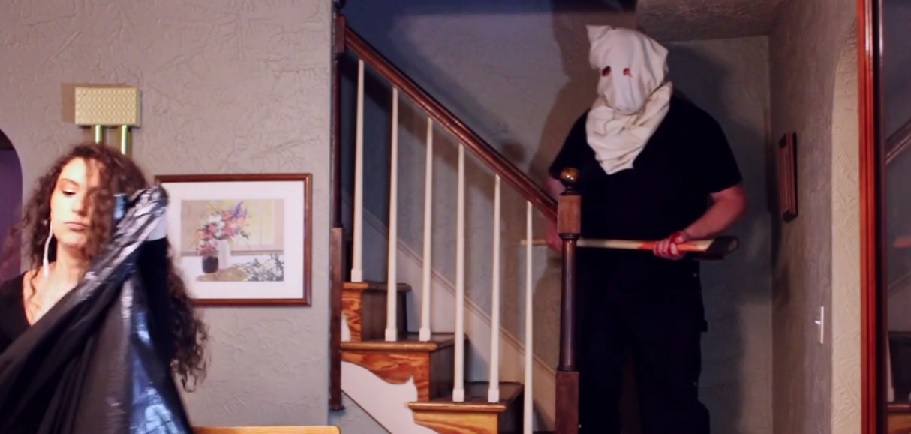
While a rather simplistic movie in many ways, Night of the Axe is an indie slasher that made me a happy lad, and what it might lack for in budget and special effects, it makes up for in heart.

In the vein of independent slashers such as You’re Not Getting Out Alive and Don’t Go to the Reunion, and even non-slashers like Vampire Ticks from Outer Space, Night of the Axe is a very simple movie. It’s a short one too, running at just over an hour. The special effects are minimal, the story is somewhat thin, and the performances are so-and-so. It’s not a movie for those who haven’t delved into independent horror, but if you have, it can be a rather fun time.

Sure, the performances can be shaky, but that’s just how independent films be. Honestly, most of the cast did fine. We never really learned much about the characters, but they could be reasonably fun, but that may be because half the characters were stoners, and I appreciate that lifestyle. Shawn Mongold had some quality vibes to him, Justin Sisk had a good, straight man feel to him, and Angel Nichole Bradford brings some of that flesh to the table. Others that are worth a mention include Amanda Megan, Tony Giannott, Gary Carper, Lera Savannah, Kaci Frick, and Nate Nelson.

Given the film is about a hulking escaped mental patient with an axe, there is some gore here, the best of which may be early on when someone’s arm gets lopped off. However, we also have someone’s brains burst from their head, another individual’s head gets stomped on, someone gets beaten with a hammer, and a simple, yet effective, axe to the face. Look, this is a low budget movie, so don’t expect any of these kills to look great, but I found that most were serviceable.

I also should mention that I enjoyed the synth music of the film. It felt like a retro throwback to the slashers of old, and I appreciated that. They even had a song during the end credits titled “Beast on the Loose” (performed by Black Phantom), which, while not great, reminded me of the theme-songs from Madman and My Bloody Valentine.

Oh, and the last sequence entirely cribs Halloween, which amused me.

It’s clear when you start this up that they knew exactly what type of movie they were making, and if you’re into indie horror, than I think you could have a good time with it. If indie horror’s not something you’ve had much experience with, though, I think it’s safe to say that this movie may not be for you. Personally, though, I found Night of the Axe quite fun.

7.5/10

The Lost Boys (1987)

Directed by Joel Schumacher [Other horror films: Flatliners (1990), Town Creek (2009)]

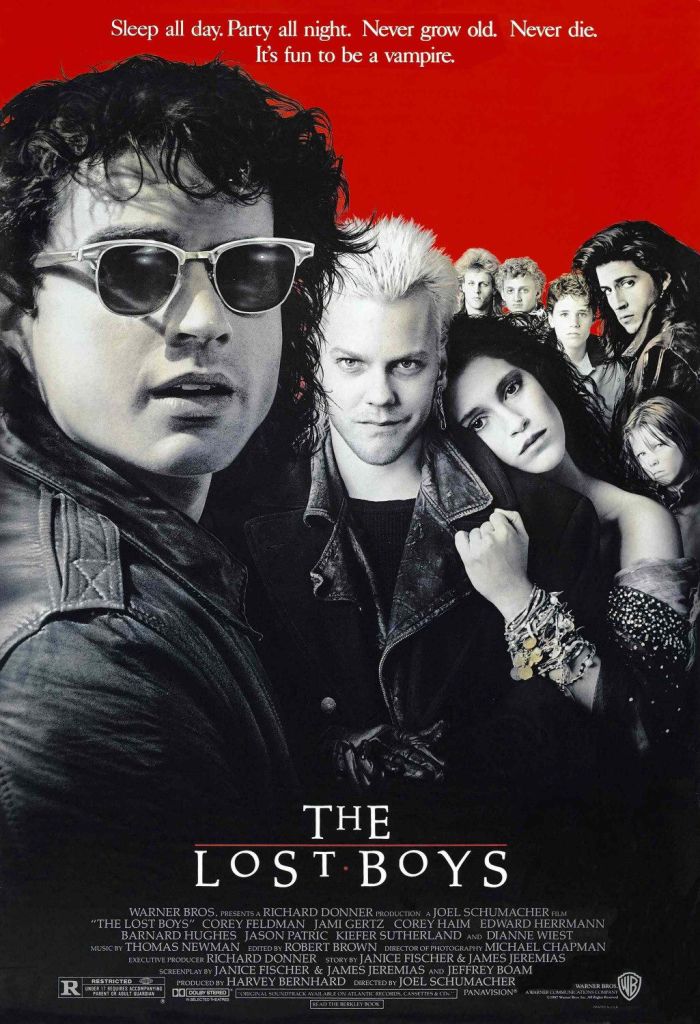
I’ve seen The Lost Boys twice now, and while it’s a moderately entertaining film, it’s never felt special to me. So many in the horror community love it, but when it comes to 80’s vampires, Fright Night is always my go-to.

The Lost Boys is still decent, and I’d probably rate it around average, but it’s not anymore than that for me. There’s only a few characters I really cared for, and some of the comedy just wasn’t my type of thing. I did dig most of the finale, along with the twist they threw in, but other story elements didn’t interest me that much (I can’t tell you how much I didn’t care about Star and her claiming she ‘warned’ Michael before he drank the blood, which is bullshit, as you can’t say something so ludicrous and just expect them to take your word for it, and count that as a warning).

Related, toward the end of the film, Sam and the Frog Brothers ride out to where Sam’s mother works, and Sam attempts to warn his mother about the vampires. It amazes me that neither of the Frog Brothers, nor Sam himself, would realize that he would be utterly unable to make a convincing argument about that, and it’s scenes where people try to convince others of something without good evidence that just drive me crazy. Sam was a decently smart kid, but he thought that would work? Give me a fucking break.

I liked the scenery and locations, especially the boardwalk (actually, more specifically, the comic book store – most of what I saw there seemed to be DC Comics, but I did see an issue of ROM, so that’s promising). It looked way too crowded and busy for me to ever actually want to go to a place like that, but it was definitely classic California imagery.

Despite not caring for many of the characters, most of the performances were decent. Corey Haim (Silver Bullet) and Jason Patric were good as brothers, Dianne Wiest was good as a concerned mother, and Kiefer Sutherland was great as the vampire David. Barnard Hughes got a pretty funny line in at the end, Alex Winter (Bill and Ted’s Excellent Adventure) was nice to see, and though I couldn’t stand her character whatsoever, Jami Gertz did fine.

Like I said, I do think the film’s decently entertaining, but with the two times I’ve seen it, I never thought The Lost Boys was great. I’d compare it to my views on The Shining, but I rather dislike The Shining, whereas I generally find this movie perfectly fine. It’s just one of my many quirks. The Lost Boys works for many people, but I think it’s just around average.

7/10

The Washington County Disappearances (2022)

Directed by Robert Joseph Farmer [Other horror films: N/A]

I’ve said again and again that found footage is such an up-and-down style. Some found footage movies are great, whereas others are really quite poor. Unfortunately, I would have to say that The Washington County Disappearances is an example of the latter.

I’ll give the movie props for a potentially interesting mystery. A young woman goes missing from the local college, and as it turns out, young women have gone missing for over a decade from the same area, and no one knows why. It also turns out that all of these women were to be married prior to their disappearance, as the main character (played by director Robert Joseph Farmer) finds out later in the film.

Is a local professor of the college involved? Is it a government-run medical experiment? Is it Bigfoot stealing women to mate with? Is it the Russkie, wanting revenge for the USA’s actions during the Cold War?

Well, those are all interesting questions, but to save you time, we never really find out, at least with any satisfactory answer. We don’t know why these women are abducted, we don’t know what’s with the cages, we don’t know what’s with the ‘Save the Date’ message at the end, and we don’t know why the main character was so idiotic during his search of a suspect house during the last 25 minutes of the movie.

There’s a lot of unanswered questions here, but I want to be clear: that in itself is not a problem. It makes sense that, in a found footage film with a limited focus, the character recording may not actually find out anything in the way of answers. What bothers me is that there was a decently interesting mystery here – I was personally wondering if the local authorities were complicit in covering up these abductions, for instance – but not only do we not get any answers, but the main character never posits any possible solutions.

Look, I don’t think Robert Joseph Farmer was that good – some of his dialogue delivery was rather poor, sometimes overly dramatic, often not sounding realistic – and as he’s the only real character of note, that’s not great. Even so, I don’t think a poor performance here is that damning. Obviously I’d prefer a better one, but not even the best performance could make up for what I see as problems with the story, which is why I don’t often have major critiques of actors or actresses. To me, that’s largely secondary to the story, and I imagine most of them do the best they can with what they have.

I will say, though, that the main character wasn’t particularly great. He’s panicked over his missing fiancée, and the fact that the local authorities aren’t up to all that much isn’t helping whatsoever. Even so, toward the end of the film, he sees a gun in the far end of a dog cage. He crawls into the cage to retrieve the gun, but he doesn’t move quickly – in fact, once he grabs the gun, he waits a few moments before trying to get back out – and gets locked into the cage. Perhaps it’s just me, but that scene alone turned me off this guy.

Also, I have to speak about the final 20 or so minutes of the film. For about 15 of these minutes, the camera the main character was using was having problems – the light kept flashing. For ten solid minutes, the light flashed off and on; I almost thought I’d get a seizure watching this, and I definitely developed a minor headache because of that sequence. It reminded me of the most visually-unappealing sequence I’ve ever seen in a movie, being the end of Feast III: The Happy Finish, in which much the same thing happened.

Oh, and because this is a found footage movie, it’s claimed to be real footage. The beginning says that this was released under the Freedom of Information Act, 5 U.S.C. § 552 in order to help solve the ongoing investigation. It’d help if, at any point during this movie or the information text before or after, it listed what state that Washington County was in, but hey, I guess that’s just the way the cookie crumbles. We know it’s somewhere in the midwest, but I guess that’s all that the authorities wanted people to know insofar as the location was involved.

I don’t mean to be nit-picky, but I’m really tired of found footage films that say “Hey, this footage was found by the [insert random police department] and the identities of the assailants remain unknown.” I’m sick of found footage films trying to seem like they’re authentic footage. Here, at least there was no supernatural claim made (or was there?????????????), but I just find the whole thing quite old. It doesn’t make the movie any better, and honestly, if anything, just turns me off the film more.

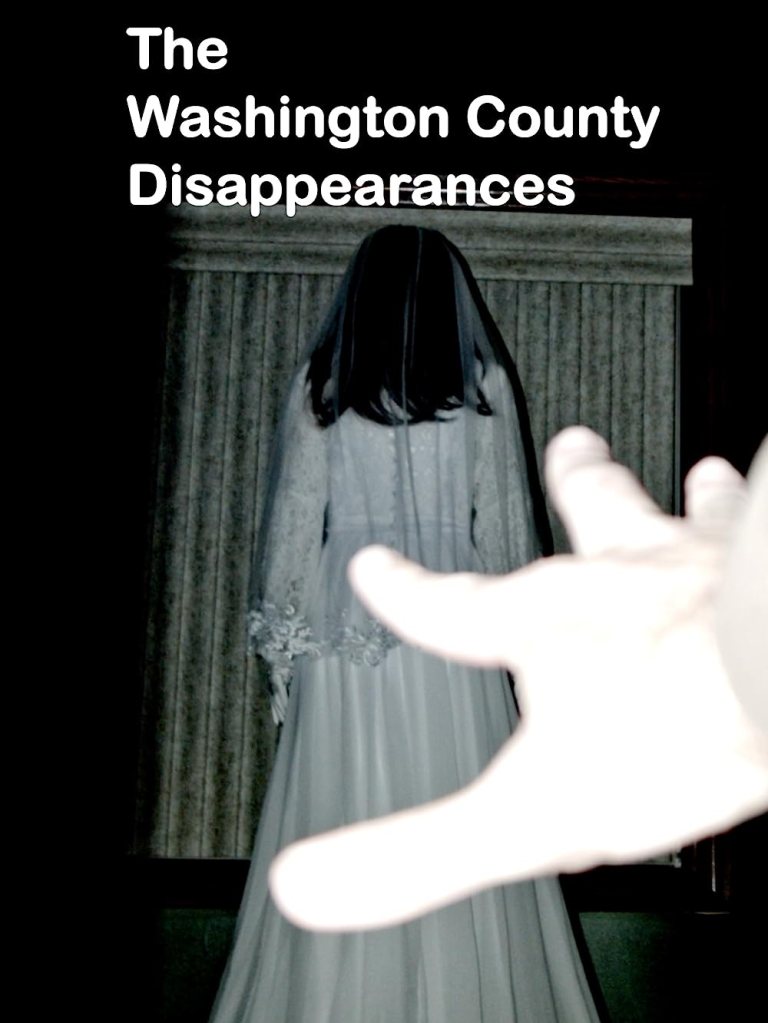
There’s nothing in The Washington County Disappearances that I think would amaze many people. None of this is to say that the film is without it’s merits – there are a handful of okay scenes and, toward the end, some decent imagery (one of which was used as the poster of the film, to decent effect).

If you’re a fan of films in the found footage style, I’d recommend checking this out. Personally, I find much of the film boring and the finale unsatisfactory, but I’m also not a giant found footage guy, so it may well work for some.

Overall, though, this wasn’t it, brahs.

4/10

The Fear Chamber (2009)

Directed by Kevin Carraway [Other horror films: Se7en Below (2012), Way of the Wicked (2014)]

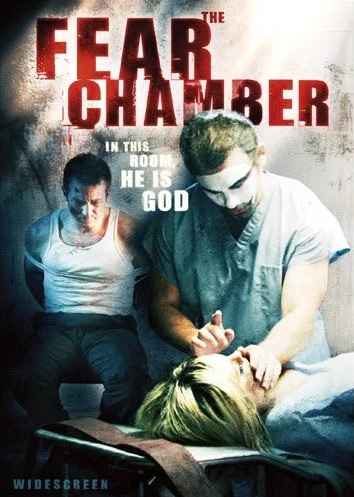
I don’t have too much to say about The Fear Chamber because I don’t really think there’s much that could be said. The movie is somewhat functional, but it feels pretty generic and aside from a decent performance or two, doesn’t strike me as memorable whatsoever.

I can say that with at least a little confidence because this is the second time I’ve seen the film, and I didn’t recall too much from my first time watching this. I can imagine it’s partially the plot – a detective searches for a serial killer, all while having visions about the victims. There’s not really much more to it than that, and that twist they throw in at the end was somewhat laughable (the twist itself wasn’t bad, it’s just that it involved a specific character, and as soon as that character was introduced an hour previously, I knew the exact twist they’d go for).

Nothing here really screams originality. The gore is more implied than anything. Only one scene really stands out, in which the killer is removing some teeth from a poor victim. It looked reasonably painful, but still wasn’t that bloody, and other than that, there’s not a lot for the film to offer.

Really, the only thing that I thought was actually good would be some of the performances. The lead Rhett Giles was okay, but of the central actors, I thought he was the weakest. I liked the killer, played by Richard Tyson – he had some strong moments, especially toward the finale. Both Steven Williams (X from The X-Files) and John Duerler were solid too, and it’s sort of odd seeing Williams in a movie with this kind of quality.

For what it’s worth, I don’t think The Fear Chamber is nearly as bad as others seem to. At the time of this writing (for posterity, that’d be October 16th, 2021), this film sports a 3.3/10 on IMDb, with 519 votes. I know that tastes differ, but I don’t think it was that bad whatsoever.

More than anything, it’s just overly generic, and doesn’t stand out well at all. It might be a reasonable way to spend an hour and a half if you’re in a pinch, but this is one of those films that I struggle to see making anyone’s “Underrated horror films” list.

5/10

Cries in the Night (1980)

Directed by William Fruet [Other horror films: Death Weekend (1976), Spasms (1983), Killer Party (1986), Blue Monkey (1987)]

Though the print I possess is of dubious quality, I’ve consistently found this Canadian movie pretty decent. Sure, the print is rough, but the atmosphere is on point, and while elements may not be the most original, Cries in the Night is worth seeing.

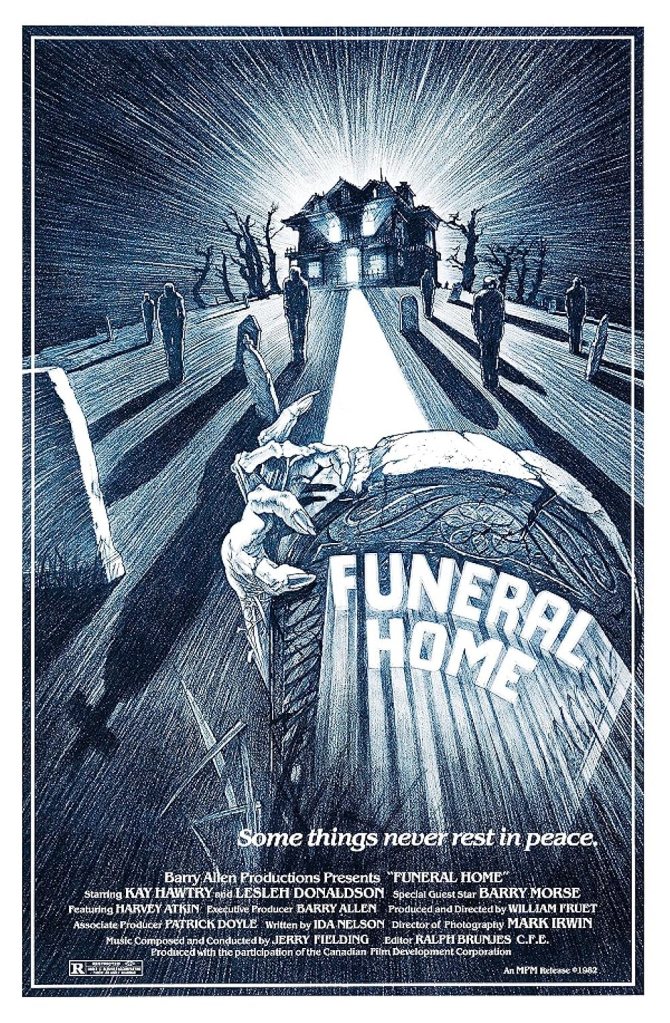
Of course, you probably won’t see it under the name Cries in the Night, as it was retitled Funeral Home (which I tend to think is a better name). The print I own (from Mill Creeks 50-disc set Creepy Classics) is rough – the audio is occasionally a bit garbled, and visually, some scenes can be dim, others blurry. In a way, it’s a testament of my feelings on the film that despite this, I’ve watched the film twice, and had fun each time.

It’s largely the story, revolving around a young woman staying at her grandmother’s bed-and-breakfast inn (which was previously – you guessed it – a funeral home), that helps the film out. Guests seem to disappear without warning, voices tend to come from the cellar (which is kept locked), and the mystery around her grandfather’s departure is still unsolved. Funeral Home can be quite atmospheric, and the big old house helps with that vibe.

Another thing I rather liked is the use of flashbacks – three different flackbacks pop up throughout the film, all of which add a little something (one that involved two boys sneaking around the funeral home was pretty solid stuff). The movie isn’t really that emotionally-charged, and I sometimes wonder if they were going for a more somber vibe, but it’s still quite nice.

All of the central performances, I thought, were solid. Lesleh Donaldson (Curtains) felt a little weak as the lead at times, but I enjoyed her character well enough. Kay Hawtrey did quite well as a grandmother potentially hiding some secrets. Stephen E. Miller impressed me, Alf Humphreys (Howard from My Bloody Valentine) amused me, Barry Morse intrigued me, and Harvey Atkin also amused me. Dean Garbett was decent, and for extra points, we got Jack Van Evera in a flashback (who played Happy the bartender in My Bloody Valentine).

There’s no gore here, at least not in the version I’ve seen. Someone gets stabbed in the back with some funeral home implement, and a couple had their car shoved into a lake, but for the most part, the film’s not overly violent. In fact, some people may feel the movie is slow, as the body count is quite low. Even so, I can say that while that’s true, I personally never reached the point where the story disengaged me.

I wouldn’t mind seeing a higher quality print of Funeral Home, but even if the only print I see is the one I own, that’s fine, because the movie is still pretty solid. It has a great atmosphere, and though I don’t think it’s an unsung classic, I’ve always personally enjoyed it.

7.5/10