The Haunted Palace (1963)

Directed by Roger Corman [Other horror films: The Beast with a Million Eyes (1955), Day the World Ended (1955), It Conquered the World (1956), Not of This Earth (1957), Attack of the Crab Monsters (1957), The Undead (1957), War of the Satellites (1958), The Wasp Woman (1959), A Bucket of Blood (1959), House of Usher (1960), The Little Shop of Horrors (1960), Creature from the Haunted Sea (1961), The Pit and the Pendulum (1961), The Premature Burial (1962), Tales of Terror (1962), Tower of London (1962), The Raven (1963), The Terror (1963), X (1963), The Masque of the Red Death (1964), The Tomb of Ligeia (1964), Roger Corman’s Frankenstein Unbound (1990)]

Being the second time now I’ve seen this,  The Haunted Palace is a good example of a Corman-Price movie, with a great setting, quality atmosphere, nice color, all the works. I have to admit, though, that I just think it’s a good movie, and not much more.

You’ve gotta love the setting – the New England town of Arkham (H.P. Lovecraft influenced obviously), and of course, once a husband and wife seek out an ancestral palace they inherited, the townspeople react just as warmly and cuddly as you’d expect (pretty much as they did in The Gorgon). There’s also an influx of mutated people roaming around town, which leads to some pretty creepy scenes.

Vincent Price gives a solid performance, but this is Vincent Price we’re talking about (House on Haunted Hill, Pit and the Pendulum, Theatre of Blood, and The Tingler, among many others), so that can’t come as a surprise. Lon Chaney Jr. (The Wolfman) is nice to see, but his character doesn’t really have much in the way of agency. Elisha Cook Jr. (House on Haunted Hill and Blacula) was nice to see, but like Chaney, his character wasn’t really given much to do. Others such as Milton Parsons, Frank Maxwell, and Debra Paget were all good also.

These elements (and the fact the film is in beautiful color) should lead to a great movie, but I think it’s only okay. I can’t entirely say why – the story isn’t my favorite, but it’s still decently creepy (it helps that the titular palace is a pretty stellar setting), and seeing Price’s character being taken over and becoming a cruel warlock is good stuff, but I just don’t love this the same way I did, for instance, The Pit and the Pendulum.

None of this is to say that The Haunted Palace isn’t a movie worth seeing, because it’s still a fine slice of 1960’s horror films. And I know others who rank this quite highly among the Corman-Poe cycle, so perhaps you’ll love it, but for me, I think it’s just around average.

7/10

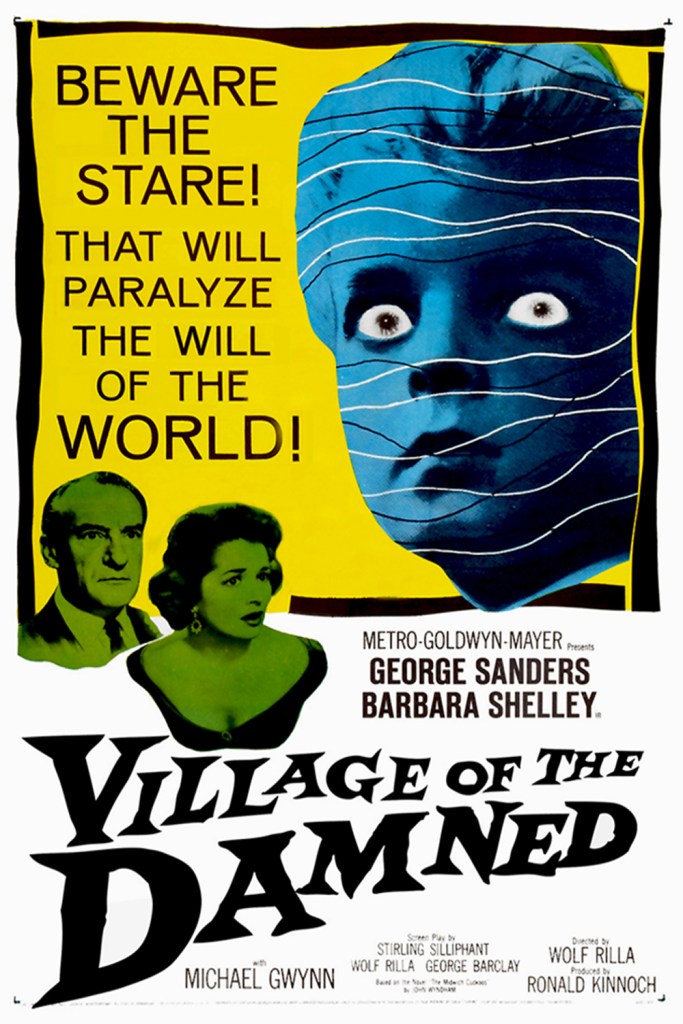
Village of the Damned (1960)

Directed by Wolf Rilla [Other horror films: N/A]

This is a classic that I’ve never loved. Now to be honest, “never” entails a whole of now two full viewings, but that aside, the story isn’t really my cup of tea. It’s not the movie’s fault – I also didn’t much care for The Gamma People for similar reasons. That said, I maybe enjoyed the film a bit more this time around, but it’s still not a movie that I’d consider a go-to for the 1960’s.

The first twenty minutes are all on point, though, when a mysterious blackout occurs affecting everyone in a small village (and by blackout, I mean everyone blacks out, not that there’s some concerns of an electrical nature) and in a sequence reminiscence of the The Stand mini-series, we see multiple downed people which was pretty ominous. Once they come to, all of the women who were able were pregnant, and here’s where my interest waned.

I don’t know what the state of abortions were in the United Kingdom in 1960. I know that in 1967, abortions became legal, so if they had just been more progressively-minded, there may not have been a problem here at all. Surely the women who hadn’t even have had sex would have probably taken care of the problem, and many of the other women too, who had husbands that thought they were cheating on them, would have also terminated the pregnancies.

Regardless, it was a backwards time then, and the children are born, and they’re all Aryan. There are some interesting conversations about other places in the world where this has happened, along with the aftermath, but a group of emotionless kids with psychic powers isn’t really my idea of a fun time.

It’s not something that anyone in the cast (George Sanders, Michael Gwynn, or Barbara Shelley) could have fixed, because they all did fine (especially Sanders and Martin Stephens, who played one of the kids, and who was also in The Innocents), and I even found the ending to be decent (although not altogether surprising), but it’s a well-made movie with a  story I don’t love, and that’s something that I can’t lie about.

Village of the Damned is a decent movie. It looks nice, there are some good actors in it, and there are occasionally some decent scenes here. It’s also not all that long, even if you are not having the best time with it. For classic horror, it’s a lesser movie for me, but it’s still around average prolly.

7/10

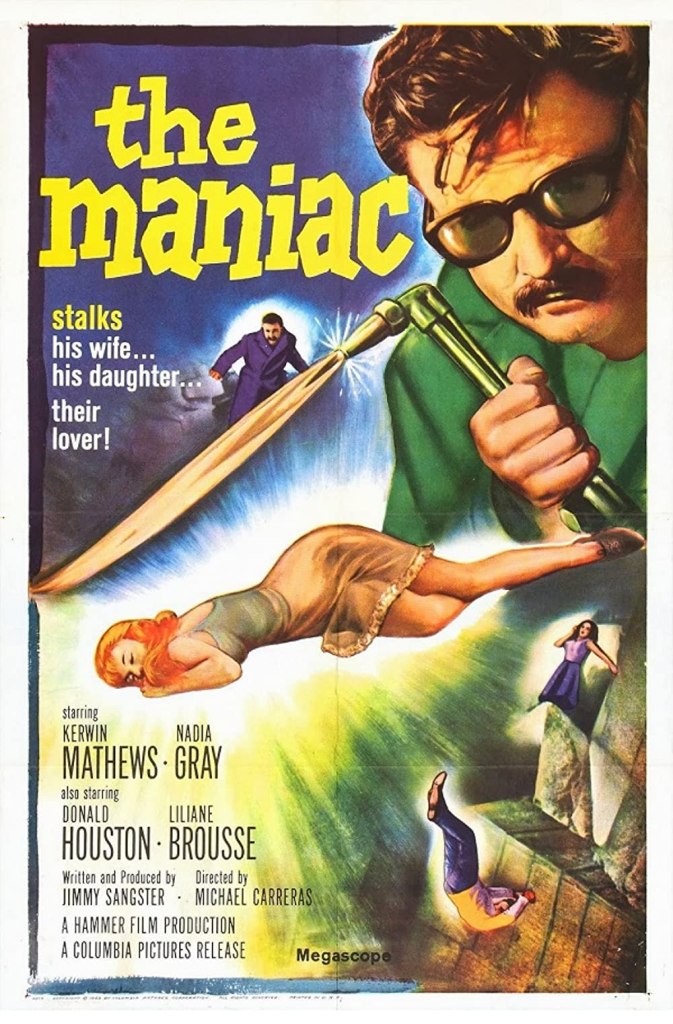
Maniac (1963)

Directed by Michael Carreras [Other horror films: The Curse of the Mummy’s Tomb (1964), Blood from the Mummy’s Tomb (1971)]

I can’t say that this Hammer film is exceptionally good, because it’s not. By no means a bad movie, Maniac has a pretty decent story and a somewhat stellar ending. Even the method of murder is interesting (when it pops up), but all of that said, I don’t know if it’ll end up being all that memorable.

One thing that doesn’t necessarily bother me, but does make me question the sanity of Kerwin Matthews’ character, is when he falls for Nadia Gray over Liliane Brousse. Nothing against Gray, who certainly wasn’t unbecoming, but Brousse looked quite fantastic throughout, but I guess that the heart wants what the hearts wants.

Otherwise, it’s a solid story, and has a pretty fair conclusion, the likes which somewhat reminded me of the 1972 mystery-horror film Endless Night (though I still think Endless Night has a better finale), though I do think there was a change or two this movie could have made to make the ending even better. That said, it was a solid ending still for what they cobbled together.

I’m not familiar with any of the names in the cast – Kerwin Matthews (The Boy Who Cried Werewolf being one of his few other horror roles) was pretty decent, had a good look to him, and though I can’t say I care for his romantic choice, still seemed a solid guy. Nadia Gray didn’t do poorly, but I never thought much of her character, especially in the beginning when she was obviously trying to pull Matthews’ attention away from Brousse’s character. And as for Liliana Brousse (who was also in Hammer’s Paranoiac, which came out earlier in 1963), she was quite cute and I felt for her throughout. Donald Houston (A Study in Terror) was appropriately threatening.

While I do wish that Maniac had a bit more frights in it than it ultimately ended up having, I think the suspense was decent enough for what they had, and overall, it’s one of the lesser-known Hammer films that might be worth checking out. I have to admit, though, that others they made around this time, such as Paranoiac, were superior.

7/10

Two on a Guillotine (1965)

Directed by William Conrad [Other horror films: N/A]

This is a movie that I’ve been wanting to see for a long time. As soon as I first saw the title, I was hooked. Now fast-forward eight years or so, and here I am. Overall, while it’s not really the type of movie I expected (not that my expectations were based on anything more than the fact I knew a magician was in this movie), I do think it was a lot of fun and is worth a look should you be a fan of 1960’s horror.

Let me first talk about my foolish expectations coming into this. Before I really knew the plot (in which a young woman must spend a week in a dark and creaky house in order to fulfill the request in the will of her deceased father), all I knew was that it involved a magician. And what two films from around the same time period involved magicians? For one, the somewhat underrated film The Hypnotic Eye, along with the colorful, confusing gore-fest that was The Wizard of Gore (1970).

This movie is not anything like either of those whatsoever, and feels more like House of the Damned with maybe a few elements of House on Haunted Hill thrown in, which I think works to it’s benefit. At times it feels like it could have appropriately been made ten years earlier (and it doesn’t help that the film’s in black-and-white, which was falling out of favor around this time), but there’s also the somewhat lengthy romantic subplot that might have been handled differently in older films, so there’s enough here to place this in the 1960’s.

Though he doesn’t have much screen-time, Cesar Romero is a pleasure to see, and stands out well despite his short time on screen. Virginia Gregg did pretty well too, though half the time she played a drunk character, so more than anything, I found her amusing, but she had a few strong emotional scenes also. I don’t really know either Connie Stevens or Dean Jones, but they both did fantastic, and their slow-growing romance here (not something you’d necessarily expect to see in a horror film) was pretty delightful to see.

I can’t say that the mystery here really had the best conclusion, but it’s also accurate to say there were only so many possibilities (as I saw it, maybe four or five realistic endings), and the one that we got was still okay (and certainly led to additional emotional scenes and a solid finale). It never got too into expository as some endings, especially from the time period, can do, and I think the somber finale did well.

The setting, being a cliché mansion, wasn’t the most original we’ve seen, but I do appreciate how it stood out a bit by being filled with magicians’ tricks and props (such as that flying skeleton, which was used to great effect both times it came up), and it lent the film both a solid atmosphere and some pretty creepily creaky moments.

Two on a Guillotine isn’t a new favorite of the 1960’s, and I never really thought it would be, but it is a pretty solid film that has a decent amount to offer. It does run at almost an hour and 50 minutes, so while I never personally felt it dragged, that’s certainly something to be aware of. It also spends a fair amount of time on a building romance, so some also might not find that engaging, but overall, I really enjoyed the film.

8.5/10

Dementia 13 (1963)

Directed by Francis Ford Coppola [Other horror films: The Terror (1963), Dracula (1992), Supernova (2000), Twixt (2011)]

This proto-slasher has always been interesting to me. I’ve never found it a great movie, and rarely have I found it good, but I do appreciate the combination of an old dark house mystery style of horror from the 1920’s and 1930’s with the emerging slasher (and arguably giallo) stories of the 1960’s. Dementia 13 isn’t a good movie, but I do think it’s one that’s certainly worth experiencing.

Obviously this isn’t H.G. Lewis – there’s no excessive gore here, and in fact, barely any gore at all. It’s also black-and-white, and focuses more on the atmosphere than it really does the kills. That said, we do get some okay kills here (by an unseen assailant with an ax), and some skin from Luana Anders (no nudity, of course, but solid, smooth skin), and the mystery is almost fun, so that helps also.

William Campbell and Bart Patton were decent as brothers, but I sort of wish we saw more of them actually acting like brothers as opposed to feeling like two people who live in the same house without ever seeing each other. Though now that I think about it, the house is certainly large enough to warrant that excuse. Either way, both were decent, but I don’t think either one was all that amazing.

Neither Mary Mitchel or Luana Anders were really all that special, either – Anders might get higher accolades, though, as her character actually did something. Patrick Magee (who’s been in quite a few horror films, Tales from the Crypt being the role I’m most familiar with) was okay, but he felt a bit over-the-top here, and almost intentionally sinister (and whether or not that’s a red herring, well, you’ll see).

It’s the atmosphere of this one I’ve always liked, and while the mystery is okay, I don’t know if the ending is entirely satisfying, and I wish maybe a few more twists were thrown in. It’s not too hard to figure out the one behind these things, and I wish it were more of a challenge. Even so, Dementia 13 is a proto-slasher that is at least worth one look, if for no other reason, to see how far slashers have come in the years following Psycho and this one.

6.5/10

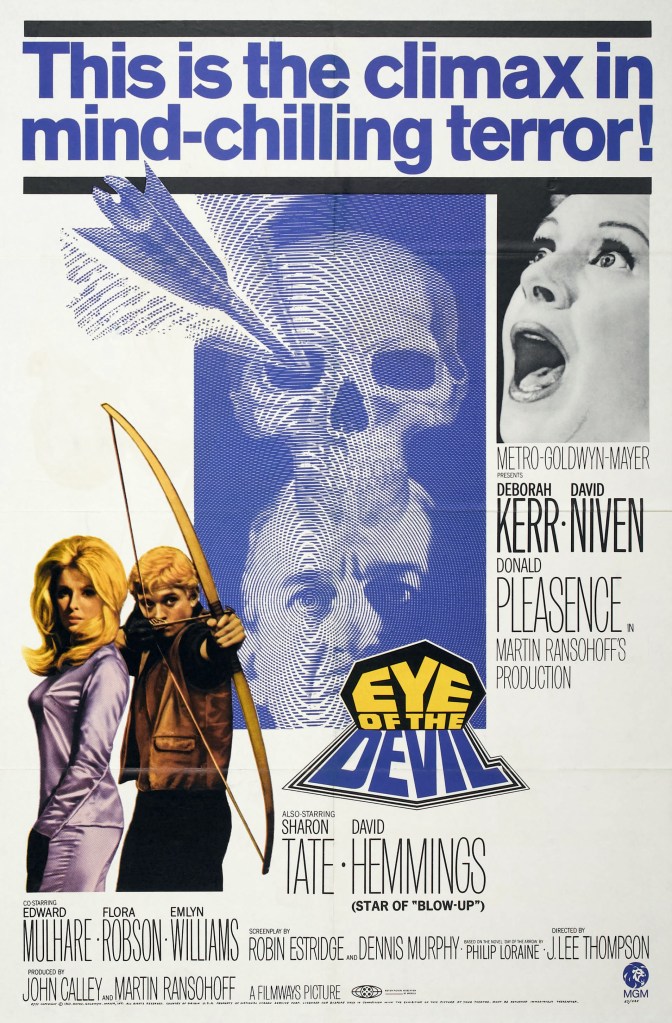
Eye of the Devil (1966)

Directed by J. Lee Thompson [Other horror films: The Reincarnation of Peter Proud (1975), Happy Birthday to Me (1981)]

So I didn’t really know what to expect going into this one, and to be entirely honest, I wasn’t really anticipating that I’d enjoy it, which goes to show (not that this needs any additional examples) of how wrong I can be.

Eye of the Devil is far from your typical Satanist movie, even for the time period. I was expecting something along the lines of The Devil Rides Out, which seemed a fair basis of comparison since that’s also a British Satanist film from the latter half of the 1960’s, but again, I was far, far mistaken.

I wouldn’t go as far as to say that Eye of the Devil’s horror is subtle, but I think it’s fair to say that there’s far more uneasiness and unsettling situations than there is outright horror. Certainly there are some tense scenes (two of my favorites being the children playing on the roof and the main actress being chased through the woods by robed cultists), and I think they work beautifully in the movie, but it’s not a thrill-ride from beginning to end.

Another somewhat surprising aspect about this film is the fact it’s in black-and-white. By the mid-1960’s, most movies had made the full transition over to color (Night of the Living Dead being the most famous exception, but other cases of black-and-white movies post-1965 include Hour of the Wolf, Blood Bath, Ghosts of Hanley House, The Living Skeleton, Confessions of a Psycho Cat, Zinda Laash, and A Thousand Pleasures), so the fact they filmed this in black-and-white was a bit of a surprise. That said, I do think it worked wonderfully with the story (especially during the scene when Deborah Kerr is being chased by the cultists).

Kerr (The Innocents) here is great in her leading role, as she is well aware something sinister is going on around the castle and surrounding village, but she can’t ascertain as to exactly what it is (and it doesn’t help when everyone who knows something has exactly zero intention on letting her in on it). Playing her husband, David Niven (who has an extraordinarily familiar face, but aside from the murder mystery spoof Murder by Death, I haven’t seen anything else with him it in) does a great job too, especially as his somewhat tragic tale unfolds. I often wonder if he is seeking, or the one being sought.

Of most interest to me, of course, is Donald Pleasence (most famously Halloween, though he also really stood out in 1960’s The Flesh and the Fiends), who played a priest here. He was pretty much as you’d expect, speaking in soft tones (it’s hard for me to even hear him speak without immediately thinking about The Spirit of Dark and Lonely Water), so that was fun. David Hemmings isn’t a name I know, but he was also great (and that scene where he pops up blowing that horn just randomly amusing), and brought a fantastically tense character. Others who stand out here include Sharon Tate (yes, that Sharon Tate), Edward Mulhare, and Flora Robson.

What really sets Eye of the Devil apart from many of it’s contemporaries is the atypical cinematography, some of which is really quite smashing, as my homeboi Nigel would say (90’s kids what’s up!). Seriously, some of the camera-work here is fantastic, and much before it’s time. Even if the story isn’t up your alley (and it should be, because there’s some solid uncertainty and a great feeling of dread of the unknown), you should probably watch this just to see how it was filmed.

Like I said at the beginning, I didn’t really expect to like this film, but I was quite mistaken. I’ve not honestly seen that many 1960’s horror (at most recent count, only about 148 total films for the decade), but I can say that I think Eye of the Devil would be in my personal top 20 list for the decade, and it’s a movie I’m sorry I waited so long to see.

8.5/10

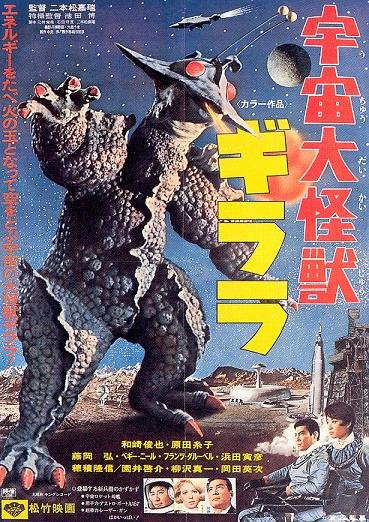
Uchû daikaijû Girara (1967)

Directed by Kazui Nihonmatsu [Other horror films: Konchû daisensô (1968)]

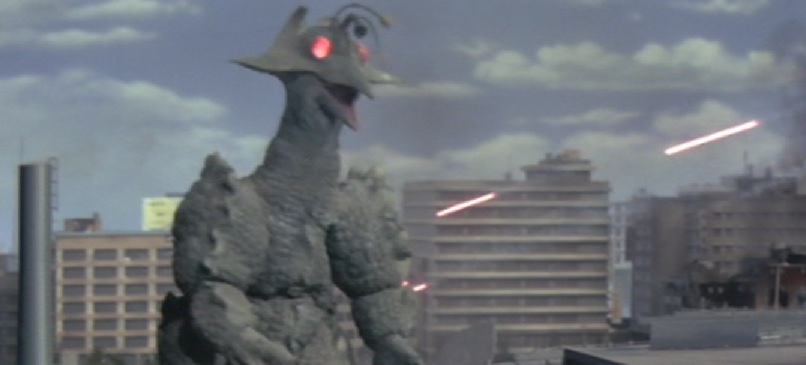
This Japanese film, commonly known as The X from Outer Space, is pretty poor in comparison to both other movies from the same production company (Shochiku) and other movies from the overall decade. This isn’t to say The X from Outer Space is terrible, but it is pretty unremarkable in most ways.

Shochiku isn’t a well-known name, but they made films such as Genocide (Konchû daisensô), The Living Skeleton (Kyûketsu dokuro-sen), and perhaps most famously, Goke, Body Snatcher from Hell (Kyuketsuki Gokemidoro). The best of these may well be Goke, Body Snatcher from Hell, but the other two are decent enough also. This one just can’t match any of those others at all. It’s as if they were trying to be Toho, and just failed miserably at it.

I think the first big problem is the fact that, until you get 48 minutes in or so, you can’t even tell this is going to be a giant rampaging monster movie. Personally, I thought the first half was decent (albeit in a rather cheesy, very 60’s type way), but the story of the astronauts going up into space could have been trimmed a bit in places. They could have gotten to the meat of the story quicker. The thing is, I don’t think there was that much meat to get to, which is probably why the first half was so dragged out.

Few of these characters are really worth much. In his own way, I did sort of like Shun’ya Wazaki as the straight-laced captain, and the idea that both Itoko Harada and Peggy Neal’s characters wanted to jump his bones was fine (though the cat fight I was hoping for never happened), but it doesn’t much go anywhere aside from a scene in the finale that was somewhat laughable. Otherwise, the only character in the film worth watching this for was the monster, called Guilala, which was just an overly goofy-looking lizard thing with bouncing antennas.

You get some funky music here rather often, but the first half of The X from Outer Space can come across as particularly dry, the quickness at which they can travel in space seems ridiculous, and the rather silly destruction of models – sorry, Japanese cities and power plants – wasn’t much what I’d call thrilling.

There are some fun space-based movies from the 1960’s, one of them being the Italian Planet of the Vampires (Terrore nello spazio), and there are some fun monster movies, such as Monster from a Prehistoric Planet (Daikyojû Gappa), but this tries to combine the two, and it really doesn’t work out. Stick with the other Shochiku movies instead, and go to this only if all else fails.

5/10

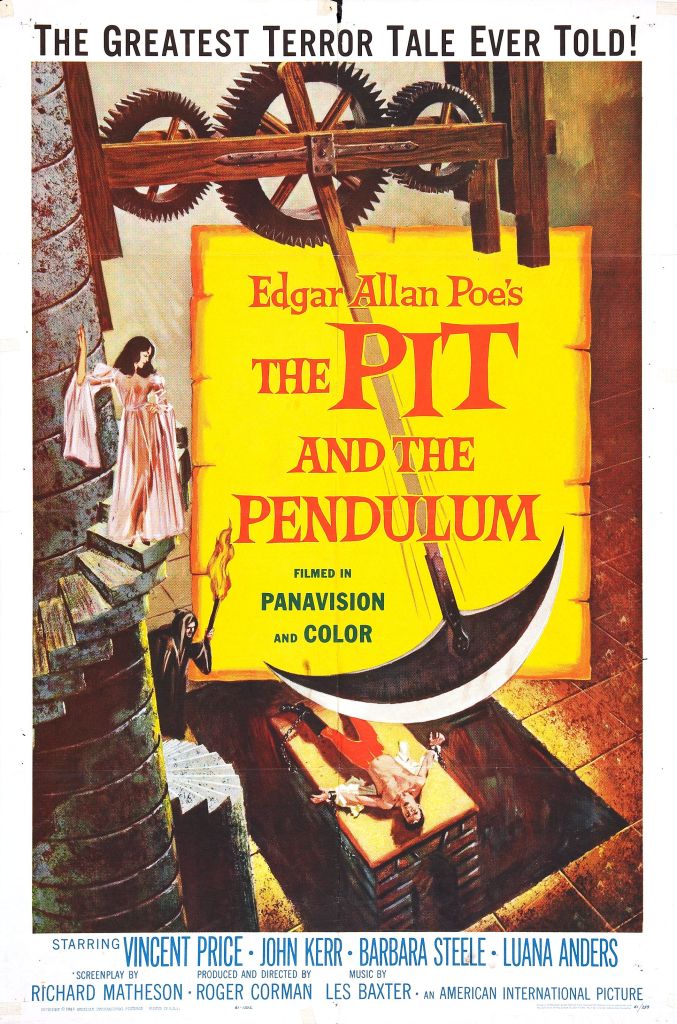
The Pit and the Pendulum (1961)

Directed by Roger Corman [Other horror films: The Beast with a Million Eyes (1955), Day the World Ended (1955), It Conquered the World (1956), Not of This Earth (1957), Attack of the Crab Monsters (1957), The Undead (1957), War of the Satellites (1958), The Wasp Woman (1959), A Bucket of Blood (1959), House of Usher (1960), The Little Shop of Horrors (1960), Creature from the Haunted Sea (1961), The Premature Burial (1962), Tales of Terror (1962), Tower of London (1962), The Raven (1963), The Terror (1963), X (1963), The Haunted Palace (1963), The Masque of the Red Death (1964), The Tomb of Ligeia (1964), Roger Corman’s Frankenstein Unbound (1990)]

The last time I saw this movie, it was free on IMDb. If I had to guess, this was around 2009, 2010 or so. It’s been around ten years since I’ve last seen this, and I can’t express what a blast it was to finally see The Pit and the Pendulum again after so long.

Luckily, this movie very much stands the test of time. It’s simple, yet tense, and, if you’re a new viewer, may keep you guessing for a little while. It’s also rather tragic, as the antagonist come the end wasn’t at fault whatsoever for their actions, and honestly, I can’t much say I blame them for the horrors that went down.

It’s Vincent Price that really brings this movie to life. Price is one of my favorite actors of the genre, and this is one of his top performances, without a doubt, especially toward the end when he seems to break entirely, shouting, over and over again, “TRUE! TRUE! TRUE!” – who couldn’t feel bad for this man during that time? His performance in House of Usher was no slouch, but I think he does even better here, and I really find him engaging through the whole of the film.

To be sure, I have no complaints about John Kerr, Barbara Steele, Antony Carbone, and Luana Anders. Out of these, Carbone was the most forgettable, but he still had a great performance. Steele, of course, was in quite a few classic horror films, such as Black Sunday, The Ghost, Castle of Blood, and Nightmare Castle, and she did great here. She doesn’t get a whole lot of screen-time, and when she does, she’s not particularly sympathetic, but she’s still great. Anders isn’t a name I was familiar with, but I do know that she also stars in Dementia 13, so I thought I’d mention that.

Pit and the Pendulum has a very oppressive, ominous feel to it, and while some might say that things don’t really pick up until the conclusion, the whole film is pretty much fantastic from beginning to end. I enjoyed the flashback of Price’s character, and how that’s later expanded on. I loved the last split-second ending, which really felt deserved. I loved the psychedelic nature of a few of the scenes (not unlike a portion of House of Usher), and the mystery, and that scene where they check the corpse of the supposedly dead woman.

Really, this whole film is great. Until I see the other Corman-Poe films, I can’t say it’s the best (I’ve heard tell that Premature Burial, while not possessing Price, is a pretty good movie), but I can say that it’s hard for me to personally imagine a better one.

8.5/10

Peeping Tom (1960)

Directed by Michael Powell [Other horror films: N/A]

Often considered a proto-slasher, Peeping Tom is a horror classic that I’ve wanted to see for a really long time, but I have to admit to being disappointed after having finally accomplished that goal.

It’s not as though the movie’s bad, though. Peeping Tom is a very solid psychoanalytic look into a crazed killer, from the killer’s perspective (think movies like The Couch or The Strangler, both of which came out a few years later). I just didn’t find much of the movie enjoyable, and more so, found the stilted and almost inhuman conversations more awkward than anything.

While the film got terribly skewered upon it’s original release, from a modern-day standpoint, it’s hard to see almost anything in Peeping Tom that comes across as too obscene or ghastly. In fact, there’s almost no on-screen murders, and while there’s passing nudity, again, we’re talking very tame, muted stuff. What some critics saw in this movie back then, I don’t know, but I don’t see it now.

German actor Karlheinz Böhm did fantastic as the main character, a seemingly-mild but quite demented, socially-awkward killer. There’s a decent amount of character building in regards to his father and what made him into the man he is, but I definitely get the sense that more was left unsaid than what was discovered. His love interest, played by Anna Massey, was good also, but I didn’t fully understand her character (why she was so insistent on staying around Mark even after she discovered his homicidal activities was beyond me), and her blind mother, played by Maxine Audley, confused me more.

One thing I’ll say as far as surprises go, I honestly didn’t know until I started the movie up that Peeping Tom was in color, and not only that, but it looked pretty good. I’ve sometimes heard this compared to Psycho, and I guess I just mentally imagined this as a black-and-white film, but no, it’s in gorgeous color, which was nice. I just wish there was more in it worth seeing in color.

For what Peeping Tom is, I think the movie’s decent, and to a certain extent, I can understand it’s inclusion in many proto-slasher lists, but I honestly didn’t enjoy the movie near as much as I was hoping for, and given all that I’ve heard about it, I was hoping for a bit more violence and less awkward conversations. Still worth a watch, if only because it’s one of the more-commonly referenced British horror films, but it’s not one I can imagine keeping in my rotation.

6/10

This is one of the films covered on Fight Evil’s podcast. Listen below as Chucky (@ChuckyFE) and I discuss this one.

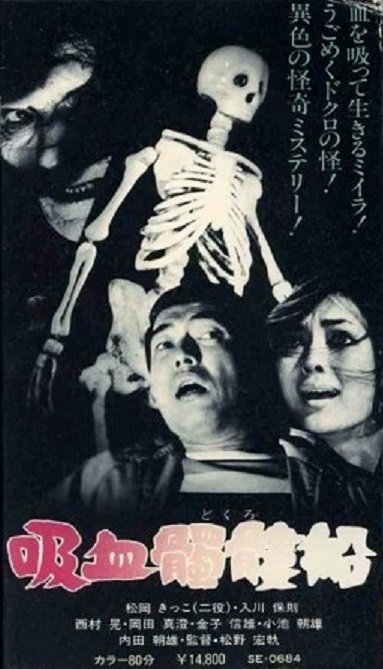
Kyûketsu dokuro-sen (1968)

Directed by Hiroki Matsuno [Other horror films: N/A]

Though at times incoherent, this Japanese film, commonly known under the title The Living Skeleton, has a creepy vibe and seems to be a movie worth seeing at least once, although it may not be the most enjoyable time.

It’s somewhat hard past a certain point to keep up with who’s who, and that’s what causes much of the potential confusion toward the latter half of the film, but even so, there’s enough here to keep the viewer engaged, especially as the movie draws to a close and there’s even a pretty fun twist thrown in there.

The skeletons in the water may not have the most realistic look, but I did enjoy it when they popped up. What’s less engaging was the focus on some Japanese gangsters, but they don’t last all that long, and hell, it is a movie of ghostly revenge from the watery grave, so it works fine.

Being a black-and-white movie (which certainly isn’t a given for a late 1960’s Japanese flick), The Living Skeleton had a lot of atmosphere, and though the story itself wasn’t always the most clear, the fog throughout the film, along with the coastal town and characters attempting to locate a friend gone missing, do make this an atmospheric, beautiful film, and possibly an influential one for Carpenter’s The Fog.

Really, no characters stood out that much to me, but the story, if you can keep up with the names and faces, was still worth watching, and though this would be far from the first recommendation when it comes to classic Asian horror, The Living Skeleton still merits a look, albeit a tepid one.

6.5/10