Indestructible Man (1956)

Directed by Jack Pollexfen [Other horror films: Monstrosity (1963)]

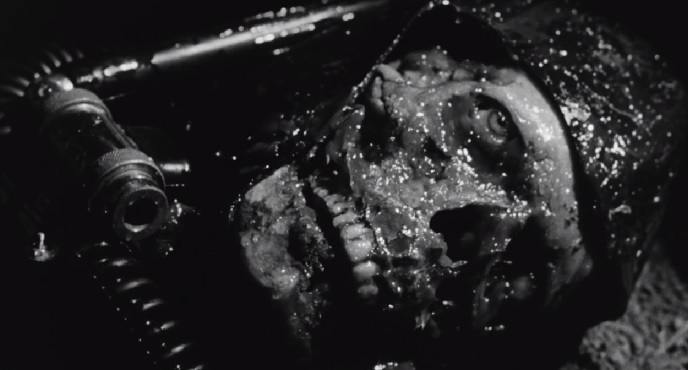
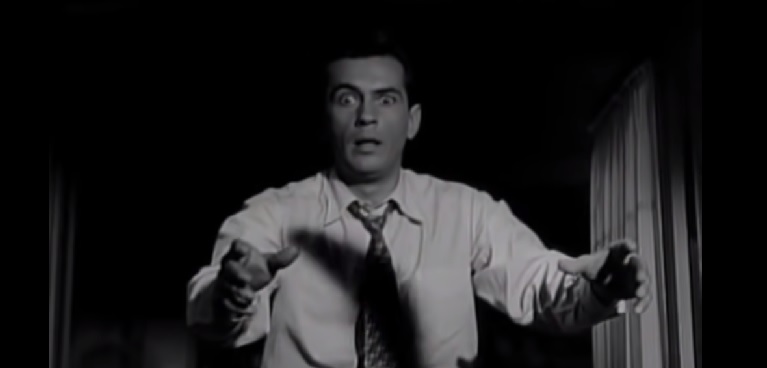
I’m not sure why, but I’ve always felt an affinity toward this movie. The story is at least a decade out of time, and certainly it’s not an easy case to make that the movie’s actually good, but I’ve seen this four times or so, and have always had a fun time with it.

The idea of a man being brought back to life only to seek revenge on those who’ve wronged him has been done before, in films like The Walking Dead and The Man They Could Not Hang. It’s not an original idea, but I liked the execution here. To be sure, the story in The Walking Dead was far more emotional, but again, this had a good sense of fun to it.

Part of that may be the Dragnet-type style. The film’s narrated by Max Showalter’s character, and though it’s not really a big thing, it does give the film a different vibe, almost like a crime documentary of sorts, reminding me of later films like The Town That Dreaded Sundown and Drive-In Massacre.

You also have the Los Angeles setting, which, despite being in black-and-white, comes across as vibrant and alive. You even have an appearance of the Angels Flight railway (and I have to admit, the first three times I watched this movie, I had absolutely no idea what that was), which just adds to a regional flavor.

Lon Chaney Jr. (Pillow of Death, The Ghost of Frankenstein, Bride of the Gorilla, The Haunted Palace) wasn’t given the most interesting material to work with, but I still thought it did a solid job as a threatening antagonist. Max Showalter (The Monster That Challenged the World) felt sort of generic, but he’s also a police detective in a 50’s movie, so who could blame him? Ross Elliott (Tarantula) had a solid, slimy feel to him, and Marian Carr was okay in the limited capacity she was given.

As one could imagine, special effects here aren’t that relevant, but there were two scenes in the last handful of minutes that were pretty solid. Most of the time, though, it felt pretty simple, and most of the people who were killed died either by strangling or being picked up and thrown (which was always fun, admittedly).

There’s little that’s really special in Indestructible Man, but I enjoy it, perhaps in a similar way to how I deeply enjoy The Monster Walks despite its rather negative reception. Indestructible Man is a fun movie, though, and one that I’d not hesitate to watch again in the future.

7.5/10

Zombies of Mora Tau (1957)

Directed by Edward L. Cahn [Other horror films: Creature with the Atom Brain (1955), The She-Creature (1956), Voodoo Woman (1957), Invasion of the Saucer Men (1957), It! The Terror from Beyond Space (1958), Curse of the Faceless Man (1958), The Four Skulls of Jonathan Drake (1959), Invisible Invaders (1959), Beauty and the Beast (1962)]

I’ve seen this late 50’s zombie movie once before, and while I remember enjoying it a bit more that first time around, I still think it’s a decent little movie. Nothing stellar, and nothing to upend what we all consider the pre-Night of the Living Dead zombie classics, but a perfectly fine film.

Zombies of Mora Tau follows a group of people going after diamonds, but these diamonds have some undead protectors. Naturally, many in this group are largely skeptical, and if there’s one thing in the movie that bothered me, it’s how long many of these people just disbelieved the claims of those who’ve lived in this area for years out of hand, even after experiencing astonishing events, such as a man being stabbed without showing any pain.

That type of disbelief isn’t uncommon in horror, but after a few experiences, you’d think that something would give. Here, though, even the granddaughter (or great-granddaughter, I forget) of an older woman who’s known of zombies most of her life doesn’t seem to take her great-grandmother’s words seriously until the very end. It’s slightly off-putting.

The aquatic zombies here (for the diamonds are on a coast in a shipwreck) are fun, though I have to say that none of the underwater scenes really thrilled me. To be sure, few of the scenes that took place on land thrilled me either, but we’re talking about a pretty old zombie movie, and one that doesn’t exactly move with a brisk pace.

Something also has to be said about how weak the zombies were. Sure, if they get their hands on you, you might be screwed (though if you’re underwater, evidence shows that you’ll survive 90% of the time), but all you need is an open flame or a flare gun, and you’ll be golden. These mothas move slowly, and they’re not exactly what I would label as threatening.

Both Gregg Palmer (The Creature Walks Among Us) and Autumn Russell were fine, if not generic. Speaking of generic, Allison Hayes (The Unearthly, The Hypnotic Eye, The Disembodied, The Undead) had that annoying trait of fainting whenever she was scared. I don’t blame Hayes’ for it, and she did get one of my favorite lines in the film (“You’re already dead, you just don’t have the decency to lie down”), but neither of the women in this movie have the chance to give it their all.

Well, young women, that is, because I really liked Marjorie Eaton (Monstrosity, The Attic, Night Tide) here. She was a feisty woman, and pretty much in the right about everything. I would have liked to see her have a bit more to do, but in a way, she’s like the oracle who warns people off a path, only to know that they’ll do exactly what she says they shouldn’t. Morris Ankrum (Half Human: The Story of the Abominable Snowman, Giant from the Unknown, Beginning of the End, Earth vs. the Flying Saucers, The Giant Claw) and Joel Ashley both appeared, Ankrum being the more interesting of the two, but neither one really stood out that well to me.

I mean, Zombies of Mora Tau can be a bit sluggish, and I don’t think any part of the film comes close to being as enchanting as portions of I Walked with a Zombie did, but it’s not a bad way to spend an hour and ten minutes. It’s a digestible zombie movie that follows the expected path, and if you want a taste of some pre-Romero zombies, giving this a go isn’t likely to ruin your life.

7/10

The Killer Shrews (1959)

Directed by Ray Kellogg [Other horror films: The Giant Gila Monster (1959)]

While calling The Killer Shrews a cult classic might be a bit strong, I do think it’s fair to say that this late 50’s film, despite some effects failures and less-than-stellar performances, is a decent amount of fun, although I also think it’s fair to say it can still feel on the average end.

It’s a pretty short film, at around an hour and ten minutes. Because it’s digestible, it doesn’t take too long to get moving, and given there’s only a handful of characters here, that keeps things simple. The plot is somewhat standard 50’s monster fair, the difference being that instead of one giant monster (as seen in The Giant Claw, The Beast from 20,000 Fathoms, The Black Scorpion, It Came from Beneath the Sea, and Earth vs the Spider), there’s lots of smaller giant monsters (similar, I suppose to Them!, although these shrews are much smaller than those anty bois).

That said, it’s also a movie with it’s foot in door of the following decade – while it’s a brief scene, a character gets bit on the leg, and we actually see a bit of blood. It’s a black-and-white film, so it’s not like the blood stands out that much, but it was a tad more violent than you’d expect from the late 1950’s. It’s not much, but give it four years, and this could have been a much different product.

Which isn’t to say that the product we do have isn’t good, as I do tend to find it a fun movie. The Killer Shrews is simple in story, but I think a lot of it works well.

I appreciate the atmosphere, for instance – on a small island, a group of people must bunker down in a house during a hurricane as killer shrews threaten their existence. The hurricane was a nice touch, and there’s a scene in which characters are keeping watch while the others sleep, going room to room, and I was immediately reminded of Halloween 4: The Return of Michael Myers, as the group’s holed up in the dark house, alone. This had a good atmosphere, and that went a long way to helping out.

James Best (Death Mask, Return of the Killer Shrews) wasn’t always the most defensible lead – at one point, he’s even close to throwing someone over a fence to the shrews – but he was decent as the generic, rugged man. Ken Curtis (mostly known for his western films) made for a fun and unlikable antagonistic force. I didn’t care much for Ingrid Goude’s character, but that has more to do with gender roles at the time than anything else. The fact that they had an in-story reference to her Swedish accent was fun, at least.

Of the other four performances – Baruch Lumet, Judge Henry Dupree, Gordon McLendon, and Alfredo de Soto – I think I liked de Soto the best. Dupree was sadly more a stereotypical portrayal of black men at the time (nowhere near as bad as Mantan Moreland’s usual character, at least), and despite lasting longer than expected, Lumet didn’t really stand out much to me. McLendon was sort of fun, though.

Certainly, there’s not a ton to The Killer Shrews. Some people make a big deal out of the shrews – for many of the scenes, they used dogs (wearing some type of cute costume) and hand-puppets. Honestly, I don’t think that harmed the film much. It may have looked silly at some points, but it’s not an easy case to make that it looks much worse than the average giant monster movie.

What works for this one is the atmosphere, which I deeply appreciated. The finale was quite amusing, reminding me of something you’d see in Tremors II: Aftershocks – I’ve seen this movie once before, but entirely forgot about the goofy, yet sensible, way the group tries to escape. The Killer Shrews is a fun film. It may not be any more than that, but I had a good time with it.

7/10

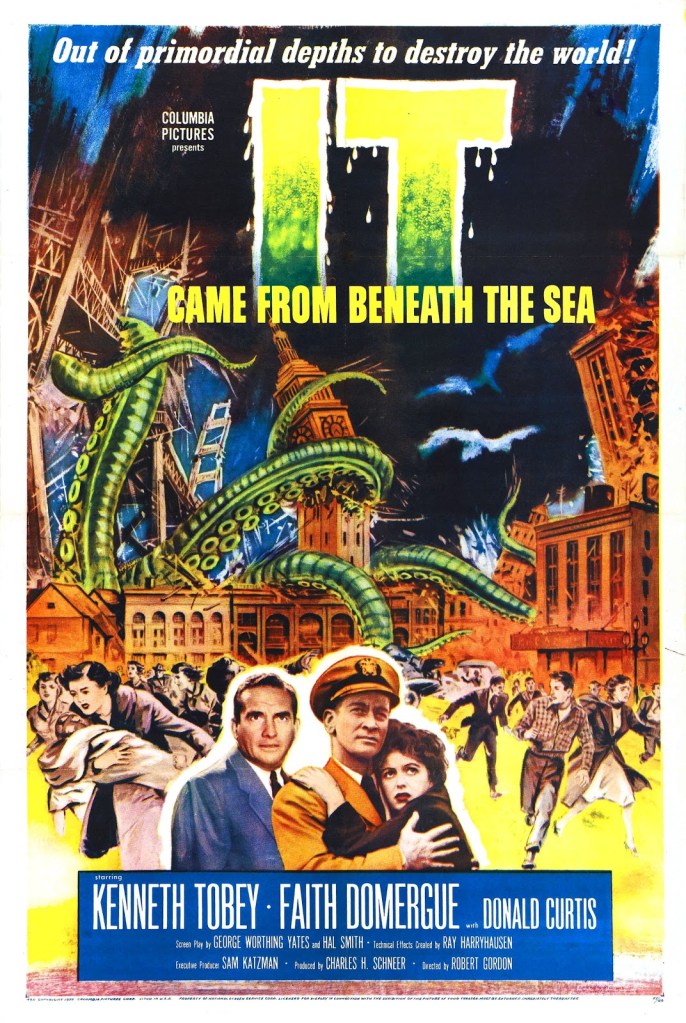
It Came from Beneath the Sea (1955)

Directed by Robert Gordon [Other horror films: Black Zoo (1963)]

I’ve said before that when it comes to giant monster movies, I’m not the biggest fan. I don’t think this one was great either, but I have always liked octopi, and it’s in that spirit that I found this a bit more tenable, despite having a creature with somewhat limited ranges of attack.

Largely, I’ve come to the conclusion that the reason I’m not as enamored with movies of this type is because of it’s attention. And by that, I mean in this film, the whole of the United States Navy knows about the creature (and I imagine much of the military), and then, of course, the general public. Everyone knows about it. In slashers, the killer might be going after just a handful of people, but in movies like this, everything’s a public affair.

From Them! to The Black Scorpion, from The Giant Claw to The Beast from 20,000 Fathoms, it’s always the military and scientists working together to find a way to destroy the creature. It just gets so repetitive, no matter how good the special effects are, or what the creature happens to be. Not only that, but they often throw in romantic subplots, and rarely does that do anything particularly interesting.

In this movie’s case, I will give you that the romantic subplot felt more like a confused love triangle at times, so it was at least a little different, and I did tend to actually like Faith Domergue’s character, but the point remains that throwing in a love story doesn’t automatically make the movie better, or the characters involved more interesting.

Of the three important performances, I do think Faith Domergue (Cult of the Cobra, The House of Seven Corpses, This Island Earth) was the best. It’s true that I liked her character the most anyways, but I also thought she had the most going for her. Kenneth Tobey (The Thing from Another World, The Vampire) felt like generic military guy 101, and while Donald Curtis (Earth vs. the Flying Saucers) was okay, but I feel like I never got a great hang of his character.

Again, I enjoy cephalopods – I think it’s the tentacles I’m enamored with. Which means, naturally, I felt bad about the harm people caused it throughout, especially as it had little other choice but to look for a new food group. I think the most painful was the flamethrowers – certainly that scene looked great, but my sympathy for the octopus was at it’s zenith.

Speaking of good-looking scenes, the sequence in which the octopus attacks the Golden Gate Bridge was pretty fun. I’ve never been to San Francisco, but if I could see a giant octopus destroying a famous bridge on my visit, then that would be a vacation worth remembering.

All-in-all, It Came from Beneath the Sea was an okay affair. It’s pretty much how I feel about most of these giant monster movies, which just aren’t usually my cup of tea. No doubt it was an okay watch, and the movie is well made, but it’s also not one that I’d think I’d watch too often in the future.

7/10

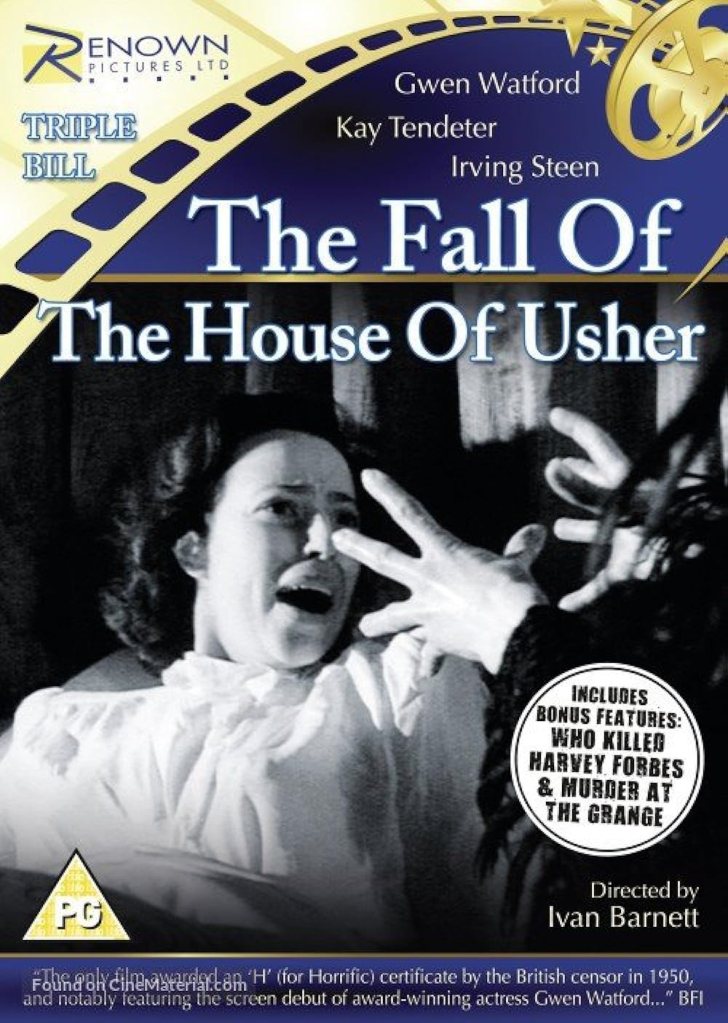
The Fall of the House of Usher (1950)

Directed by Ivan Barnett [Other horror films: N/A]

This is a movie I’ve been wanting to see for some time. Sure, seeing another rendition of a classic Edgar Allan Poe story is nice, but it’s more the time period this came out that drew my attention. As it is, while the movie has potential, it also feels a wee bit on the lifeless side.

There are two periods of time in which horror films were close to nonexistent, being the late 1930’s (specifically 1937 and 1938) and the late 1940’s to early 1950’s. Exceptions exist, of course – Sh! The Octopus, The Ghost Cat and the Mysterious Shamisen, The Terror, Uncle Silas, Things Happen at Night, Inner Sanctum, The Queen of Spades, The Invisible Man Appears, and El hombre sin rostro – but it’s a rather dry period, and so any film released around that time is of immediate interest to me. Ever since I ran across this one on IMDb, I’ve been curious, and though it’s a somewhat disappointing version of the story, I am happy to have finally seen it.

I think the main issue is that the movie feels quite stagy, as though we’re watching a play. Some of the acting is exceedingly melodramatic, especially toward the end, and though there are promising portions – the temple of torture, and the old woman entombed within, are good examples – much of the film doesn’t seem that engaging, and the finale, while containing some action, seems too little too late.

Also, I find it somewhat amusing that while Irving Steen’s character is narrating the story, his character is absent for much of the plot, and he never actually does anything at all, really, aside from painting and reading with Kaye Tendeter’s character. Oh, another odd thing – this main story is framed by a group of gentlemen at a club, with one of them reciting the Poe story The Fall of the House of Usher – at the end of the film, these men discuss what the finale of the story means, and it’s just an odd way to present the film.

As for the faithfulness and veracity of this rendition, I cannot speak, nor would I dream of doing such, of whether the story possessed within conforms to it’s source. That said, I did rather enjoy Steen’s narration, as it definitely had that style of writing down that I do tend to associate with Poe. It was melancholy, dreary, dramatic, and all the more fun for it, and arguably, the best part of the movie.

Really, that’s what Irving Steen brings to the film – a quality narration. Given his character doesn’t do anything else, it’s good to have a part. Kaye Tendeter was nowhere near as engaging as Price was in the role of Roderick Usher, and as I said, he was both dramatic and, conversely, stilted, at times. Actually, many of the performances felt stilted – again, this whole film feels somewhat lifeless.

Gwen Watford (in her earliest role – she was also in Taste the Blood of Dracula, The Ghoul, and Never Take Sweets from a Stranger) didn’t seem to have that much in the way of agency, but she had an okay scene or two. Vernon Charles was actually relevant to the plot, which was at least nice, but his performance was probably the worst here. Lucy Pavey looked creepy, so kudos.

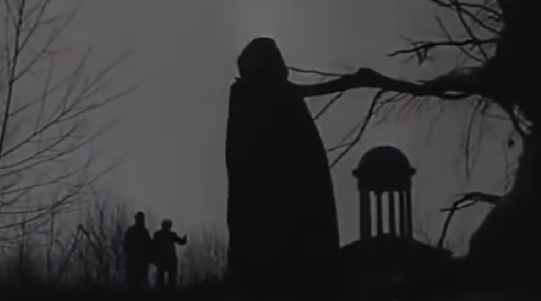
There were some cool shots of the temple – a fact I think they knew, as we saw the same angle about four times throughout the film – what with the silhouettes of people walking toward it from the moors. The backstory of the curse the Ushers are under was pretty gruesome, and I dug it. Most of story is even decent – it’s just that the execution here is both stilted and dry.

While I did enjoy this version more than the 1928 French movie, it doesn’t have the charm of the 1960 Price movie. It’s a curiosity insofar as it’s release date, but beyond that, I don’t really think it’s a movie that will be all that memorable.

6/10

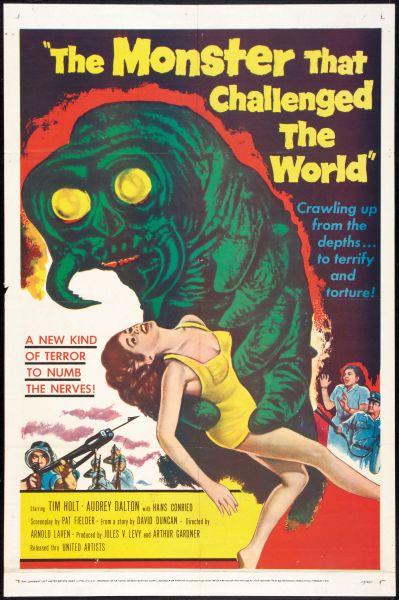
The Monster That Challenged the World (1957)

Directed by Arnold Laven [Other horror films: N/A]

Though sometimes heralded as one of the many solid giant-animal movies of the late 1950’s, I have to say that The Monster That Challenged the World didn’t do much for me. The movie’s not bad, or anything, but the more and more I see these types of movies, the more I lose interest in them.

Some of them, of course, do have something special – The Giant Claw had a lot of science going on, Earth vs the Spider has been a mild favorite for a while, and Attack of the Giant leeches has hokey charm – but I’m widely disinterested in this particular portion of the genre. Giant monsters causing havoc just isn’t my thing.

Taking place around the Salton Sea in southern California (which I never heard of before this movie), we have a mollusk-like thing that entertains some people, and by ‘entertain,’ I mean suck their blood out entirely and kill them. Of course, it’s not just one – the thing laid eggs, so there’s a potential of hundreds, though we only see three or so others, and as the film focuses around a Navy Base, I can’t say there was much character in the characters we got.

Tim Holt plays a generic, gruff military guy. Because a monster movie isn’t complete without romance, Audrey Dalton (Mr. Sardonicus) plays a young woman who falls head over heels for him, and he saves her from the monster at the end, and I don’t have the words to describe how uninterested I was in their romance. Hans Conried didn’t really do that much, but he did later voice the Grinch in Halloween is Grinch Night, so that’s something.

Honestly, I don’t know what more to say. The special effects were iffy, the finale somewhat underwhelming, the monsters were monstering. I don’t know – these types of movies just often don’t interest me, but they can work for others, so if this sounds like your type of thing, give it a watch. I just may not be the exact audience to enjoy it.

6/10

Caltiki il mostro immortale (1959)

Directed by Riccardo Freda [Other horror films: I vampiri (1957), Maciste all’inferno (1962), L’orribile segreto del Dr. Hichcock (1962), Lo spettro (1963), L’iguana dalla lingua di fuoco (1971), Estratto dagli archivi segreti della polizia di una capitale europea (1972), Murder Obsession (1981)] & Mario Bava [Other horror film: I vampiri (1957), La maschera del demonio (1960), Ercole al centro della Terra (1961), La ragazza che sapeva troppo (1963), I tre volti della paura (1963), La frusta e il corpo (1963), 6 donne per l’assassino (1964), Terrore nello spazio (1965), Operazione paura (1966), 5 bambole per la luna d’agosto (1970), Il rosso segno della follia (1970), Ecologia del delitto (1971), Gli orrori del castello di Norimberga (1972), Lisa e il diavolo (1973), The House of Exorcism (1975), Schock (1977)]

Caltiki il mostro immortale, better known as Caltiki – The Immortal Monster, is a decent film, if not perhaps a bit generic for the time. It looks quite nice, with some solid special effects, and it’s nice to see Italy get back into the genre after a long hiatus, but I think the film finishes out around average.

The story is probably what holds the film back most, and to be clear, I don’t think the plot is bad, but it’s not too different from many films at the time, such was the giant monster craze. Obviously, it’s similar to The Blob – the creatures here are amorphous, single-cell organisms, but also movies like The Black Scorpion, so it’s not the most original stuff.

It does have some surprisingly decent special effects though. The best would probably be someone’s face melting, which was beautifully gruesome for the time. The creature itself doesn’t look near as smooth as the Blob we know and love, but when it’s multiplying toward the finale, it does strike me as impressive.

It’s never easy for performances from giant monster movies to make a big impression, and it’s the same here. John Merivale is fine as a lead, and Gérard Herter was fine as a more antagonist force, but neither one stood out. Daniela Rocca and Didi Sullivan were fine, but again, neither one really added that much.

Italy got back into the horror genre in 1957 with The Vampire – the country had a couple of horror films in the early days, such as 1917’s Malombra and 1925’s Maciste in Hell – which was also directed by both Riccardo Freda and Mario Bava. Obviously, Italian horror skyrocketed during the 60’s and 70’s, so it’s sort of nice seeing Italian horror before it became the big thing, and though Caltiki is in black-and-white, it did look quite nice, despite the story not being particularly interesting.

When it comes down to it, while I enjoyed some aspects about the film, and I still think it’s an adequate movie, I don’t know why I’d watch this when I could just watch The Blob, unless I wanted something with Italian flavor.

7/10

Behemoth the Sea Monster (1959)

Directed by Eugène Lourié [Other horror films: The Beast from 20,000 Fathoms (1953), The Colossus of New York (1958), Gorgo (1961)]

I have to say, I forgot how decent portions of this film are. Better known by the title The Giant Behemoth, Behemoth the Sea Monster is a decent film. I don’t think it necessarily stands out among other giant creature movies from the late 1950’s, but it is decent.

Personally, I love how hard they hit on the dangers of radiation from atomic testing in the beginning, having a marine scientist (Gene Evans’ character) warn of the dangers, which was nice, and I only wish people listened and dismantled the bombs back then instead of going through the Cold War for thirty more years. Like Godzilla did before, this film is a nice argument against atomic weaponry, and I appreciated it.

Things moved pretty quick for most of the film. I will admit that toward the final twenty minutes, during the beast’s attacks in London and the commission trying to come up with some way to defeat it, I did feel it dragged a bit. Partially, I think, because, as fun as the scenes of the rampaging behemoth were, some of them were a bit on the repetitive side.

Of note-worthy performances, there’s really only three, and even though they did well, it’s not as though any of the three were exceptionally memorable. Gene Evans (Peopletoys) and André Morell (The Plague of the Zombies, The Hound of the Baskervilles, The Mummy’s Shroud, The Shadow of the Cat) worked well together, especially during the first half of the film when they still had some disagreements, and though he really only got one scene, I loved Jack MacGowran’s (Dance of the Vampires) exuberance.

Admittedly, but unsurprisingly, the behemoth was a bit on the hokey side, but if I’m being honest, I found it more charming than anything else. Seeing it flipping over a ferry or destroying a helicopter, not to mention all of the cars it smashed, was a decent amount of fun, and though, as I said, I do think some of the attacks toward the end were a bit longer than need be, I still appreciated the creature.

If I’m being honest, I wasn’t looking forward to revisiting this one. All I remember from my first time seeing this is thinking that it was a poor man’s Beast from 20,000 Fathoms. It’s actually decent fun, at least near the beginning, but I do think it tapers off a little. Ultimately, I think it falls somewhere around average, but if you’re a fan of late 50’s horror, it’s worth seeing.

7/10

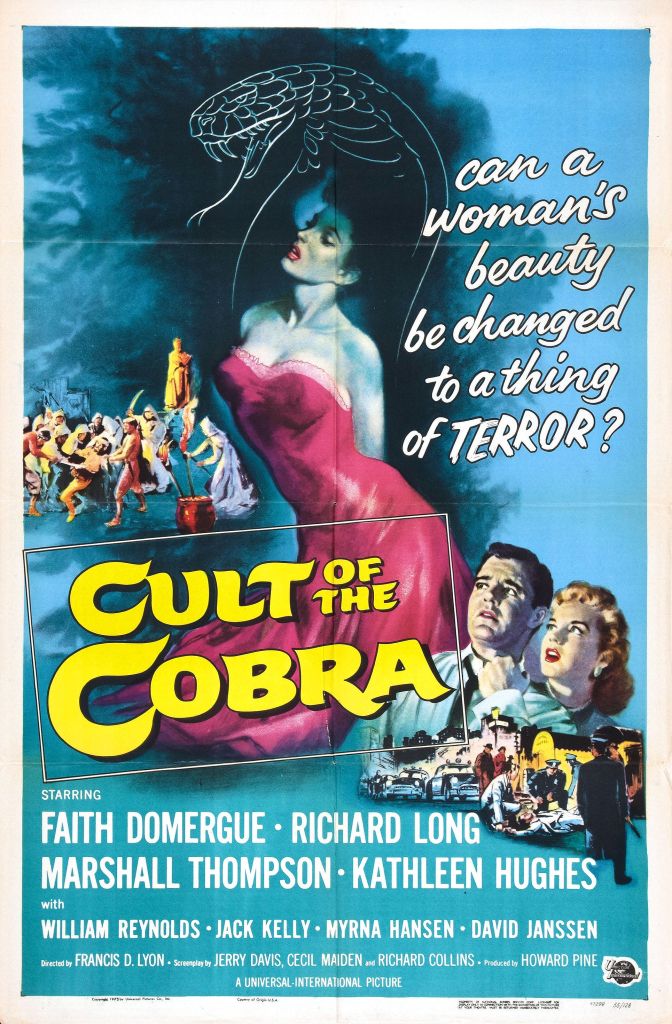
Cult of the Cobra (1955)

Directed by Francis D. Lyon [Other horror films: Castle of Evil (1966)]

Cult of the Cobra is a film I’ve known about for a while, and I was lucky enough to notice that TCM was playing it, and given that I’ve never seen it airing on television before, I knew it was one I had to watch. As it is, Cult of the Cobra can be somewhat entertaining, but it’s also a bit on the slow side, and perhaps not as interesting as I would have hoped.

I do think the basic plot is good, though. Six American soldiers in some nondescript Asian country witness a ritual that wasn’t for their eyes, and after being found out (one of the soldiers, who was a bit intoxicated, tried taking a picture of the ritual), have a curse placed on them, and one-by-one, they’ll be killed by snakes. It’s a nice little plot and the set-up was solid, but when the soldiers get back to the USA, things become mildly more middling.

There’s also a mysterious woman who gets involved with one of the soldiers, and is she perhaps a woman who can turn into a snake (or even better, a snake who can pretend to be a woman)? In that way, portions of this feel a bit like Cat People. I probably enjoyed it a bit more than Cat People, if only because cobras are more slithery than cats, but it’s the same basic idea. There is a solid silhouette sequence here toward the end, but there’s nothing near as good as the pool scene from Val Lewton’s classic.

Faith Domergue (It Came from Beneath the Sea, The House of Seven Corpses, This Island Earth, So Evil, My Sister) was okay as the mysterious, potentially snaky woman. She didn’t have a ton of personality, but I guess that was somewhat the point. Of the six soldiers (William Reynolds, Jack Kelly, Marshall Thompson, David Janssen, James Dobson, and Richard Long), only three, being Richard Long (House on Haunted Hill), David Janssen (Moon of the Wolf), and Marshall Thompson (Fiend Without a Face), made anything close to a lasting impression. Kathleen Hughes has one solid scene, but most of the time, her character was forgettable.

Obviously, Cult of the Cobra isn’t without some charm, and I sort of like aspects of the film, but it does drag for a not-inconsiderate portion of the middle section, and given that so few of the kills are great, this one, while competent, may not end up being that memorable, which is not only mildly damning, but also rather disappointing.

6.5/10

Les diaboliques (1955)

Directed by Henri-Georges Clouzot [Other horror films: N/A]

This French classic, widely known as Diabolique, has never been a particular favorite of mine. It’s a solid film, with a strong atmosphere permeating the whole product, and of course, the finale is pretty great, but at almost two hours long, every time I see this, I can’t help but feel as though it drags at points.

Obviously, this film has received critical acclaim, and later went on to inspire Psycho, so you know it’s heart’s in the right place, but on a personal level, I just can’t fully find it in me to love the movie. This isn’t to say I dislike it – like I said, Diabolique has a great atmosphere – but when it comes to classic horror films to watch, this wouldn’t really make my list, unless I was focused on French horror from the mid-1950’s.

None of this is supposed to sound harsh, and to spoil things, I’m giving this movie an average rating; I just feel as though I’m in the awkward position to defend an unpopular opinion on a movie that I don’t even dislike. I think Diabolique is an okay movie, and the finale obviously went on to influence hundreds of other films (and to be entirely fair, this film is based on a novel – Celle qui n’était plus, or She Who Was No More), but I personally find much of it a slough to get through.

Véra Clouzot (who died just five years later, at the age of 46) worked well with Simone Signoret. The pair of them made for good protagonists, and as the movie kept going, you could see the increased pressure they were under to try and figure out exactly what was going on. I found Clouzot’s character quite irksome at times – her ability to lie was worse than Janet Leigh’s character in Psycho – but her performance was sound. Paul Meurisse played a horribly unlikable man well, and I liked Charles Vanel’s gruff, yet paradoxically gentle, version of a private detective.

For a classic piece of cinema that inspired so many future films, Diabolique is definitely a movie worth seeing. It’s an atmospheric and moody film with beautiful cinematography and great tension. Of course, it’s also two hours long, and I just don’t know if there’s as much meat as I’d prefer. If you’re offended I’m not giving this a higher score, then worst case scenario, don’t listen to me, and ignore all my reviews. It’s the best I can say.

7/10