The Mummy’s Hand (1940)

Directed by Christy Cabanne [Other horror films: One Frightened Night (1935), Scared to Death (1946)]

I’ve never been the biggest fan of The Mummy, but that’s not to say that other films in the series can’t be enjoyable (and to be sure, it’s not like the 1932 movie isn’t okay either). In the case of The Mummy’s Hand, though, I can say that it suffers from a painful comic relief character, and though it’s not terrible, I can’t say I had a great time with it.

However, it might be possible to say that this at least has a better pace than the 1932 movie. I should also mention that despite the fact some may think this is a sequel, it’s not – the Universal Mummy series (the 1932 original, this one, The Mummy’s Tomb, The Mummy’s Ghost, and The Mummy’s Curse) isn’t as disjointed as the Halloween franchise is, but from my understanding, the first movie is stand-alone, and the other four, starting with this one, comprise of the Kharis mummy tetralogy.

The actual plot isn’t shabby. If you’ve seen one mummy movie from the 1940’s, though, you’ve probably seen them all, so I don’t know if this really stands out, and if it does, it’s likely because of Wallace Ford’s comedic relief character. To be fair, he can sometimes have amusing quips, and I appreciate that he at least made the film feel as though it was moving at a faster pace than the snail’s crawl that is the 1932 movie, but even so, I never saw the point of his character here.

Dick Foran (Horror Island) made for a solid straight lead. Like many leading men, I don’t think he really stands out, but he was good at the time. Again, I couldn’t stand a lot of Wallace Ford’s (The Rogues Tavern, The Ape Man, Night of Terror) dialogue, but that’s not on him. Cecil Kellaway (The Beast from 20,000 Fathoms, Hush…Hush, Sweet Charlotte) was a lot of fun as a magician, though.

George Zucco (The Mad Ghoul, Dead Men Walk, The Flying Serpent, Fog Island) was pretty sinister in his role, as he usually is. Though he had a limited time to make an impression, Charles Trowbridge (Valley of the Zombies) was solid. Playing the generic love interest was Peggy Moran (Horror Island), who had a little more of an action feel than I usually get from actresses at the time.

Oh, and the Mummy here was played by Tom Tyler, who did well, though he’s no Boris Karloff. And speaking of the Mummy, he didn’t even appear until 40 minutes into this 67 minute movie. Again, this isn’t as slow as the 1932 Mummy is, but things aren’t exactly moving at lightning speed either. That may not come as a surprise – in my experience, a fast-paced mummy movie is almost impossible to make – but worth noting nonetheless.

What else is there to really say about The Mummy’s Hand? It’s not a bad movie, and though it was better paced than the 1932 classic, I don’t think that makes it more enjoyable, especially as it doesn’t have any of that film’s charms. Worth a watch if you’re into the Mummy craze, but otherwise, not up to much, in the end.

6/10
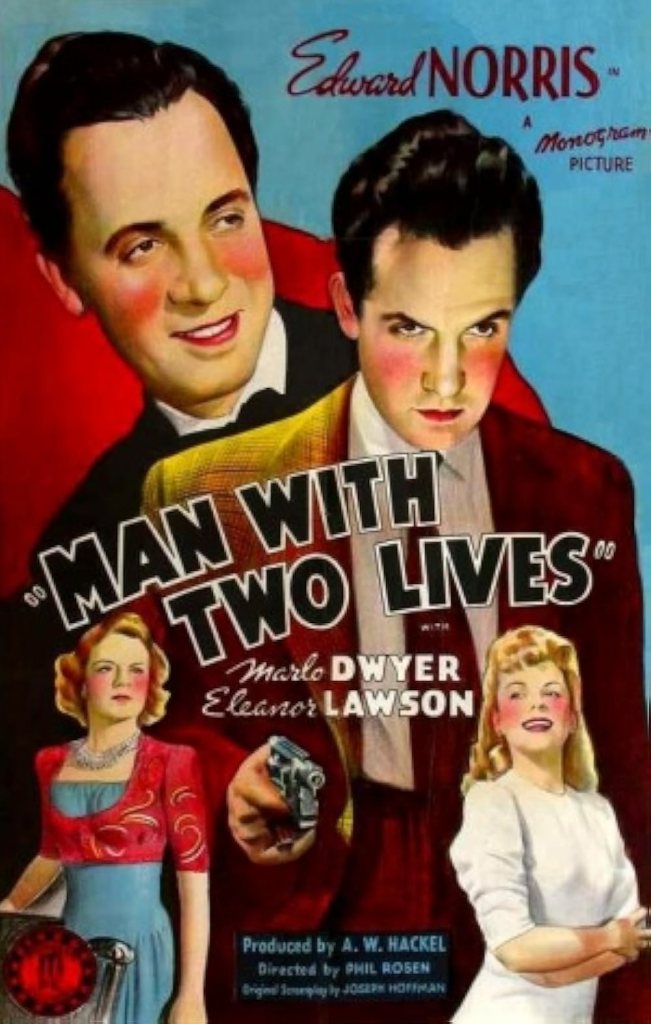
Man with Two Lives (1942)

Directed by Phil Rosen [Other horror films: Spooks Run Wild (1941), Mystery of Marie Roget (1942), Return of the Ape Man (1944), Black Magic (1944), The Jade Mask (1945)]

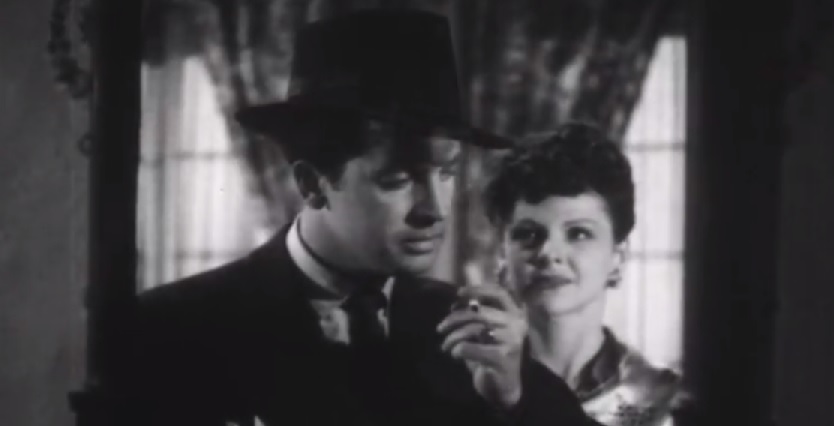
This is an interesting one. Man with Two Lives can be a pretty decent movie – if you’re into the classics – but I do think that if you’re a fan of classic horror specifically, and come into this one expecting something like The Walking Dead, you’ll be a bit disappointed.

The thing is that the means of the story are couched in what you’d expect from a horror film, but the final product generally feels more like a crime movie than anything else. I guess before I go on, I should get into the plot and explain what I mean.

Man with Two Lives follows recently-engaged Philip Bennett (Edward Norris) as he has a car accident, and dies. Luckily, a family friend, Doctor Clark (Edward Keane) has been doing experiments regarding bringing hearts back to life after death, and after Philip’s father and brother (Frederick Burton and Tom Seidel) plead with him, and against the warnings of another family friend, Professor Toller (Hugh Sothern), Clark does just that.

Troubles arise, though, when it turns out that this experiment – bringing Philip back to life – happens at the exact same time the violent gangster Panino is executed for his crimes. When Philip does regain consciousness, he has no memories of his life, and begins exhibiting violent, gangstery qualities unbecoming of a young man from means, including going to shady bars, taking over a gang, and killing police officers just because it brings him joy.

As you can potentially tell by my description, much of Man with Two Lives follows a man who’s leading a gang. The way this man came to be in control of the gang – a possible migration of the soul – may be rooted in what you’d expect from some horror, but the outcome feels like a crime film throughout large portions.

None of this is to say that the film isn’t good or without suspense. In fact, the finale is extraordinarily tense in a way that no previous portion of the film has been. Sure, we see a character get strangled earlier on, but we also get the sense that that specific character definitely wasn’t long for the world, so I wouldn’t call that sequence suspenseful. The finale, though, which is sort of a culmination of the family’s investigations into where Philip disappears to days on end, is fantastically done.

I will say that Edward Norris did great with his double-role, of sorts. As a gangster, he was pretty solid, and it was fun to watch. After Norris, I think the most important cast members become Edward Keane and Frederick Burton, both of whom spend time trying to figure out why Norris’ character is acting so differently after being brought back to life.

Some aspects of Hugh Sothern’s character were hard to like – his insistence, for instance, that there is in fact such a thing as a soul because all religions and philosophies agree on its existence – but that’s on his character, not the performance, which I thought was good. Others who don’t really impact things as much as you may think include Marlo Dwyer, Eleanor Lawson, Tom Seidel, and Addison Richards (The Mummy’s Curse, Strange Confession), though Richards does have a strong sequence near the end.

As you could expect, the film also goes into the whole “man should not get involved in what’s best left to the Creator” tripe that was all-too-common in movies from that time period, such as Frankenstein. It was a different time, and perhaps back then people didn’t understand that before you make the claim that man shouldn’t interfere with God’s will, they first need to prove the existence of a God, along with a way to determine what his ‘will’ is, neither of which has been done to this day.

Overall, though, Man with Two Lives is a solid film. For someone looking for a traditional horror film of the 30’s and 40’s, I don’t think this will hit the right spot, but if you’re into something a bit different, with a nice crime feel permeating throughout, Man with Two Lives may well be worth a watch.

7/10

The Invisible Man’s Revenge (1944)

Directed by Ford Beebe [Other horror films: The Phantom Creeps (1939), Night Monster (1942)]

I found myself feeling somewhat lukewarm toward The Invisible Man Returns, and I have similar feelings for this one. The Invisible Man’s Revenge isn’t without some decent ideas, but especially toward the end, I find myself losing interest.

Part of this is because I found myself on the Invisible Man’s side. Played by Jon Hall (and not becoming invisible until something like 20 minutes into the movie), he was cheated out of money by a wealthy couple (Lester Matthews and Gale Sondergaard), and despite a signed agreement, they refuse to pay him back. To be sure, Hall’s character wasn’t the most stable, but he did have rights to some of the money, and so we’re supposed to root against him?

It wasn’t so much Matthews’ character that bothered me as it was Sondergaard’s – she obviously had no intention of paying back any owed money to the man, and would have been happy to kill him herself if she had any plausible way to get away with it. When the so-called antagonist is in the right, it just sometimes makes movies harder to play ball with.

There were also a few moments of amusing mirth that I probably could have done without. Most of Leon Errol’s dialogue pegged him for comic relief, and he was good at it. He cracked me up a handful of times, and he was good fun. The scene in which he wins at darts, though – with the help of the Invisible Man, who’s running the darts from his hand to the bullseye – went on too long and felt wholly unnecessary. The first time was sort of funny, but he threw three more darts in increasingly improbable ways, and at that point, the fun was draining from the sequence.

I do think, though, that Leon Errol was one of my favorite characters, though. Jon Hall (The Beach Girls and the Monster) was a decent lead, but Errol was simply more fun. It was also fun seeing John Carradine (Voodoo Man, Revenge of the Zombies) here – his scientist character had charm, though I have to say that his house – which held a bunch of invisible animals – also felt a bit on the silly side.

I couldn’t stand Gale Sondergaard’s (The Spider Woman Strikes Back, Savage Intruder, The Cat Creature, The Climax) character – she was just awful, and deserved to get got. Lester Matthews (Werewolf of London, The Mysterious Doctor, The Son of Dr. Jekyll, The Raven) was more bearable, but I personally thought that both Alan Curtis and Evelyn Ankers (Jungle Woman, Captive Wild Woman, The Mad Ghoul, Son of Dracula, The Frozen Ghost) were shallow, and neither, in my eyes, added a lot to the film.

Certainly the special effects here were decent, and perhaps more advanced than they have been in previous films, but there’s also not really that much of interest, as far as the story goes, in the second half of this. I mean, the Invisible Man’s titular revenge lasts just 15 minutes or so, and then he becomes visible again, and it just wasn’t doing it for me.

I don’t think it’s a terrible movie, but it definitely lacks the charm of the 1933 classic. Also, given that Vincent Price doesn’t appear as he did in The Invisible Man Returns, we don’t have his charm to fall back on either. It’s fine, I guess, but I doubt it’ll be watching it again in the next 50 years, and it doesn’t seem to me that it’ll really stand out in my memory.

6.5/10

Shinshaku Yotsuya kaidan: kôhen (1949)

Directed by Keisuke Kinoshita [Other horror films: Yotsuya kaidan (1949)]

Now this is what I’m talking about.

Shinshaku Yotsuya kaidan: kôhen, best known as The Ghost of Yotsuya: Part II, follows the first part and continues the tragic stories of those involved. I was lukewarm toward Part I, because it felt largely like a drama, with little in the way of what I’d consider horror. Here, though, the action is amped up, and there are some really great sequences here.

The whole finale, for instance, was great. Not only was it action-packed – a lot of fights taking place in a house that’s burning down – but there was some great emotional resonance from Ken Uehara’s character, especially taking into consideration what the crowd was saying the following moment (another stellar scene). And even a bit before the finale began, we got revealed a twist that I certainly didn’t see coming from Osamu Takizawa, and I loved it.

Osamu Takizawa is probably the star here. His sleazy portrayal of a man who will do anything and everything to get ahead is great, and his manipulations of Ken Uehara, Haruko Sugimura and Aizo Tamashima were classy. Ken Uehara does fantastic also, suffering from a guilty conscience most of the movie following what he did in Part I. The ending, as I said, really brought a lot to his character, moral and otherwise.

I did think both Kinuyo Tanaka and Daisuke Katô would be more involved with the story, but while they do appear from time to time, they’re not really that entwined with everything going on, aside from Tanaka’s failed attempt to speak with Uehara. Oh, and the same could be said for Hisako Yamane – save a few sequences, she was pretty much invisible, despite the fact that everything Uehara’s character did in Part I was so he could get married to her. I did like seeing Chôko Iida come back, and Aizo Tamashima got some prominent time on screen, which was nice.

I still don’t think the movie’s amazing, though. Sure, Uehara’s character had some visions and acted insane a lot of the time, but I sort of expected more supernatural phenomena as opposed to a guilty conscience playing tricks on someone (à la The Bells or The Avenging Conscience). It’s possible that there were supernatural events going on, of course, but it was more subtle than you might expect.

Still, The Ghost of Yotsuya: Part II was better than the first part, and I also really do find the ending quite good. Overall, I’d say it’s a better-than-average movie, but not one that I’d revisit often. For early Japanese horror, though, this was fun to watch.

7.5/10

Yotsuya kaidan (1949)

Directed by Keisuke Kinoshita [Other horror films: Shinshaku Yotsuya kaidan: kôhen (1949)]

Yotsuya kaidan is not an easy movie to talk about. Part of this is because it’s the first movie in a two film series, and so seems to be primarily set-up to the conflicts in the second part. It’s not that things don’t happen, but most of the action here takes place at the end. It’s also barely horror, which is problematic.

I guess if you want to get technical, there is horror in trying to poison your wife, and a character getting their face disfigured by scalding hot water, or a woman needing to deal with the unwanted attention of a man, or being stuck in a loveless marriage while there are potentially better opportunities out there. Admittedly, this paragraph started off as glib, because while some of this could conceivably be horror, it’s not the easiest case to make.

Here’s what I can say: after a character’s face gets burned by some water, there’s a suspenseful scene toward the end as the character keeps asking for a mirror, but a horrified servant doesn’t want to give them one. It’s a pretty tense scene, and when we do finally see the face, it’s certainly disfigured, so that’s horror enough to count, amiright??

Mostly, though, Yotsuya kaidan (also known as The Yotsuya Ghost Story and The Ghost of Yotsuya: Part I, and apparently also The Yotsuda Phantom – you can see why I also use the original foreign titles over any re-titles) is a romantic drama. It’s a dark drama at times – there’s a character who consistently tries to get a character to kill his wife so he can move up in the world – but it’s still mostly a drama.

It’s well-done. Some of the acting is quite melodramatic, but that might partially be due to the Japanese culture, which, at least as presented here, seems quite reserved. Instead of having a conversation about important topics, someone’s wife just wails and proclaims that they ‘must never speak of it again.’ Because that works, I’m sure.

The performances are pretty good, though. Ken Uehara’s moral struggles are palpable here, and even toward the end, he has only so much agency insofar as things go. Osamu Takizawa’s slimy character was solid. Keiji Sada (who died in a car crash at the young age of 37 in 1964), who I thought was going to be the main character, was perhaps one of the most moral characters here. Kinuyo Tanaka (who plays two roles here) was a bit dramatic at times, but again, that may be the Japanese culture. Lastly, there’s Hisako Yamane, who didn’t really get that much character here, but that may change with the second part.

And that’s the main thing. Like I said, plenty of emotional things happen in this movie, but it ends on a cliffhanger (think the end of Hatchet, only far less dramatic), so it’s not an easy movie to judge on it’s own. Certainly it’s a moody, black-and-white picture with some issues of dark morality, but I’m far more interested in where the story is going – likely with some supernatural ghost action – than the focus we got in this movie.

Yotsuya kaidan isn’t a bad movie, but it’s also not particularly easy for me to say it’s a good movie. If you’re into dramas, or Japanese period pieces, it may well be worth seeing, but if you’re coming into this from the perspective of ‘I want to see some classic Japanese horror,’ this may not provide the best time. It’s an okay watch, but I want to see where the story is going before anything else.

6/10

The Boogie Man Will Get You (1942)

Directed by Lew Landers [Other horror films: The Raven (1935), The Return of the Vampire (1943), The Mask of Diijon (1946), Inner Sanctum (1948), Terrified (1962)]

Despite the encouraging title, this horror-comedy mix doesn’t really do a whole lot to stand out. Sure, it has some good performances, and some occasionally wacky moments, but I don’t think it’s enough to solidify this as any type of classic. It’s serviceable, but little more than that.

The plot follows a young woman (Jeff Donnell) as she buys an old house, with the intention to convert it into an inn, all while dealing with a doctor doing experiments in the basement, mysterious disappearances, a town official who gets a bit nosy, and plenty of traveling salesmen. Oh, and what seemed to be an Italian fascist toward the end, which was an interesting addition.

Actually, it’s on that note that I should say much of the film’s plot revolves around the then-ongoing World War II – the scientist’s experiments are designed to create a super-soldier, someone seems as though they could be a spy, and there’s even a munitions factory in town, causing a delay when the police are finally called to the hopeful inn.

The central cast – and by central, I mean two – are great, being Boris Karloff and Peter Lorre. Karloff (The Strange Door, The Mummy, Frankenstein 1970, The Man They Could Not Hang) does amusingly as a somewhat absent-minded scientist type of good intentions, and Lorre (You’ll Find Out, Mad Love, The Comedy of Terrors, The Beast with Five Fingers) was even better playing a sheriff/mayor/investor/loan shark. I think Lorre probably brought more to the film than Karloff did, but it was great to see the two of them.

Technically, Jeff Donnell (The Unknown) and Larry Parks might be more the central characters, or at least the primary protagonists, but I didn’t really care for either one’s character. Maxie Rosenbloom and Maude Eburne (The Vampire Bat, The Bat Whispers) provided some of the comedy here, but it mostly fell flat to me. Frank Puglia’s character felt like a random add-on, but I will admit that Don Beddoe’s character did interest me.

Certainly a couple of lines were amusing, my favorite being when Karloff was showing Lorre five bodies of failed experiments, and explaining that there were traveling salesmen, pointing one out as selling encyclopedias, to which Lorre replied “I’m sure he didn’t mind.” There were a few other laughs to be had, but like I said, I personally think a lot of the comedy fell somewhat flat.

It’s not a bad movie, though. Sure, The Boogie Man Will Get You isn’t likely to stand out aside from the fact it has both Karloff and Lorre in it, but it’s still serviceable as a horror-comedy mix. It’s digestible too, at only an hour and seven minutes.

If you enjoy the classics of the genre, and are looking for something you’ve perhaps not seen, this might be worth a look, but I don’t really think it’ll end up being that memorable, all things considered.

6/10

The Spider Woman Strikes Back (1946)

Directed by Arthur Lubin [Other horror films: Black Friday (1940), Hold That Ghost (1941), Phantom of the Opera (1943)]

Perhaps one of the earliest examples of what I’d label botanical horror, The Spider Woman Strikes Back is a decent film, short, digestible, and with a solid atmosphere and occasionally creepy vibe. Not that it’s stellar, but it’s a solid little film.

I speak a bit about my enjoyment of botanical horror in The Ruins – I think it largely has to do with growing up on the book and two-part episode of Goosebumps titled Stay Out of the Basement!, which was always one of my favorite Goosebumps stories. The idea of plants consuming blood, or flesh, or attacking, just has a creepy vibe to it, and while I can’t explain it any better than that, it’s always been something I loved.

To be clear, there’s no plant attacking anyone in The Spider Woman Strikes Back. This isn’t The Revenge of Doctor X. However, there are sequences of a plant being fed blood to keep it strong, and while it’s true Gale Sondergaard deals with spiders, she uses them to feed plants (when she’s not using blood), so really, this should be The Plant Woman Strikes Back.

Of course, this is sort of meant to mimic a sequel-in-name-only, or a spin-off, of the 1943 mystery/thriller film The Spider Woman, which also starred Gale Sondergaard. Aside from Sondergaard’s presence, there’s no relation, so that just adds to the fun. Really, though, this movie, despite the somewhat confusing title, does have a decent amount going for it, so it’s a shame some people might shy away because they think it’s a sequel to something else.

The story is pretty basic, but it’s also somewhat atmospheric. Now, I did watch a rather scratchy print of this one on YouTube, which is amusing, because there’s actually a 1080P HD version I didn’t notice until after I watched the version with ten pixels. Even so, I had a pretty good time with it, and while I wish the finale had been a bit better (especially regarding Rondo Hatton’s character), it was pretty good for a 40’s horror film.

Brenda Joyce (Strange Confession, Pillow of Death) made for a fair lead, but like many women of the time period, her character’s only given limited agency. Gale Sondergaard (The Climax, Echoes, Savage Intruder, The Cat Creature, 1939’s The Cat and the Canary) had a sinister aura to her, so no complaints there. Neither Kirby Grant nor Milburn Stone (Captive Wild Woman, The Frozen Ghost, Strange Confession) do that much, but Stone’s character had some potential.

It’s Rondo Hatton I have the biggest issue with. He’s a familiar face (having been in movies such as The Jungle Captive, House of Horrors, and The Brute Man), and his performance is perfectly solid, playing a mute servant of Sondergaard’s character. I saw inklings of his character fighting for his independence, but come the end, they don’t really do much with it. Hatton’s performance was good, but they could have done a bit more with the character.

When it comes down to it, I can’t say that The Spider Woman Strikes Back is an amazing movie, but I did find it a good, quick way to spend an hour. At 59 minutes, it’s digestible, it’s decently fun, and while it could have been a bit better, it’s not at all a bad watch. If you’re into classic horror, this may well be worth a watch.

7.5/10

Dead of Night (1945)

Directed by Alberto Cavalcanti [Other horror films: The Halfway House (1944), Dead of Night (1945)], Charles Crichton [Other horror films: N/A], Basil Dearden [Other horror films: N/A], & Robert Hamer [Other horror films: N/A]

While a classic of both British horror and anthology horror, I have to admit that Dead of Night has never been a film I think about too often. It’s a decent film, and possesses both a solid framing sequence and a few solid stories, but overall, I think the movie is just okay.

It’s not the first anthology horror, of course – even if you’re hesitant about counting Waxworks (which I could understand), there’s the 1919 German film Unheimliche Geschichten (or Eerie Tales). Like many anthology films, it’s uneven, much like Dead of Night tends to be, but there is plenty to appreciate about this one.

The framing sequence is pretty good, and even a bit more involved than many framing stories you’d later see in Amicus films (Tales from the Crypt, Torture Garden, The Vault of Horror). It’s a good framing sequence with a fun conclusion and decent ideas, which is definitely not something you see in every anthology (though I like the film overall more, compare the framing story of Screamtime to this one).

Of the five stories (‘The Hearse Driver’, ‘The Christmas Party’, ‘The Haunted Mirror’, ‘The Golfer’s Story’, and ‘The Ventriloquist’s Dummy’), I’d say only two are quite good, being ‘The Hearse Driver’ and ‘The Ventriloquist’s Dummy.’ ‘The Hearse Driver’ is really simple, but I enjoyed how it went, and it had a great Twilight Zone vibe to it. ‘The Ventriloquist’s Dummy’ is a longer story, but the ending to it, reminiscent of both Psycho and Pin, was quality.

And to be fair, ‘The Haunted Mirror’ isn’t shabby. It’s just that I wanted a bit more meat. I don’t know where the additional protein would have been derived from, but it was a solid story, and I just wanted a bit more. It’s also within reason to say ‘The Christmas Party’ is okay, though it’s somewhat derivative and more spooky than scary, and I feel like the story’s been done better.

‘The Golfer’s Story’ isn’t without potential, but as anyone who has seen the movie knows, it leans toward a more comic tone. There’s a ghost who can’t properly disappear, and he and the man he’s haunting have to try and make the best of the awkward situation, especially as the man is getting married, and doesn’t want to make sweet love to his new wife in front of a ghost. We’ve all been there, guys. For a comedy story, I guess it’s okay, but I didn’t care for it, as I’m not one who wants silly stories mixed up with his horror.

Somewhat amusingly, there’s no performances, save Michael Redgrave’s, that really stood out. Redgrave did great in ‘The Ventriloquist’s Dummy’, and it’s probably a big part as to why that story is one of the most memorable things of the film. Frederick Valk and Sally Ann Howes are decent, but when it comes to great performances, it’s really just Redgrave and maybe Miles “‘Just room for one inside, sir,’” Malleson.

Anthology horror films are hard to get right, because so often, there’s a story or two that just cut it. It’s the same with Dead of Night – the framing story is solid, and it does possess some good segments – but overall, Dead of Night is just okay. I thought it the first time I saw it, and I’ve thought it each time I’ve seen it since.

6/10

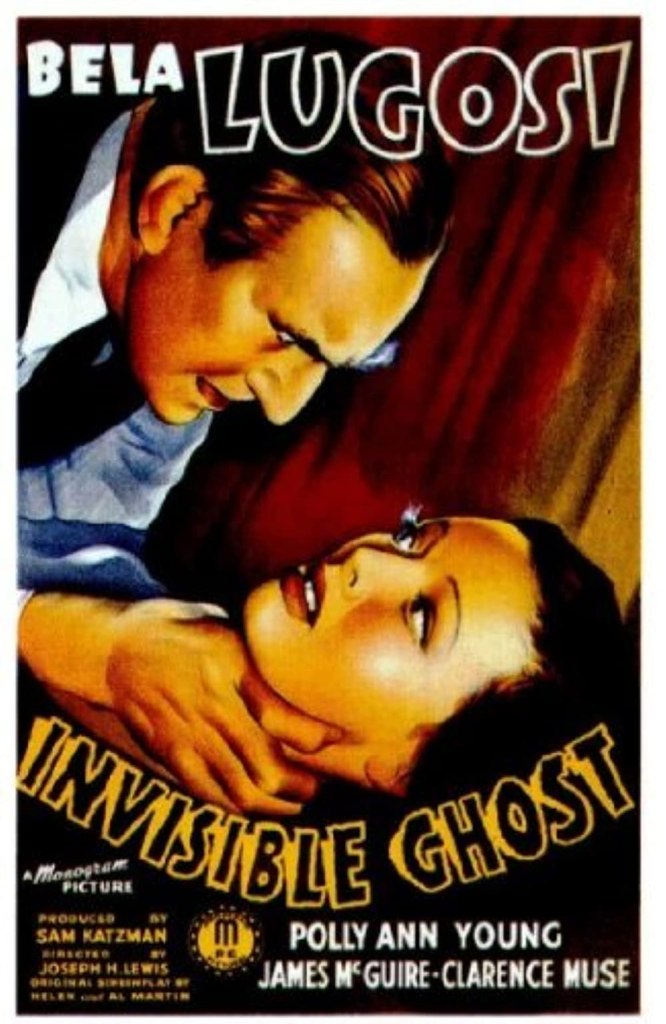
Invisible Ghost (1941)

Directed by Joseph H. Lewis [Other horror films: The Mad Doctor of Market Street (1942)]

I have a mildly fun story relating to this movie: I’ve seen Invisible Ghost once before (it’s even possible I’ve seen it twice, but I think it was just once), and the only thing I remembered about it was the opening. I mean, I remembered the opening with 100% clarity, but literally anything past that, I didn’t have an inkling.

To this day, I’m not sure why that was the case. Perhaps I fell asleep during my first viewing – it’s happened before, especially in October, when I can consume quite a bit of horror. Whatever the case, Invisible Ghost isn’t near as forgettable as my anecdote might make it sound. It’s not one of the classics, by any means, but it is a nicely serviceable film.

I appreciate how the film takes a somewhat psychological approach to the murders that are plaguing a household. I do wish that they added a little depth and explanation in the ending, as we’re not really told why the murderer is committing these murders, but either way, it is nice to have a different solution than so many other horror films from the same time period.

Bela Lugosi, of course, was a pleasure to see in this. Lugosi (The Devil Bat, Dracula, Night of Terror, and many others) did quite well, especially toward the end, as a somewhat tragic figure. Clarence Muse (White Zombie and Black Moon) is a strong runner-up – despite playing a servant (as so many black men had to do back then), I enjoyed his characterization as one of the thoroughly competent characters here. Polly Ann Young and John McGuire (in a dual role) both did decent, and McGuire had some strong moments, but I don’t know if he’ll end up being memorable.

Really, Invisible Ghost as a whole may not end up being that memorable, but I do think the story is decently strong, and as the film is just around an hour and change, it’s pretty digestible. I do enjoy the more suspenseful sequences, not to mention the answers presented, but I just wish they added a little more in the finale.

For a short and cheap film, Invisible Ghost is okay. It’s far from a classic, but it’s watchable, and though it may not stand out all that well, if you want a Bela Lugosi performance you’ve perhaps not yet bore witness to, you could certainly do worse than this.

6/10

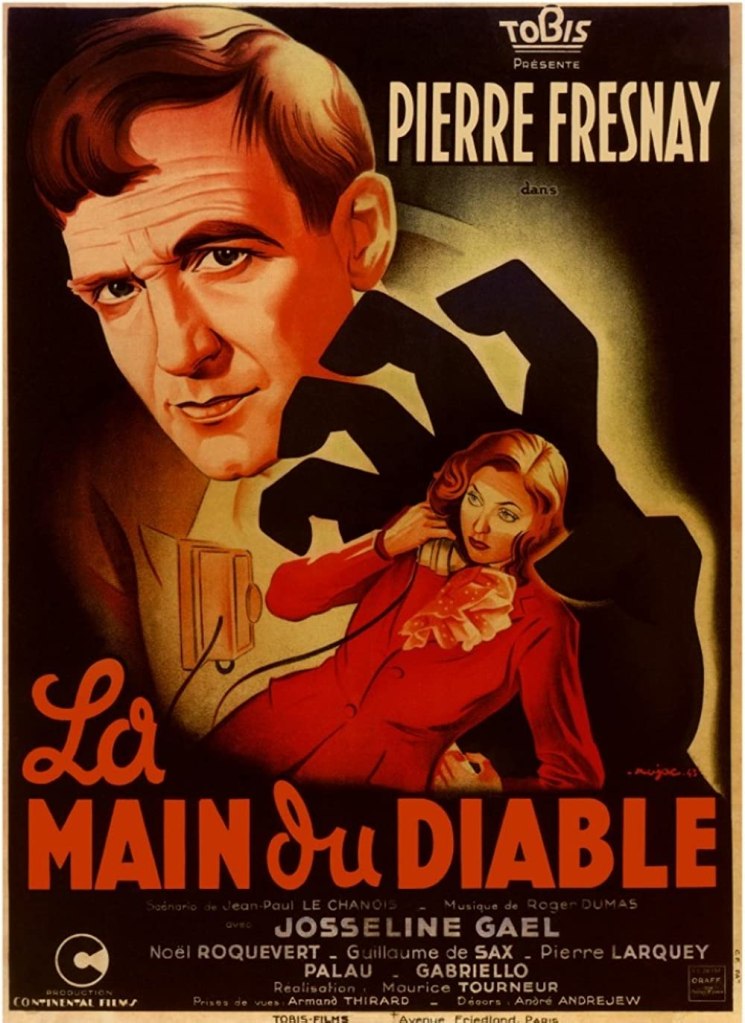
La main du diable (1943)

Directed by Maurice Tourneur [Other horror films: While Paris Sleeps (1923)]

This will be a somewhat quick write-up, if for no other reason, I just don’t have too much to really say about this French classic.

Sometimes known as Carnival of Sinners, this movie was another take on the whole deal-with-the-devil idea. As far back as Der Student von Prag, this has sometimes been an element in horror movies, so it’s not the most original content, but it is done quite well here, with a talisman being passed off from one person to another, and the central character here (Pierre Fresnay) tells the whole sordid story to a group at an inn.

To be fair, the movie feels more like a fantasy than it does a horror film for much of it, so it makes since that some of this wouldn’t be quite as interesting to me. To add to that, certainly that’s nothing to hold against the film – while I myself am not much a fantasy guy, plenty of people are, and given the rating this holds on IMDb (7.4/10), it’s fair to say I’m in the minority.

There are some clever things in the film, especially during a scene toward the end when we learn about each of the previous men who at one time possessed the talisman. Their origins are sort of told as though they’re plays, and it looked quite nifty, and the type of thing newer films wouldn’t really be able to replicate.

Pierre Fresnay was good as the lead, and Noël Roquevert (Diabolique) has some good scenes early on, but I think if there’s anyone who stands out, it’d have to be Palau, who played the Little Man (or, in terms more commonplace, the Devil). He had that charming personality that a Devil should have, and I think Palau had a good time playing the part.

With that in mind, La main du diable primarily felt, to me, like an extra long episode of The Twilight Zone. It just has that type of vibe, and while that’s not a bad thing, deal-with-the-devil stories aren’t really my preference, and so, while I appreciated plenty of technical aspect of the film, I can’t say it’s a French film I’d want to spend too much time with in the future.

I did think it was interesting, though, that this was directed by Maurice Tourneur, who is the father of Jacques Tourneur (the individual who directed classics such as Cat People, The Leopard Man, and I Walked with a Zombie), so while this isn’t a movie I was that fond of, I definitely appreciate other contributions his family made.

6/10