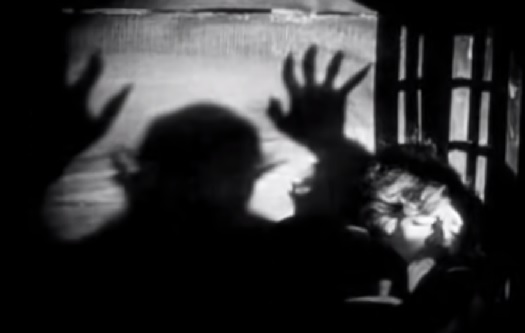
The Last Performance (1929)

Directed by Pál Fejös [Other horror films: N/A]

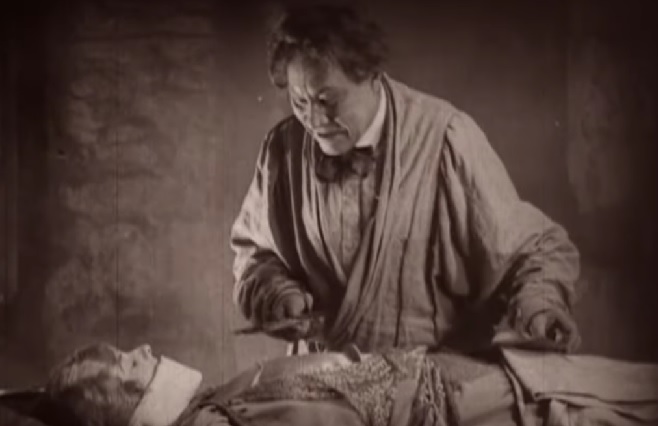
I can’t remember much about the first time I watched this late silent movie. I know I watched it in October, and those are always busy months for me, so I likely forgot a lot of it just a couple of days after watching it. Seeing it again, I do think I’ll remember it better, but it’s not a movie I think is that great.

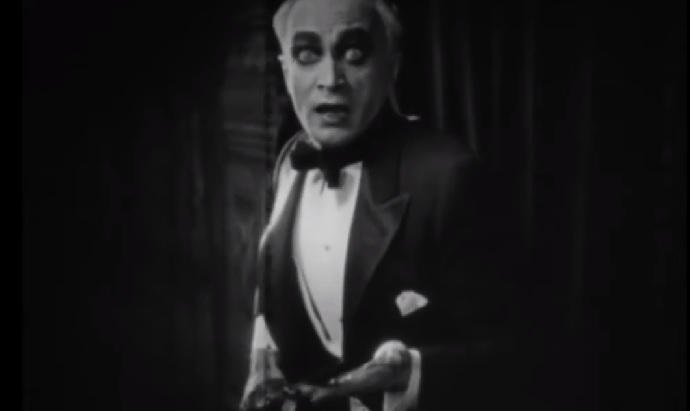
No doubt it’s okay. Conrad Veidt (The Hands of Orlac, Eerie Tales, The Student of Prague, Waxworks, The Cabinet of Dr. Caligari, The Man Who Laughs) is a staple of silent horror, and he does well here. Likewise, Mary Philbin (The Phantom of the Opera, The Man Who Laughs) is another recognizable face, though her character here isn’t great. Leslie Fenton (The House of Secrets) and Fred MacKaye were important to the story, but neither performance was a standout.

The story – a hypnotist and magician gets revenge on a woman who left him for another man – is pretty much what you’d expect from a movie of this era, and while the sword trick was fun, the ending here just didn’t do it for me. I guess it makes sense – Veidt’s character was a magician, and thus used to being a showman – but the repentance he displayed struck me as odd.

It should also be said that the version I watched was about an hour long. According to IMDb, there’s a version that’s an hour and 8 minutes long – what those extra eight minutes possess, I don’t know, and I also don’t know if the full version is available, but I am aware that what we’re seeing here isn’t the full story. That said, it all makes sense, which I can’t say for Genuine, so that’s at least good.

The Last Performance isn’t a bad movie, it’s just not something that I think will come to mind when it comes to silent horror. Of course, it may partially be due to the fact the horror here is somewhat light, but unlike The Mad Genius, it’s not difficult to see.

Overall, The Last Performance is okay, but nothing more, and when it comes to silent horror, definitely not memorable enough to really warrant a mention, in my view.

6.5/10

The Monster (1925)

Directed by Roland West [Other horror films: The Bat (1926), The Bat Whispers (1930)]

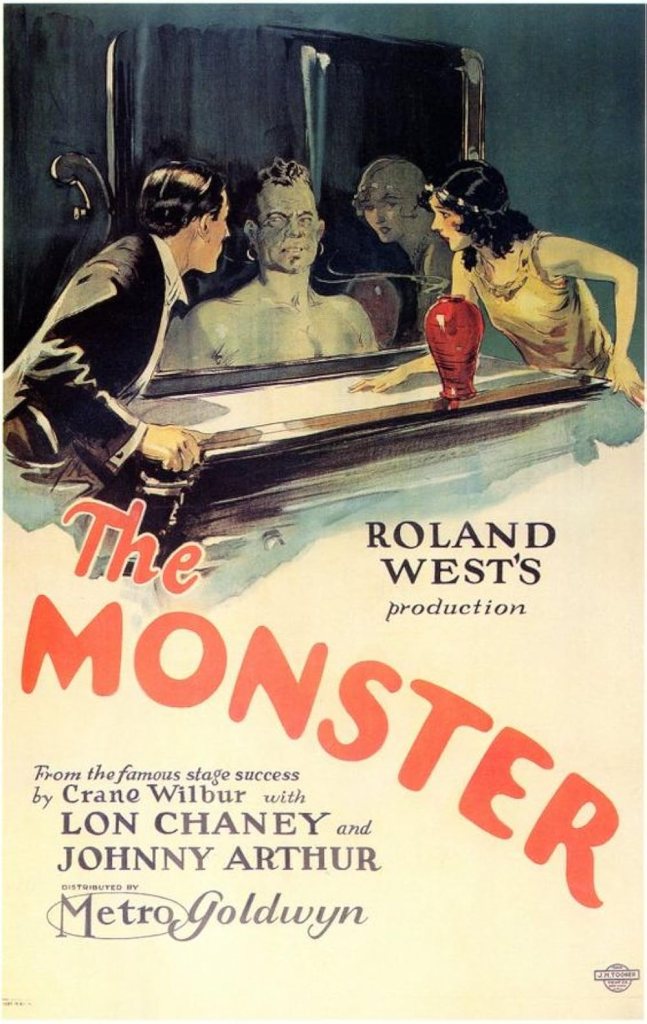
While The Monster is a decent movie, I wouldn’t go as far as to call it a classic. It’s an okay silent film, certainly watchable, but when it comes to silent horror, it’s not one that I’d go back to all that often, and I think it falls somewhere around average.

I think my biggest issue is that, for a forty or so minute period, not much seems to happen. Three characters are trapped in a room, and spend that time trying to get out. It’s not quite as dire and dull as it sounds – one of the characters explores a secret passage while the others deal with poisoned wine and a thieving surgeon – but even so, it was a bit trying to get through.

Generally, the story’s not bad, even with the humorous tilt the movie tends to have. I enjoy abandoned sanitariums and creepy doctors (Lon Chaney), and this movie has that in spades. Actually, it’s one of the earliest old dark house mystery-type films (though I’d need to see One Exciting Night to be sure), and for that reason alone, it’s fun. That said, if you have a hankering for comedic old dark house movies, The Cat and the Canary is likely much preferred.

Lon Chaney (The Hunchback of Notre Dame, The Phantom of the Opera) does make for a threatening mad scientist. I dug his performances, though neither of his minions – the strong mute Caliban (played by Walter James) and the creepy Rigo (Frank Austin) – really got much character. That said, Rigo did have a creepy look to him. Johnny Arthur (The Ghost Walks) was an okay lead, but sometimes it got a bit old with how jumpy he was. Gertrude Olmstead and Hallam Cooley made for fine side characters, and Charles Sellon looked ancient (despite only being around 55 when this came out).

The last twenty minutes of this are pretty action-packed, and despite being a comedy/horror mix, there wasn’t much comedy infused into the antics toward the finale. There was a scene that had Johnny Arthur’s character walk across power lines as though they were tightropes – holding a long stick to help with balance – during a lighting storm. At first, I sort of groaned when I saw the set-up, but that scene wasn’t played for laughs – the score was suspenseful, and though it looked ridiculous, the lack of jaunty music actually helped me appreciate it more.

I have seen this one once before, though I can’t recall too much about that viewing. I suspect I was somewhat bored by some of it, as it didn’t make much of an impression on me. Even today, I do think portions overstay their welcome – though I will admit to being amused when Johnny Arthur’s character accidentally got intoxicated.

The Monster is an okay foray into silent horror. I don’t think it’s a particularly good movie, nor do I think it’s necessarily memorable, but it’s not bad, and as the kids say, that means it’s average.

7/10

The Phantom of the Opera (1925)

Directed by Rupert Julian [Other horror films: Creaking Stairs (1919), The Cat Creeps (1930)], Lon Chaney [Other horror films: N/A], Ernst Laemmle [Other horror films: N/A] & Edward Sedgwick [Other horror films: Beware Spooks! (1939)]

When it comes to silent horror, The Phantom of the Opera has never been one of my favorites. Oh, it’s a pretty solid movie, and if you’re into silent horror, or looking to get into silent horror, it’s most definitely worth seeing, but there are other silent films I’d personally prefer to spend time with, such as The Last Warning and The Cat and the Canary.

Some of this may have to do with Mary Philbin’s character Christine. She’s an understudy to another opera singer, but a mysterious voice beyond her dressing room wall has been championing her, making her climb up the opera ladder easier. And Christine is completely okay with it. Apparently unknown voices that advance your career are a-okay in her eyes. She even willingly refers to him as her ‘Master,’ and vows to be his.

Well, until she found out he wore a mask, then all of the sudden the Phantom’s the bad guy. To be fair, Christine didn’t know the voice in question was the Phantom, but regardless, she didn’t seem to care, nor do we see her ask much up front about the mysterious voice calling to her from her mirror. She’s completely fine with it, and I 100% believe that if the voice came from a typical handsome man, Christine would have continued willingly calling him ‘Master.’

Perhaps this isn’t a critique of Christine’s character at all, but more the sexist way in which the character was written. Either way, the idea that she’s okay with her career being advanced and willingly calling unknown voices ‘Master,’ then getting upset when the unknown voice comes from a man wearing a mask – the character just pisses me off. The Phantom, a generous guy named Erik, tries to explain to her about himself, but Christine doesn’t listen, and later calls him a ‘monster.’

Looking different from other people doesn’t make someone a monster. I get the sense that Christine has absolutely zero empathy and, based on her being okay with her career being advanced by the voice, a huge sense of entitlement.

I don’t like Christine as a character at all, and that was my biggest hurdle to fully enjoying this one. I mean, otherwise, it’s a pretty charming silent horror with some great set pieces, good tension, deeply memorable scenes, and a decent finale.

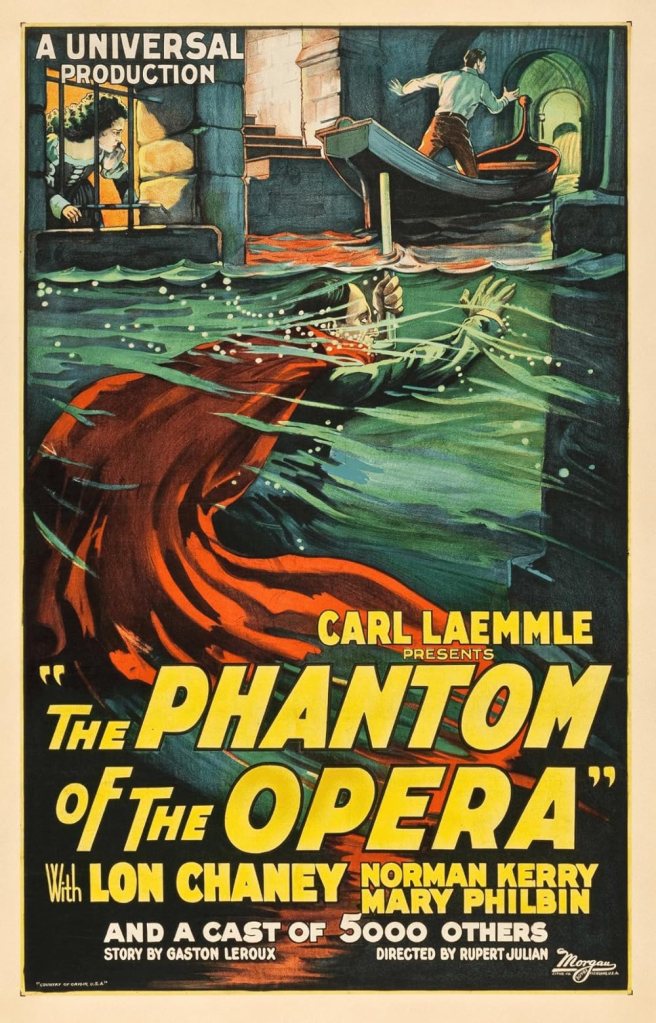
The Paris Opera House itself looks quite grand (and I didn’t know this until today, but it’s apparently the same opera house as was used in Dracula), but what’s more interesting is what’s beneath the Opera House, being a pleasant underground lair of the Phantom (and actually, on a side-note, throughout much of the film, I couldn’t help but compare it to V for Vendetta). I especially enjoy the underground lake, and the Phantom’s use of a bamboo stick-type thing that he uses to breathe with as he strolls along underwater (used to great effect as he attacks someone in a boat too near his lair).

Perhaps without question, the most famous sequence in the film is when Christine creeps up behind the Phantom and pulls his mask off whilst he’s playing music – despite being warned against this very act just minutes before – and finally revealing his face to the audience (and Christine, to her privileged shock). It’s a good, tense moment, and the make-up looks stellar.

Another scene that I have to mention is the Bal Masque de l’Opera sequence, or the Masque Ball. The version of this movie I’ve seen always has this sequence in early Technicolor – think Doctor X, only rougher – and it looks beautiful. It’s made even more beautiful by The Phantom, as so many things are, as he strolls in dressed as the Red Death and admonishes them their merriment while they’re dancing over the skeletons of the tortured who died in the catacombs below. He’s what I like to call a buzz-kill, but hey, he has his issues and he’s speaking to them, so who can complain?

It’s a solid sequence, followed by him standing atop a statute on the roof of the Opera House as Christine and her lover (not her mysterious, voice-in-the-wall lover – she’s over him by this point) Raoul (played by Norman Kerry) plot to get away from The Phantom’s grasp. What’s cool about this scene is that it’s tinted as Christine and Raoul speak, as most of the movie is tinted, but when it goes to The Phantom overhearing, it’s still technicolor. It looks stellar.

Lon Chaney (The Monster, London After Midnight, The Penalty, The Hunchback of Notre Dame) did fantastic as The Phantom, who truly is the victim here in many ways. He has a grandiose and power to him, and his expressive nature works wonderfully. He’s also quite amusing at times, such as his lines about “Callers” near his lair. I don’t like her character, but Mary Philbin (The Man Who Laughs, The Last Performance) does well with what she has, though I don’t find her terribly sympathetic.

I can’t say that I ever got much of a sense of Norman Kerry’s (also of The Hunchback of Notre Dame, along with The Unknown) character – he seemed like the generic, manly man willing to fight for the woman he loved. I did like Arthur Edmund Carewe’s (Doctor X, Mystery of the Wax Museum) character, though. He doesn’t appear much until the end, but he’s of quality stock.

Overall, the finale was solid also. People were storming the catacombs after The Phantom kills the wrong man, characters trapped in an underground torture chamber, soon to die due to high levels of heat – there’s just a lot of action come the ending. I even like how The Phantom goes out – he gets one last jab in before the mob deals out their illegal brand of “justice.” I should mention that I’m glad the mob was there because The Phantom killed a working man’s brother, as opposed to abducting a privileged woman. I didn’t agree with the mob’s actions, but their hearts were in the right place.

Like I said, The Phantom of the Opera isn’t my go-to when it comes to silent horror. It’s a decent movie, and certainly one that’s above average, but as far as personal enjoyment goes, I don’t love it. Still, if you’re in the mood for a silent classic, or you want some classy Phantom action, than this movie may be worth seeing if you haven’t already.

7.5/10
Körkarlen (1921)

Directed by Victor Sjöström [Other horror films: The Wind (1928)]

I won’t mince words – it’s hard for me, personally, to argue that this Swedish classic is a horror film. No doubt it’s a great film, but horror? That’s not an easy case to make for me, but luckily, I have liberal definitions of the genre, and while this might be straddling the line, ultimately I think it can fit.

Obviously, as anyone who has seen The Phantom Carriage (the title it’s best known under) knows, it’s primarily a morality tale. Many films we call horror from the 1910’s generally were – look at Der Student von Prag (the dangers of making deals with the Devil) and The Avenging Conscience (or, as the subtitle states clearly, Thou Shalt Not Murder). Both of those have clearer horror elements than this one has, and were it not for a scene in which a drunk man, in anger, was using an ax to chop a door down to get to his wife, I might not even personally count it.

Whether or not it counts in the genre though is a discussion I don’t want to get deep into. I’m a firm believer that films are subjective – if someone watches this film and sees it as a horror film, that’s not my business, and same as if someone watches it and sees only a supernatural melodrama. I personally think it leans horror, and I can only base the movies I add to this blog based on my personal feelings, so there you go.

Now, I did have some issues with the message of this movie (which, on an interesting sidenote, is apparently based off a novel by Selma Lagerlöf to warn of the dangers of consumption, the term used for tuberculosis at the time), and if you know some of my leanings, you may already know them. A point of the film is that those who are wasting their lives drinking need to repent (Jesus is the only option given – I wonder, if people repent to Allah, if that would count), and seek salvation.

I won’t harp on this. I know it was a different time, and to this day, the majority of the people worldwide believe in some God or gods. I don’t – to my knowledge, there’s no logical reason to accept the belief in a deity of any kind, nor if one did exist, would we need to seek “salvation.” The fact that I’m an atheist, and have been for most of my life, doesn’t mean I don’t see the beauty of the film, nor the emotional impact toward the finale, but it does turn me sour to some of what the film was pushing.

Regardless of that, I can’t deny the narrative was beautifully-structured. Using flashbacks within flashbacks and stories within flashbacks, this is a bit more complicated than one first might expect when they notice the film came out in 1921. It’s definitely a joy to see, and though the film is around an hour and 50 minutes, you’d be surprised by how quick the time goes by, a testament to the engaging story.

Among the most important performances are those given by Victor Sjöström, Tore Svennberg, and Astrid Holm. Sjöström (who also directed the film) had a fantastic emotional range, and did an amazing job playing a character who is so often despicable. On the flip-side, we have Astrid Holm, who was probably one of the most angelic characters seen in film. Tore Svennberg looks good as the driver of the phantom carriage, and his performance was solid.

The base idea around the phantom carriage – a carriage that goes around to pick up the souls of the deceased – was wonderfully-realized. Using double exposures, the spirits in the film just look amazing, and I’d put it against any modern-day special effects. It’s just damn impressive, and holds up to this day.

Though the horror within Körkarlen is limited, it’s still a classic worth seeing, and given that Sweden has never been one of the go-to countries for foreign horror (Germany, France, the United Kingdom, and Italy are hard to beat), horror fans should be happy with what they get. Classic movie fans should be overjoyed – The Phantom Carriage, despite personal misgivings with elements of the message, is a well-made and quite beautiful film, one very much worth experiencing.

8.5/10

The Magician (1926)

Directed by Rex Ingram [Other horror films: Black Orchids (1917)]

Ah, the good old days dealing with the horrors of hypnotism. The Magician is a pretty solid silent film, and while it’s a bit slow with the set-up, it’s quite a good experience come the finale, and overall is a good film.

Dealing with a somewhat mentally unhinged man who hypnotizes a woman to follow him (and eventually be his victim in a sacrifice to bring forth life with the black arts), The Magician does take a little bit to really get going, and the first thirty minutes or so can occasionally tend to be a bit sluggish.

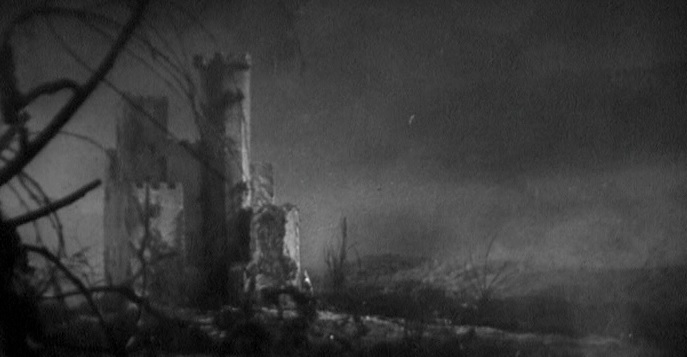
Once you’re past the point, though, things fly by nicely. You have this crazy guy dragging a woman around (and of course, she has no will to fight back) and the woman’s fiance trying to save her. Toward the end, the magician takes her to an old sorcerer’s castle (which looks remarkably similar to the castle featured prominently in Frankenstein). There’s some thrilling scenes near the conclusion, and it’s a fun time.

The performances here are pretty good, especially Paul Wegener (The Golem), who does great as the evil magician Haddo. He has great facial expressions, and comes across as quite threatening. Alice Terry did well as his victim, and Iván Petrovich did well also as the love interest of Terry’s.

Oh, and I have to mention a title card that got me laughing. There’s a small sequence when, under the influence of the magician, Alice Terry’s character is playing roulette. Before that scene, we get this catching saying (definitely not at all written by the gambling establishment): “This is the song of the wheel that spins / Who loses To-day – To-morrow wins!” Just classy.

For a film that’s not quite as well known, the score of this was pretty good. There’s plenty of recognizable classical pieces here, most noticeably being Pyotr Ilyich Tchaikovsky’s Swan Lake. It’s peaceful and intense, and so works quite well in this film when it does pop up.

Hypnotism isn’t the most interesting subgenre of horror – movies like Svengali, while okay, aren’t particularly my cup of tea. Back then, though, this stuff was popular. The 1894 novel Trilby, written by George du Maurier, was quite well-known, and while nowhere near as well-known, the 1908 book The Magician, written by W. Somerset Maugham, was likely popular too. Early horror is always interesting – I’ve only seen hypnotism done in a horrific manner a handful of times, and this probably doesn’t count – even so, this is a pretty fun film.

When I first saw The Magician, I had a pretty solid time with it. Among other silent horror films, I don’t think this one is quite a classic, but if you’ve an interest in classic silent horror, then The Magician is well worth a look. With a great score, a nice-looking print, and an enjoyable story, then this film is something you should see.

7.5/10

Orlacs Hände (1924)

Directed by Robert Wiene [Other horror films: Furcht (1917), Das Cabinet des Dr. Caligari (1920), Genuine (1920)]

This silent Austrian classic, known as The Hands of Orlac, has been a film I’ve honestly been avoiding. It’s one of the few popular silent horror films I’ve not seen, but I got the feeling that I wouldn’t care for it, and believe it or not, I take no delight in writing negative reviews for films often considered classics.

Alas, we all have to face our demons, and so in that spirit, here I am writing a negative review.

Here’s the thing – if you want to see this same story, based off the French novel Les Mains d’Orlac written by Maurice Renard, then I’d highly recommend watching Mad Love, which is a fantastic film; not only does it have some legit creepy scenes, it also, of course, stars Peter Lorre.

Sure, the story is here too, no doubt. But at an hour and 52 minutes, this is far too slow-moving to really be that engaging. Things pick up okay at about an hour and 30 minutes in, but getting there is a challenge that I don’t want to compete in again.

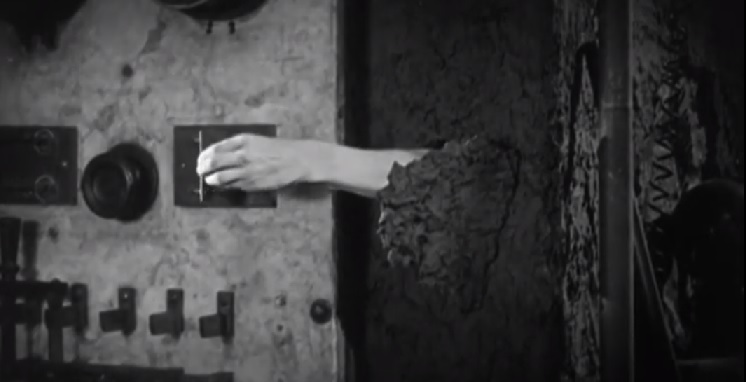
Having seen a decent amount of silent horror films, overacting isn’t something that’s too uncommon. I’d argue that most of the time, though, I don’t even notice it. I did here, though – as much as I love Conrad Veidt (Das Cabinet des Dr. Caligari, The Man Who Laughs, Das Wachsfigurenkabinett, and Unheimliche Geschichten), he just felt way too dramatic at times, and that goes double for Alexandra Sorina. It may have been intentional, but it just bothered me, For what it’s worth, Fritz Kortner (Schatten – Eine nächtliche Halluzination) did well in the end, but staying awake to see his performance may not be easy.

I can admit that perhaps I’m in the minority here. The movie feels so damn sluggish to me, but if most people see it as compelling, then so be it. I wish I felt the same, though, because as Mad Love later shows, this can be quite a decent story (especially during the blackmail sequence, which is okay here, but infinitely creepier in the 1935 classic).

All of this is to say that I avoided Orlacs Hände for a reason, and though I am happy to have seen it, if only to say that I’ve now watched most of the silent horror classics, this movie went about how I thought it would. It’s just way too slow and way too long, and that’s not a good combination.

4/10

Kurutta ippêji (1926)

Directed by Teinosuke Kinugasa [Other horror films: N/A]

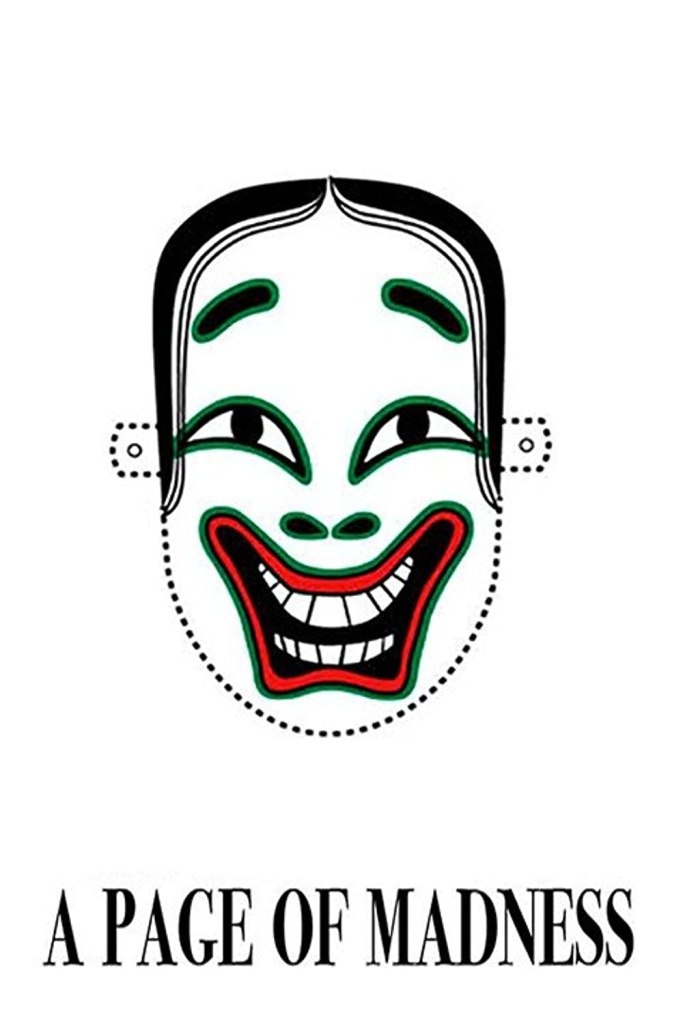
I’m a decently consistent guy, or at least I feel like I am. I’m not a fan of experimental films, and never really have been. Kurutta ippêji, better known as A Page of Madness, is certainly experimental, and despite perhaps being an important film, I find it a struggle to get into, and personally just can’t recommend whatsoever.

When it comes to silent films, I have a decent track record of enjoying many of them, and even the ones that are a bit light on traditional horror elements (such as Pikovaya dama), I can give a good shake. There are some experimental silent films I have struggled with – the two that come to mind are La chute de la maison Usher and Schatten – Eine nächtliche Halluzination. I could sort of get into Warning Shadows, because at least I could follow the story, but The Fall of the House of Usher wasn’t easy for me.

And unfortunately, this Japanese film is worse. Part of the problem is that the film doesn’t use intertitles. The aforementioned Warning Shadows didn’t either, but that story was easier to follow, whereas A Page of Madness, while somewhat simple in plot, just felt muddled and confused. To be sure, it was apparently not uncommon for Japanese silent films to eschew the use of intertitles (in Japan, there would have been live narration provided in the theaters by a benshi, or storyteller), but that doesn’t make modern-day consumption of this movie any easier.

Does the film occasionally have striking visuals and interesting use of avant-garde style? Very much so. Even more, Masuo Inoue gave what I imagine to be quite a good performance, despite the fact I didn’t really follow along with the story.

If I’m being honest, though, this was one of the hardest movies I’ve tried to sit through in the last couple of months. It’s perhaps not fair, but it’s true. A Page for Madness is only around an hour and ten minutes, but it felt like three hours, and when I say I almost dozed off at one point, I’m simply relaying facts, not trying to be cruel.

A Page for Madness is worth seeing if you want to see a classic piece of avant-garde, experimental cinema from Asia. I’ve always had a difficult time with experimental films, though – I despise Eraserhead, and always have – and though I’ve seen this Japanese film once and I don’t remember having that bad a time with it, this time around, I just couldn’t do it, fair or not.

3/10

Der Hund von Baskerville (1929)

Directed by Richard Oswald [Other horror films: Der Hund von Baskerville, 3. Teil – Das unheimliche Zimmer (1916), Der Hund von Baskerville, 4. Teil (1916), Nächte des Grauens (1917), Das Bildnis des Dorian Gray (1917), Unheimliche Geschichten (1919), Nachtgestalten (1920), Cagliostro – Liebe un Leben eines großen Abenteurers (1929), Unheimliche Geschichten (1932)]

Though this came out 15 years after the 1914 adaptation, I think it’s arguably on equal grounding. Certainly this version of The Hound of the Baskervilles improves on some levels than the earlier silent movie, but at the same time, I think a few things were holding it back from making more of an impact.

One thing I did appreciate was a more traditional version of the story, and by that, I mean the version of the story I’m accustomed to. Here they brought in some elements that were missing from the 1914 version, including Watson and Holmes appearing and then disappearing for a good portion of the story (this classic element of the plot couldn’t have happened in the 1914 version, as, in unique fashion, Holmes actually went to investigate the case without first being summoned by Henry Baskerville, so the classic, “I can’t leave London, but take Watson with you,” line was absent).

Worth mentioning is that while Watson did appear in the 1914 version, he was such a non-entity that he wasn’t even credited.

It’s not that this addition instantly make the movie better, by any means, but it certainly was nice to see, as I was wondering at what point that sub-plot would make it into the movies.

What really gives this film a different and potentially more powerful aura is the strong atmosphere, especially in the opening sequence with the elder Baskerville being terrified of the howls coming from the stormy night, and the group of friends around him mostly laughing the superstitions off. The storm is great, the tension is great, and the film kicks off with such a fantastic atmosphere. I can also add that the black-and-white looked quite crisp, and helped in that endeavor (and yes – while the 1914 version was tinted, this version is in black-and-white).

It should also be said that this version isn’t complete – some sequences are missing, and to get around that, this reconstruction summarizes the missing moments while giving us stills of the characters introduced during those scenes (such as Fritz Rasp’s Stapleton and Betty Bird’s Beryl). Some might be bothered by the missing scenes, and I hope they turn up at some point, but I thought they did a pretty good job working with what they had, and it was certainly more watchable and engaging than the TCM restoration of London After Midnight, so there’s that.

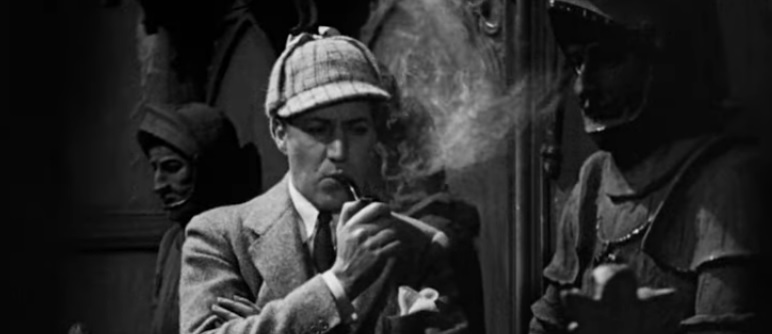
If that’s one last issue I have, it’s that I didn’t care all that much for Carlyle Blackwell, who played Sherlock Holmes (at least in comparison to the 1914’s Alwin Neuß). It’s not that Blackwell gave a particularly poor performance – he most certainly didn’t – but he was younger and a bit more handsome than I usually expect from a Sherlock Holmes, and while far from perfect, I did think the 1914 rendition done by Neuß was better.

No complaints about the rest of the cast, though – playing Stapleton, Fritz Rasp brought a quality quiet insanity with him that wasn’t really in the 1914’s Friedrich Kühne’s version. Obviously Rasp and Kühne were going for different things – Kühne a traditional, mustache-twirling fiend and Rasp a mentally-unstable psychopath – but both had solid respective performances, and here, I thought Rasp did great.

As Henry Baskerville, Livio Pavanelli did decently, though he wasn’t anything special. Playing his love interest was Betty Bird, who did get more character than Baskerville’s love interest in the 1914 version (and that character, Lyons, does appear here, though in a different way), was likewise just okay. The butler Barrymore (Andreas Van Horn in the 1914 movie), played by Valy Arnheim, lost a bit of story that he previously had, but also gained a little something with the added escaped convict on the moors subplot, and Arnheim did well with that.

And lastly, playing Watson, George Seroff was pretty strong throughout most of the film, though his character gets overshadowed by Holmes (as one can naturally expect) by the end, and so he doesn’t leave all that much of an impact.

The conclusion presented here is quite a bit more action-packed than what we got 15 years ago, and it’s all a decent amount of fun (albeit I couldn’t help but notice Watson, as it seems he always is, is treated a bit like a doddering fool at times), and the use of shadows and other film techniques such as flashbacks, slow camera-swivels and close-ups make this film far more technical than what the 1914 version managed (though with a difference of 15 years, one would certainly hope that’s the case).

When all is said and done, Holmes said it best: “Supernatural dogs do not leave footprints,” and while this movie was enjoyable to watch, I can’t say that it’s the pillar of silent horror despite having many strong elements present.

7.5/10

La chute de la maison Usher (1928)

Directed by Jean Epstein [Other horror films: L’auberge rouge (1923)]

This is one of the few remaining silent horror films that I needed to see, and the reason why I hadn’t seen it up until this point was that this French movie (known as The Fall of the House of Usher, based off an Edgar Allan Poe story) is easy to find in it’s native language, but not so much in English.

After finally seeing it – well, let me get something really important out of the way first.

I am delighted that I got to see a version which I could actually read the inter-titles to, but this print was beyond rough. It wasn’t tinted, which wasn’t a big deal (I didn’t even notice until halfway through the movie), but it was extraordinarily blurry, and the English translations weren’t captioned at the bottom, as usual, but superimposed over the existing French inter-titles, which, while functional, was not aesthetically pleasing whatsoever. In fact, it may be one of the roughest silent prints I’ve seen, and you’re reading a guy who sat through Malombra.

Adding to that, the plot here isn’t always clear-cut, and the dubious nature of the print makes quite a bit of this even more difficult to fully grasp. Luckily, while I’ve not read the story in some time, I have seen the 1960 Corman version of the Poe classic, and thus got a bit more out of this than I would have gotten had I gone in not knowing how the story went.

Certainly there are some captivating uses of cinematography here, perhaps the one that comes to mind quickest the seemingly first-person view from the ground to indicate – – – something, I suppose. I didn’t exactly follow that part, but that’s the nature of some 80 year old films.

Even had the print been better, a decent amount of this film felt off. I wouldn’t go as far as to say it was experimental, but I do think they didn’t want to go a more traditional route as far as story structure was concerned. As such, no one performance really stuck out to me (Jean Debucourt would be the only one to come close, and he didn’t come that close), and overall, while I would definitely like to give this movie another go with a cleaner print, I had to say that this silent film didn’t really impress me.

Kudos to it being the oldest French horror film I’ve seen, though, so that’s cool. Otherwise, though, even as a fan of silent horror, this didn’t do that much for me at all.

5/10

Nosferatu, eine Symphonie des Grauens (1922)

Directed by F.W. Murnau [Other horror films: Satanas (1920), Der Bucklige und die Tänzerin (1920), Der Januskopf (1920), Schloß Vogelöd (1921) Faust: Eine deutsche Volkssage (1926)]

I can’t say for sure, but this may be only the third time I’ve seen this German classic. There’s not a specific reason for this, aside from maybe the fact the print I own on DVD is a bit rough (thanks Mill Creek), but it’s also true that while I enjoy some ideas and aspects about Nosferatu, I’ve never really loved it as a whole.

Throwing in the whole plague sub-plot was a nifty idea, I think. Especially given that I’m writing this while many are still on moderate lock-down due to Covid-19, the diseases’ impact on the characters (while somewhat negligible as far as the story is concerned, and does more to help with the ominous atmosphere, to be honest) brought a bit of reality to the film. That scene in which bodies are being taken out through the narrow streets in particular was an effective one.

Count Orlac himself (played by none other than Max Schreck) didn’t have that much in the way of character, but definitely made his presence known. He was awkward as fuck, but everyone has their vices, and hey, I don’t have a castle in the land of phantoms, thieves, and ghosts, so maybe he’s doing something right. Schreck was great here, be him creeping up stairs or standing ramrod straight in a split second (both highly effective scenes).

I couldn’t help but feel for both Gustav von Wangenheim (who was also in Schattan – Eine nächtliche Halluzination) and Greta Schröder, as both of their characters went through the wringer. I felt legitimately dismayed as Schröder’s unhappiness at being away so long from her husband, and I enjoyed both of their performances, though I do think the ending maybe could have been extrapolated on a bit.

The print I watched this time around was pretty nice (it was on TCM, so could you imagine anything but?), with a nice tint, solid score, and all-around pleasant presentation. I just wished the inter-titles had been in German as opposed to English, but that’s a personal preference which has no impact on my enjoyment.

Overall, I don’t doubt at all that Nosferatu is a classic, and rightfully so. The effects were pretty good for the time, and some scenes, like I said, still increase suspense to this very day. It’s just never been a personal favorite of mine (The Cabinet of Dr. Caligari was always more my vibe).

7.5/10