Directed by Ishirô Honda [Other horror films: Ishirô Honda [Other horror films: Gojira (1954), Gojira no gyakushû (1955), Jû jin yuki otoko (1955), Godzilla: King of the Monsters! (1956), Sora no daikaijû Radon (1956), Godzilla (1957), Tokyo 1960 (1957), Bijo to ekitai ningen (1958), Daikaijû Baran (1958), Half Human: The Story of the Abominable Snowman (1958), Gigantis: The Fire Monster (1959), Mosura (1961), Varan the Unbelievable (1962), King Kong vs. Godzilla (1963), Mosura tai Gojira (1964), Uchû daikaijû Dogora (1964), War-Gods of the Deep (1965), Furankenshutain tai chitei kaijû Baragon (1965), Furankenshutain no kaijû: Sanda tai Gaira (1966), Gezora, Ganime, Kameba: Kessen! Nankai no daikaijû (1970), Gojira tai Hedora (1971), Godzilla (1977), Godzilla 1985 (1985), Gojira vs. Desutoroiâ (1995), Gojira tai Megagirasu: Jî shômetsu sakusen (2000)]
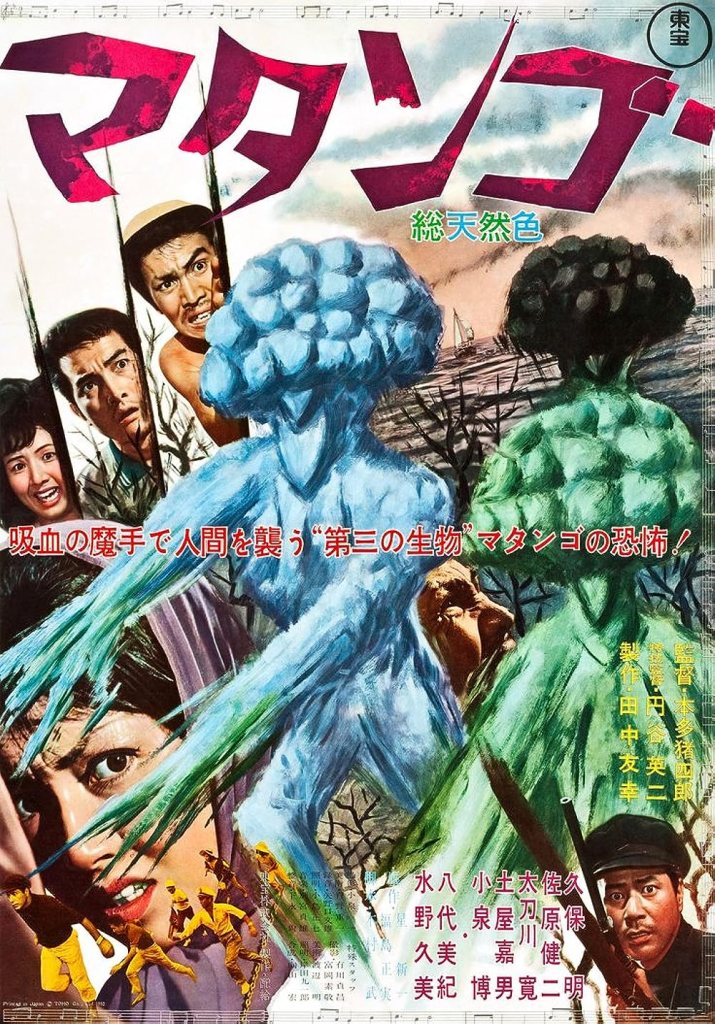
Matango, or Attack of the Mushroom People (which is a pleasantly provocative title) is a quality Japanese movie, rife with beautiful colors and people horrifically transformed into mushrooms. It’s never been a favorite of mine – I think it moves a bit slow for much of the runtime – but the final twenty minutes or so are hauntingly nightmarish, and it’s worth the watch for that.
Based on a short story by William Hope Hodgson titled ‘The Voice in the Night’, the film follows a group of people who shipwreck their yacht, and are trapped on an island filled with mist and mushrooms, and little else. It should go without saying that the mushrooms may not be the healthiest thing in the world to eat, but given their desperation and hunger, they don’t have a lot of choice, and some succumb to the springy-textured temptation.
Before that point, though, we’re treated to a lot of infighting amongst the group – the captain is getting on peoples’ nerves, one of the women is actively flirting with multiple men, putting people on edge, and there are power struggles popping up as to who should lead the group, and what their plan of action should be.
It’s not uncommon in a movie like this, and in fact, it reminded me of Goke, Body Snatcher from Hell, which I saw earlier this month. In that Japanese movie, much like this one, a group of people find themselves in a desperate situation, and morals break down, leading to danger and tension throughout.
For a sociological look at things, that approach is fine. You can also see much the same type of things in various zombie movies (28 Days Later… comes to mind), and it’s certainly realistic. I don’t mind it here, but I do think the film moves terribly slow, and it’s not until about 35 minutes in that I’m really intrigued. Once they find an old shipwreck covered in fungus, things improve, but getting there is a little bit of a struggle.
Honestly, none of the performances really stood out to me. I sort of liked Miki Yashiro’s character, and she had a creepy scene at the end, but saying she added much would be a hard case to make. Akira Kubo was perfectly fine, albeit generic. Yoshio Tsuchiya was fine as an antagonist, but again, he doesn’t particularly stand out.
What makes Attack of the Mushroom People worth seeing it the slow, creeping atmosphere and the eeriness of the concept. I didn’t read much of the Odyssey back in school, but the story of the lotus eaters always freaked me out, and that’s the type of thing this movie has to offer. Once people consume the mushrooms, they slowly transform, and never want to leave the island. Oh, and they live in this creepy mushroom-filled area – it’s color, it’s atmopshereic, and it’s, as the kids say, creepy as fuck.
Attack of the Mushroom People has never been a movie I loved, but that’s not because it’s bad. It’s just that much of the human element before the titular Mushroom People come about doesn’t interest me that much. Their drama is just not my cup of tea. Once things get moving, though, it’s a really good film, and the final twenty minutes are fantastic. Definitely a Japanese classic worth checking out.
7.5/10

 Jiggy's Horror Corner
4 thoughts on “Matango (1963)”