
Directed by Tun-Fei Mou [Other horror films: Xiang Gang qi an 5: Jian mo (1977), Die xian (1980), Da se (1980), Huet luen (1995), Hei tai yang: Nan Jing da tu sha (1995)]
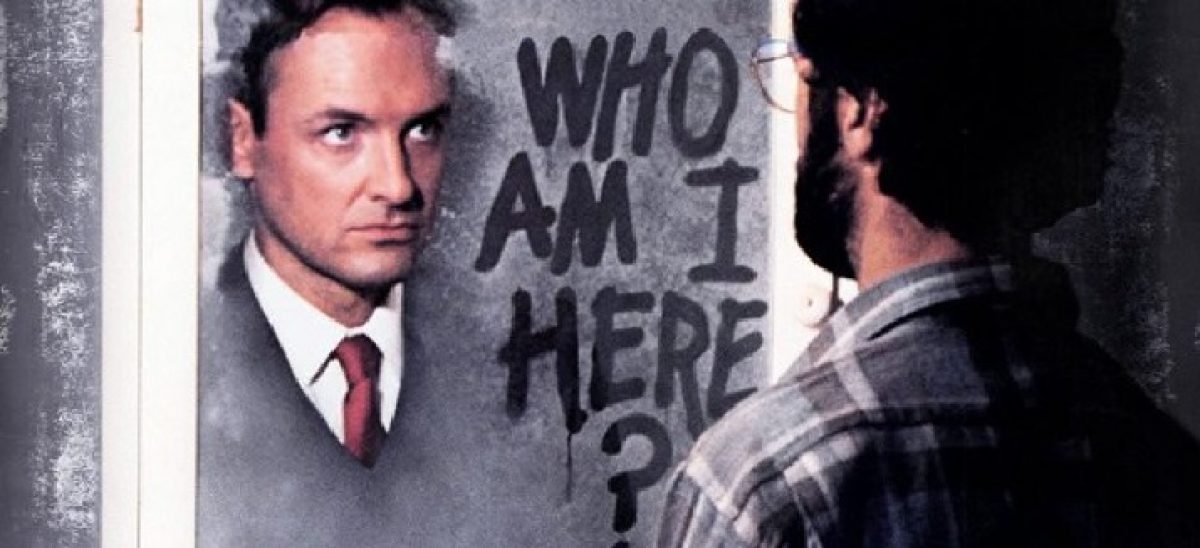
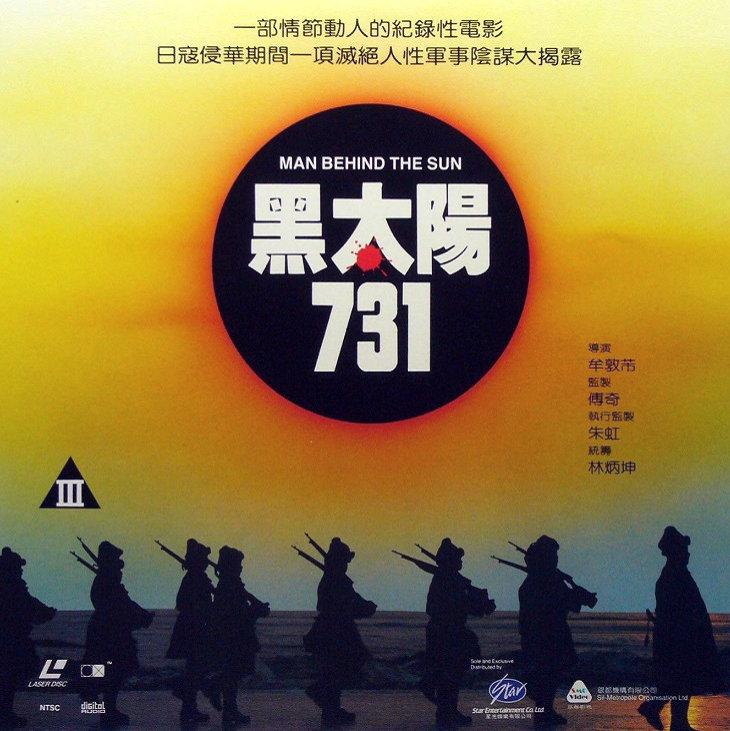
Among one of the most disturbing films I’ve ever seen, Hei tai yang 731, better known as Man Behind the Sun, is not a movie I’ll soon forget. It’s far from a pleasurable viewing experience, and I can imagine that it’d only attract a niche looking for extreme cinema.
Much like Threads, this movie isn’t horror in the conventional sense – it follows the experiments and troops of Unit 731, a Japanese biological and chemical warfare research lab, during the Second Sino-Japanese War. In gruesome detail, we see various human experimentation and how it impacts both the victims and the perpetrators, including young boys who have been conscripted into the Youth Corp.
Naturally, whereas Threads dealt with the theoretical impact of nuclear warfare, this deals with historical material. As to the authenticity displayed here, I will fully admit to not knowing anything about this period of Japanese history, so I can’t say. This is a movie from Hong Kong, so if they show the Japanese is a more negative light than reality, that wouldn’t be surprising. I have no doubt, though, that the information displayed toward the end – that the central scientist of this facility was later acquired by the United States government after they granted him immunity – is accurate, as that’s just how the American government works.
Because of the nature of this film – possessing an almost documentary-type feel at times – it’s not an easy one to judge. It’s not easy to judge anyway, given the material they deal with here, but I can say that while it’s pretty well-made, it’s definitely not a movie that I suspect many people would want to throw on any type of annual playlist.
Let’s get to the main point. Most people who hear about this movie, or perhaps read about it online, have probably done so due to the gruesome content here. Somewhat ironically, the scene in which a cat is thrown into a pit of rats – which seems to be among one of the most distressing sequences for people – is actually one of the least disturbing parts of the film for me. Related, as disgusting and off-putting as the decompression scene in, it wasn’t as bad as I’d had built up in my mind.
When it comes to the disturbing content, there is one scene that comes to mind, and it’s a scene that I don’t think I’ll ever forget. During some hypothermia testing, a woman is bound with her arms straight out, cold water being poured over them repeatedly. The woman is then brought into a lab and her arms are placed into a vat of warm water (well, 15 degrees Celsius, which is around 59 degrees Fahrenheit). After a few moments, her arms are pulled out of the water, and the skin just sort of sloughs off.
There are a lot of disturbing scenes here – a man has his arms quick-frozen, and then shattered off, people are tied to crosses in a field for some bomb testing, and lose limbs, a baby is buried under some snow, a young boy is harvested for his organs in graphic detail – but that arm scene was among one of the most sickening things I’ve ever seen. I rewatched it for accuracy to write this review, and felt a bit sick to my stomach after having done so.
Gang Wang is the only performance that really matters. Playing a character who is committed firmly to the Japanese army, and who sees the prisoners (or as he calls them, Maruts) as merely ways to improve the efficiency of their army by perfecting biological warfare methods, Wang does well with such a disturbing role. Some of the younger kids and other military generals do fine, but this isn’t a movie where performances are going to matter that much, to be honest.
Like I said, this is far from a conventional horror movie, and in fact, I know some may even find it insensitive to label it as such. It’s no doubt exploitative and certainly, at times, tasteless, and more so, Man Behind the Sun is not at all a fun movie to watch. It’s a movie that will stick with me, but you better know what you’re getting into if you want to give this one a watch.
6/10





 Jiggy's Horror Corner