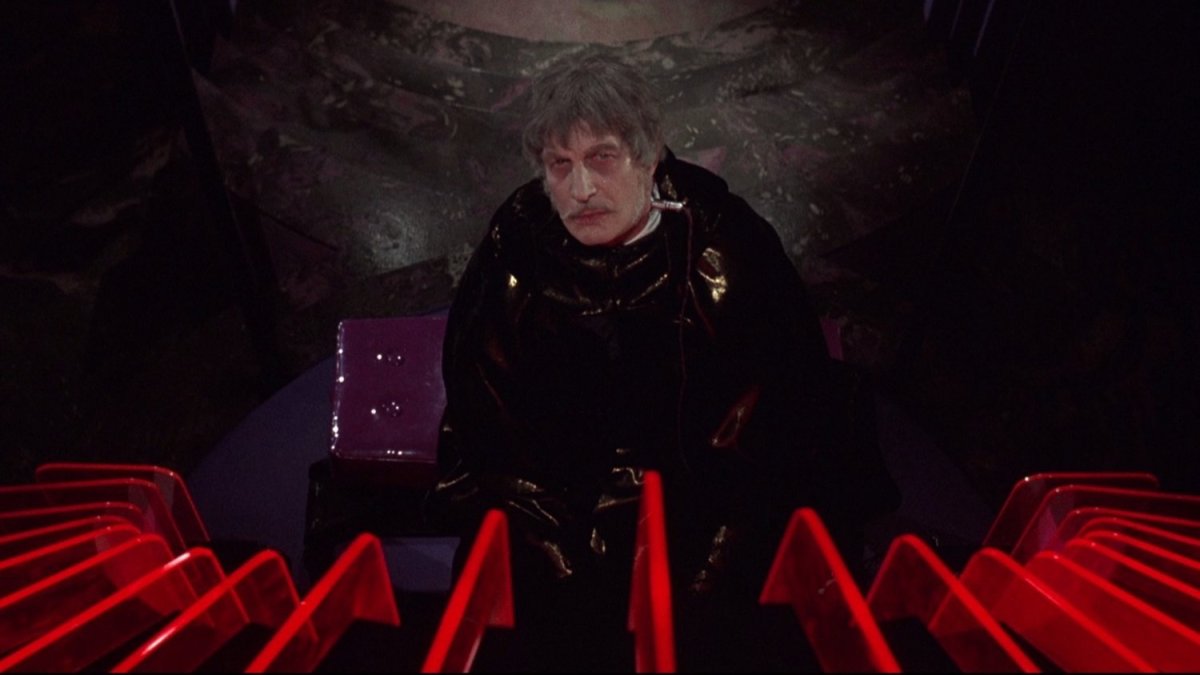
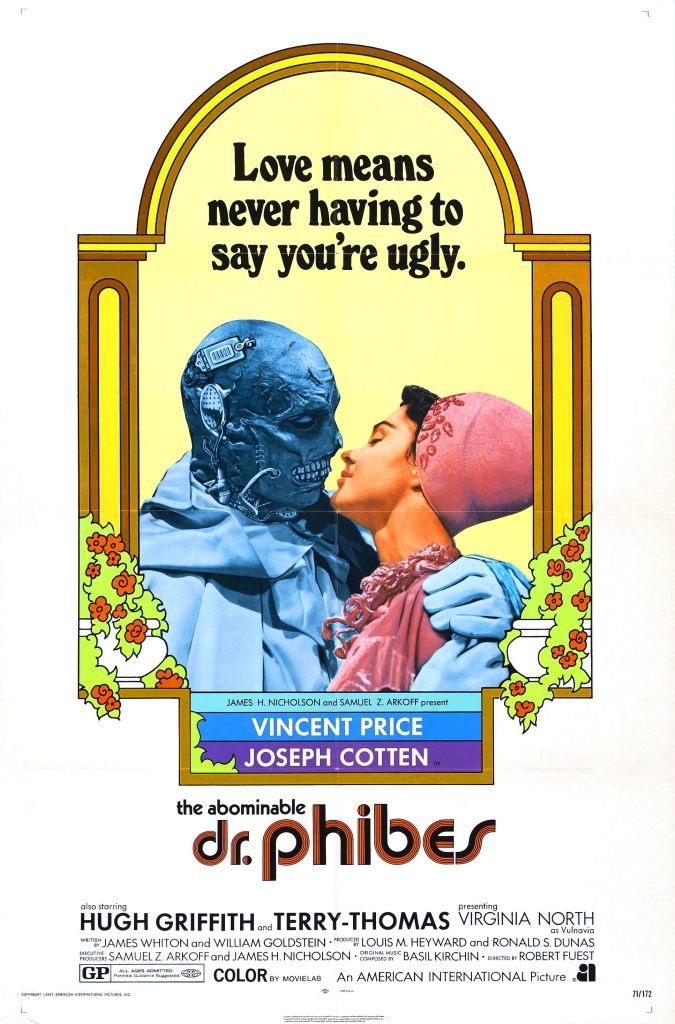
The Abominable Dr. Phibes (1971)

Directed by Robert Fuest [Other horror films: And Soon the Darkness (1970), Dr. Phibes Rises Again (1972), The Devil’s Rain (1975), Three Dangerous Ladies (1977, segment ‘The Island’)]

I’ve seen this one something like three or four times before, and I always left with a lukewarm feeling. Seeing it once again, I don’t find the movie bad, or even all that mediocre, but despite the cleverness and amusing pieces of dialogue throughout, this still isn’t a movie I love.

As it is, I really like most of the really random kills (perhaps the death-by-brass-unicorn is my favorite, but the bat kill was great, as were the locusts, snow-blower, and the exsanguination scenes), and the character of Dr. Phibes, played by Vincent Price, was really interesting and moderately tragic. Even so, the movie doesn’t work for me.

Vincent Price was a clear stand-out, but this movie isn’t really as driven by him as many of his other films are (such as House on Haunted Hill or Theater of Blood), possibly because he didn’t speak all that often. Others were pretty solid also, such as Joseph Cotton, Terry-Thomas (who I love in anything I see him in, from The Vault of Horror to my favorite comedy, It’s a Mad Mad Mad Mad World), and Peter Jeffrey.

The movie does possess a bit of a tragic feel, especially toward the somewhat somber conclusion (which also had a solid precursor to a Saw series trap, which was innovative), so that worked out well, but though I enjoyed much of the comedy (which was never too pervasive, luckily), I still find the movie hovering around average, which may change sometime in the future with another viewing.

7/10

This was covered on Fight Evil’s podcast, so if interested, listen as Chucky (@ChuckyFE) and I discuss The Abominable Dr. Phibes.

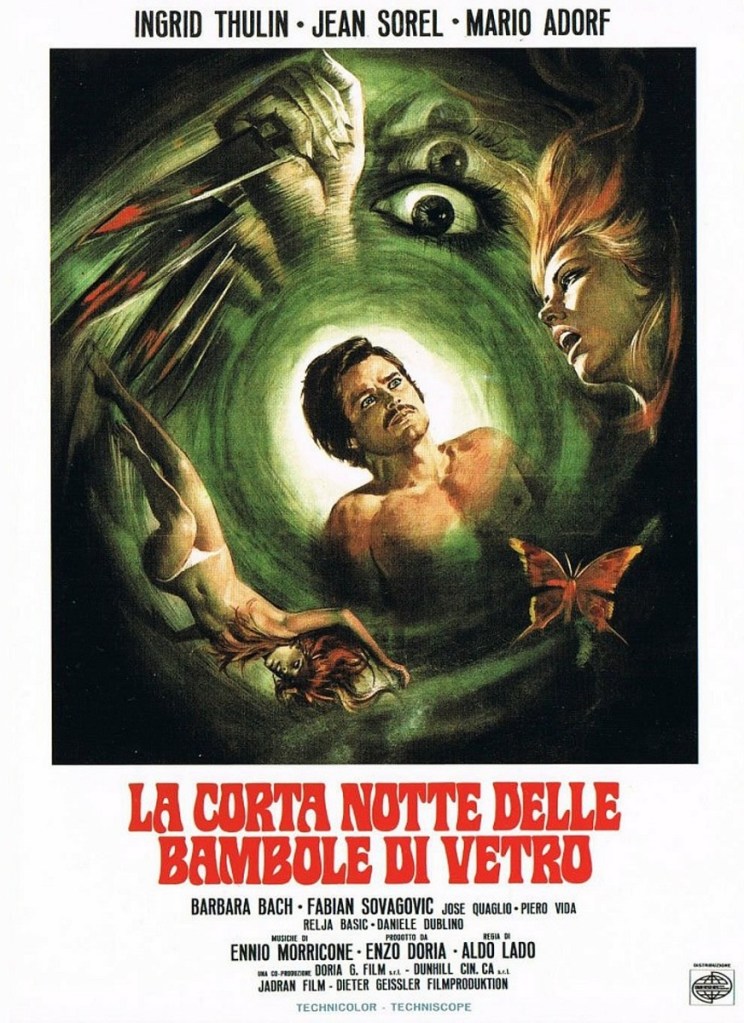
La corta notte delle bambole di vetro (1971)

Directed by Aldo Lado [Other horror films: Chi l’ha vista morire? (1972), L’ultimo treno della notte (1975), Il Notturno di Chopin (2013)]

This Italian giallo, widely known as Short Night of Glass Dolls, was a decent film for much of the run-time, but toward the end, it sort of went into a somewhat incoherent mess.

The mystery here is pretty good, and enjoyable to watch unfold. A young woman disappears without a trace in Prague, and her lover, an American journalist, attempts to find her. It’s typical for a giallo, but that doesn’t make it any less fun. It’s made better by the setting, and more so, the time period, as this took place when then-Czechoslovakia was a Communist state behind the Iron Curtain.

Because of that, there is a bit of anti-USSR material strewn throughout the film, and even toward the conclusion, though I don’t think it’s terribly over-troubling. It does lead to a more oppressive feel, and much of the going-ons have a very conspiratorial feeling to them. Problematically, the conclusion doesn’t explain what’s going on nearly as well as I’d have liked, and honestly, I’m at a loss right now as to what actually happened, and why. It’s just not made clear, as far as I could tell.

Worth noting, most of the main story is told via flashback, and the present-day material, luckily, is decently engaging. Still, I don’t care much for the conclusion they had there, either, though it certainly possessed a somewhat bleaker feel than some audiences might be used to.

I’m not trying to harp too much on the movie, because much of it is really engrossing. It’s not until the final ten minutes or so that the movie, in my opinion, falls apart. It’s just rather noticeable because my enjoyment level went down so much as the ending unfolded, and I felt that given how good the film was before, it was rather unfortunate.

I liked much of the principal cast of this film. Jean Sorel took a little bit, but he grew on me as the film went on. Playing a friend of his, I thought that Mario Adorf did well with his more care-free, fun-loving character. Lastly, playing the woman who goes missing, Barbara Bach did well as a beautiful, semi-mysterious woman.

For a giallo, La corta notte delle bambole di vetro is extraordinarily tame. There’s little to no gore, and many of the staples you might expect from the subgenre, such as first-person view from the killer, or black gloves, are absent. The mystery is certainly here, and like I said, it’s done well, but this movie feels really toned down, and if you’re expecting a run-of-the-mill giallo, then you’ll likely to be disappointed.

I will admit to being disappointed by this one, if only because the conclusion (to both the flashback and present-day stories) were so unsatisfactory. I can live with little gore, because the story was otherwise engaging, but what draws me to giallos is how everything’s pieced together nicely at the end, and I definitely didn’t get that feeling here. For what this movie is, it’s okay, but I’d definitely temper your expectations before jumping in.

6/10

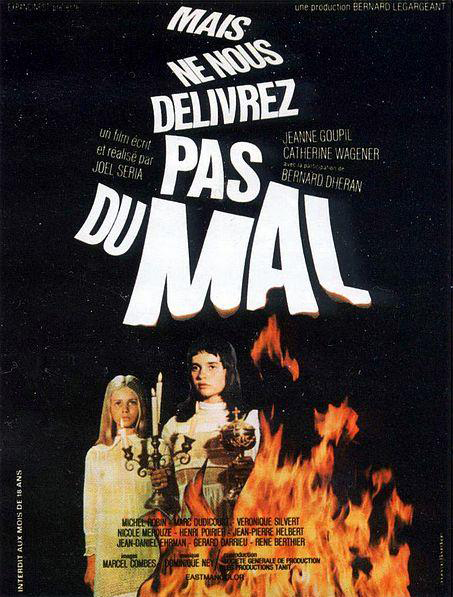
Mais ne nous délivrez pas du mal (1971)

deliver

Directed by Joël Séria [Other horror films: N/A]

What makes a slow-burn movie good? It’s upon examination of this question that will lead to whether you will like or dislike this film. Known in the USA as Don’t Deliver Us from Evil, this French film is an interesting one, and as alluded to, quite the slow-burn. But does the ending pay off?

The plot of the film is simple, in that two Catholic girls decide they want to push the limits and sin (welcome to the consequences of religious oppression). For the first hour and twenty minutes, there’s very few horror elements – it’s just the two girls going around doing ‘bad’ things of varying degrees (poisoning canaries, setting bales of hay on fire, teasing men with sexual come-ons), and it feels somewhat aimless, in many ways.

Eventually, when something more in the realm of the genre happens, things pick up a bit, but that’s in the final twenty minutes of the film. Now, what doesn’t make this a complete loss is the fact that the two main actresses Jeanne Goupil and Catherine Wagener were amazing in their roles. They were both very convincing, both as innocent Catholic schoolgirls, and then as randy, sensual young women wanting to explore the more lustful side of life (on a side-note, for a good majority of this movie, it seems like a coming-of-age story).

Honestly, for a French film, this was pretty tame. Despite plenty of scenes of the two young women in their underwear, never once is lesbianism encroached upon (I’ll be honest, I was expecting something like that from the very beginning), and while there’s occasionally nudity, it’s pretty brief. And the two attempted rape scenes are both more on the mild side, at least compared to other such scenes of the same time period.

Instead, they attempted to build up to the end, which somewhat worked, but a somewhat shocking final minute of the film doesn’t really excuse an hour and forty minutes of very little happening beforehand. Still, Don’t Deliver Us from Evil occasionally had a chilly vibe, helped along by a very haunting soundtrack that popped up multiple times throughout the film.

A classic of sorts, with pretty high ratings from various sources, this movie didn’t entirely do it for me. Fantastic acting aside, it was just way too slow, despite occasionally showing us some interesting scenes. No doubt I was pretty engaged during the whole of the film, but I was hoping for something more than the great ending they had. If you’re a practicing Catholic, though, this film will probably be a lot more effective.

5.5/10

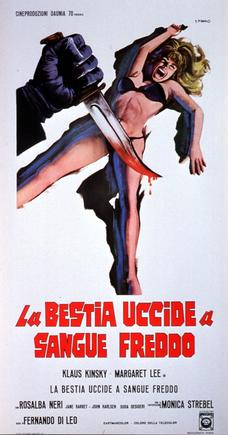
La bestia uccide a sangue freddo (1971)

La bestia uccide a sangue freddo

Directed by Fernando Di Leo [Other horror films: N/A]

La bestia uccide a sangue freddo, more popularly known as both Asylum Erotica and Slaughter Hotel, is an Italian movie that came as something as a disappointment. What I was hoping would be a decent giallo with good kills turned out to be more a soft-core pornographic flick.

There’s a lot of nudity in this one, folks. Self-fondling, lesbianism, nymphos, a little bit of everything besides male nudity. 😛 The story’s simple enough: at a secluded clinic for women, a killer proceeds to whack off quite a few people. With various suspects and red herrings, will they discover who is behind these heinous acts?

Well, that’s not completely accurate. It’s not until 75 minutes into the movie that anyone knows there’s a killer on the loose, and once the police get there, there’s only ten minutes left in the movie. In fact, the whole ending seemed rather rushed. Not that it’s a bad thing – rushed action is better than no action at all, and to tell you the truth, I got tired of the sex and self-fondling a few minutes into the first sequence. But they keep on coming (wink wink).

And when we do get kills, they’re not overly inspired. Sure, the crossbow kill was pretty cool, and the iron maiden death was decent, but everything else just fell flat. For Pete’s sake, there’s a bloodless decapitation in the movie. We can’t have such an utter lack of gore like this and expect much of the kills to be memorable. For most of the film, I was just bored with the red herrings and consistent nudity, truth be told. While the ending was rushed, along with the explanation of why the murderer is offing people, at least we got some type of payoff for our troubles. A pretty tedious flick, but if a lot of nudity’s your thing, give it a go.

6/10