Directed by Phil Rosen [Other horror films: Spooks Run Wild (1941), Mystery of Marie Roget (1942), Return of the Ape Man (1944), Black Magic (1944), The Jade Mask (1945)]
This is an interesting one. Man with Two Lives can be a pretty decent movie – if you’re into the classics – but I do think that if you’re a fan of classic horror specifically, and come into this one expecting something like The Walking Dead, you’ll be a bit disappointed.
The thing is that the means of the story are couched in what you’d expect from a horror film, but the final product generally feels more like a crime movie than anything else. I guess before I go on, I should get into the plot and explain what I mean.
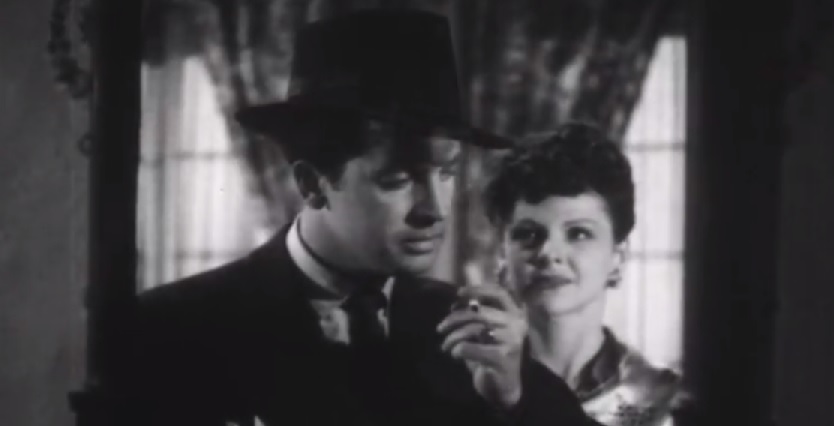
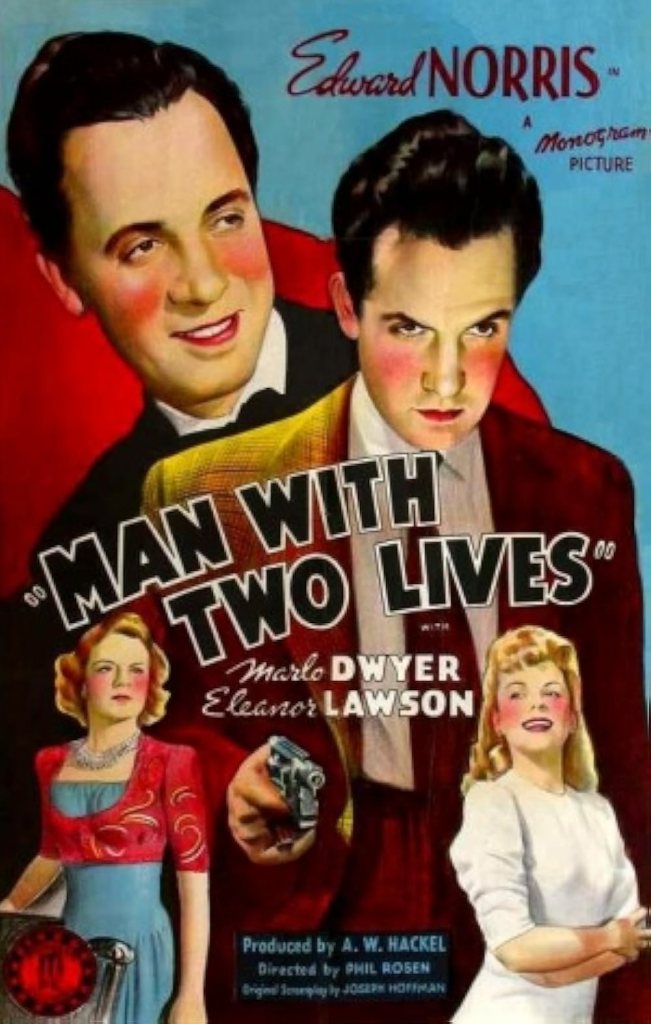
Man with Two Lives follows recently-engaged Philip Bennett (Edward Norris) as he has a car accident, and dies. Luckily, a family friend, Doctor Clark (Edward Keane) has been doing experiments regarding bringing hearts back to life after death, and after Philip’s father and brother (Frederick Burton and Tom Seidel) plead with him, and against the warnings of another family friend, Professor Toller (Hugh Sothern), Clark does just that.
Troubles arise, though, when it turns out that this experiment – bringing Philip back to life – happens at the exact same time the violent gangster Panino is executed for his crimes. When Philip does regain consciousness, he has no memories of his life, and begins exhibiting violent, gangstery qualities unbecoming of a young man from means, including going to shady bars, taking over a gang, and killing police officers just because it brings him joy.
As you can potentially tell by my description, much of Man with Two Lives follows a man who’s leading a gang. The way this man came to be in control of the gang – a possible migration of the soul – may be rooted in what you’d expect from some horror, but the outcome feels like a crime film throughout large portions.
None of this is to say that the film isn’t good or without suspense. In fact, the finale is extraordinarily tense in a way that no previous portion of the film has been. Sure, we see a character get strangled earlier on, but we also get the sense that that specific character definitely wasn’t long for the world, so I wouldn’t call that sequence suspenseful. The finale, though, which is sort of a culmination of the family’s investigations into where Philip disappears to days on end, is fantastically done.
I will say that Edward Norris did great with his double-role, of sorts. As a gangster, he was pretty solid, and it was fun to watch. After Norris, I think the most important cast members become Edward Keane and Frederick Burton, both of whom spend time trying to figure out why Norris’ character is acting so differently after being brought back to life.
Some aspects of Hugh Sothern’s character were hard to like – his insistence, for instance, that there is in fact such a thing as a soul because all religions and philosophies agree on its existence – but that’s on his character, not the performance, which I thought was good. Others who don’t really impact things as much as you may think include Marlo Dwyer, Eleanor Lawson, Tom Seidel, and Addison Richards (The Mummy’s Curse, Strange Confession), though Richards does have a strong sequence near the end.
As you could expect, the film also goes into the whole “man should not get involved in what’s best left to the Creator” tripe that was all-too-common in movies from that time period, such as Frankenstein. It was a different time, and perhaps back then people didn’t understand that before you make the claim that man shouldn’t interfere with God’s will, they first need to prove the existence of a God, along with a way to determine what his ‘will’ is, neither of which has been done to this day.
Overall, though, Man with Two Lives is a solid film. For someone looking for a traditional horror film of the 30’s and 40’s, I don’t think this will hit the right spot, but if you’re into something a bit different, with a nice crime feel permeating throughout, Man with Two Lives may well be worth a watch.
7/10





 Jiggy's Horror Corner