The Magician (1926)

Directed by Rex Ingram [Other horror films: Black Orchids (1917)]

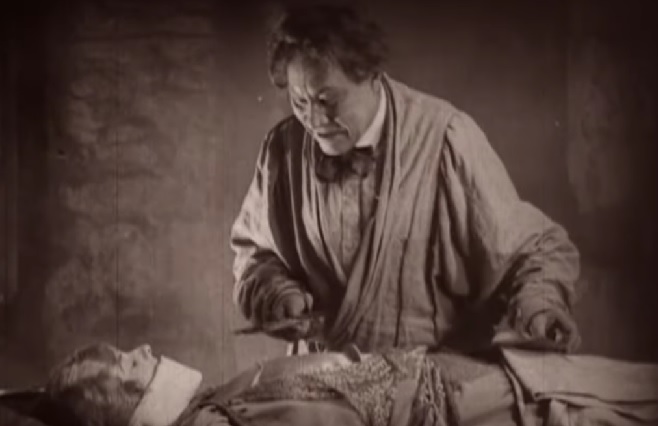
Ah, the good old days dealing with the horrors of hypnotism. The Magician is a pretty solid silent film, and while it’s a bit slow with the set-up, it’s quite a good experience come the finale, and overall is a good film.

Dealing with a somewhat mentally unhinged man who hypnotizes a woman to follow him (and eventually be his victim in a sacrifice to bring forth life with the black arts), The Magician does take a little bit to really get going, and the first thirty minutes or so can occasionally tend to be a bit sluggish.

Once you’re past the point, though, things fly by nicely. You have this crazy guy dragging a woman around (and of course, she has no will to fight back) and the woman’s fiance trying to save her. Toward the end, the magician takes her to an old sorcerer’s castle (which looks remarkably similar to the castle featured prominently in Frankenstein). There’s some thrilling scenes near the conclusion, and it’s a fun time.

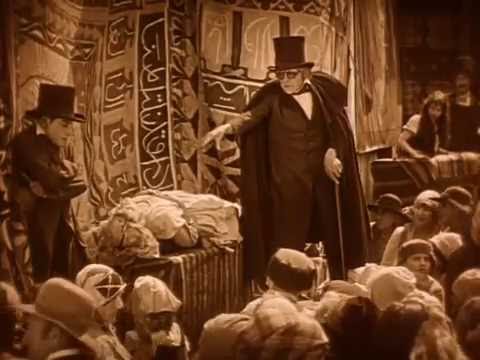
The performances here are pretty good, especially Paul Wegener (The Golem), who does great as the evil magician Haddo. He has great facial expressions, and comes across as quite threatening. Alice Terry did well as his victim, and Iván Petrovich did well also as the love interest of Terry’s.

Oh, and I have to mention a title card that got me laughing. There’s a small sequence when, under the influence of the magician, Alice Terry’s character is playing roulette. Before that scene, we get this catching saying (definitely not at all written by the gambling establishment): “This is the song of the wheel that spins / Who loses To-day – To-morrow wins!” Just classy.

For a film that’s not quite as well known, the score of this was pretty good. There’s plenty of recognizable classical pieces here, most noticeably being Pyotr Ilyich Tchaikovsky’s Swan Lake. It’s peaceful and intense, and so works quite well in this film when it does pop up.

Hypnotism isn’t the most interesting subgenre of horror – movies like Svengali, while okay, aren’t particularly my cup of tea. Back then, though, this stuff was popular. The 1894 novel Trilby, written by George du Maurier, was quite well-known, and while nowhere near as well-known, the 1908 book The Magician, written by W. Somerset Maugham, was likely popular too. Early horror is always interesting – I’ve only seen hypnotism done in a horrific manner a handful of times, and this probably doesn’t count – even so, this is a pretty fun film.

When I first saw The Magician, I had a pretty solid time with it. Among other silent horror films, I don’t think this one is quite a classic, but if you’ve an interest in classic silent horror, then The Magician is well worth a look. With a great score, a nice-looking print, and an enjoyable story, then this film is something you should see.

7.5/10

Kurutta ippêji (1926)

Directed by Teinosuke Kinugasa [Other horror films: N/A]

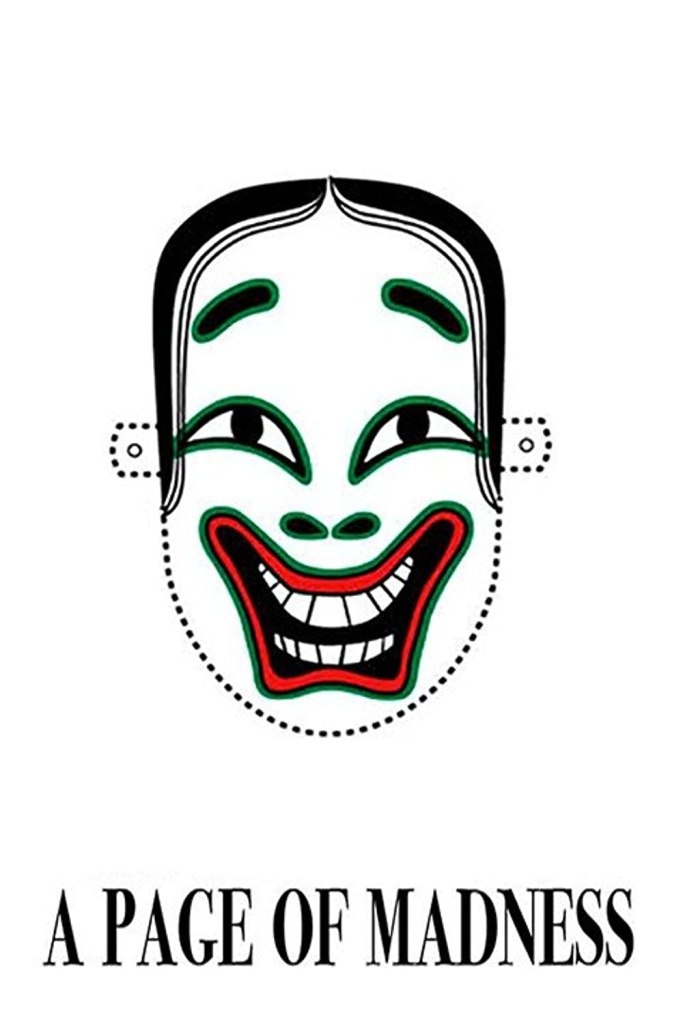
I’m a decently consistent guy, or at least I feel like I am. I’m not a fan of experimental films, and never really have been. Kurutta ippêji, better known as A Page of Madness, is certainly experimental, and despite perhaps being an important film, I find it a struggle to get into, and personally just can’t recommend whatsoever.

When it comes to silent films, I have a decent track record of enjoying many of them, and even the ones that are a bit light on traditional horror elements (such as Pikovaya dama), I can give a good shake. There are some experimental silent films I have struggled with – the two that come to mind are La chute de la maison Usher and Schatten – Eine nächtliche Halluzination. I could sort of get into Warning Shadows, because at least I could follow the story, but The Fall of the House of Usher wasn’t easy for me.

And unfortunately, this Japanese film is worse. Part of the problem is that the film doesn’t use intertitles. The aforementioned Warning Shadows didn’t either, but that story was easier to follow, whereas A Page of Madness, while somewhat simple in plot, just felt muddled and confused. To be sure, it was apparently not uncommon for Japanese silent films to eschew the use of intertitles (in Japan, there would have been live narration provided in the theaters by a benshi, or storyteller), but that doesn’t make modern-day consumption of this movie any easier.

Does the film occasionally have striking visuals and interesting use of avant-garde style? Very much so. Even more, Masuo Inoue gave what I imagine to be quite a good performance, despite the fact I didn’t really follow along with the story.

If I’m being honest, though, this was one of the hardest movies I’ve tried to sit through in the last couple of months. It’s perhaps not fair, but it’s true. A Page for Madness is only around an hour and ten minutes, but it felt like three hours, and when I say I almost dozed off at one point, I’m simply relaying facts, not trying to be cruel.

A Page for Madness is worth seeing if you want to see a classic piece of avant-garde, experimental cinema from Asia. I’ve always had a difficult time with experimental films, though – I despise Eraserhead, and always have – and though I’ve seen this Japanese film once and I don’t remember having that bad a time with it, this time around, I just couldn’t do it, fair or not.

3/10

Faust: Eine deutsche Volkssage (1926)

Directed by F.W. Murnau [Other horror films: Satanas (1920), Der Bucklige und die Tänzerin (1920), Der Januskopf (1920), Schloß Vogelöd (1921) Nosferatu, eine Symphonie des Grauens (1922)]

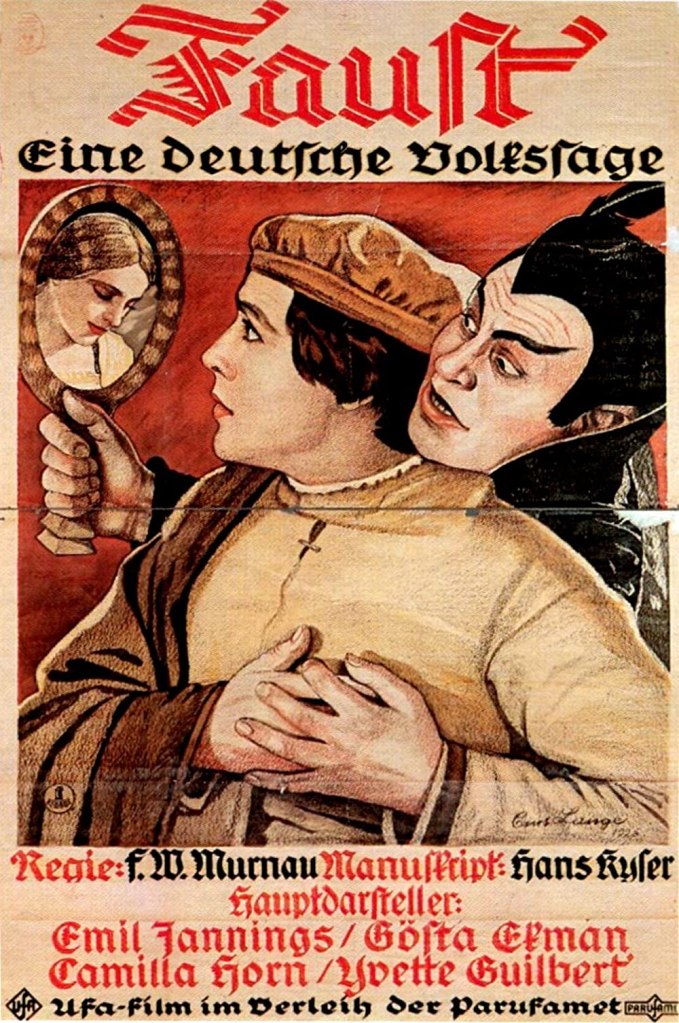
Obviously much more a drama than a horror, Faust: Eine deutsche Volkssage still has enough dark elements in it for it to clearly count as horror, which I’m grateful for, because otherwise, I’d probably never have seen this beautiful-looking movie.

The story here is one, of course, of a morality tale, in which Mephisto makes a wager with an angel that he can corrupt Faust, and the angel’s all like “Brah, men are too good to corrupt, I take your wager and if I lose, the world is yours.” And of course, through the tragedy and misery, the grace of God reigns supreme, and because of love, Mephisto’s wager fails.

Now, I can do without all of the religious bullshit, but I admit that I love how some movies back then had the cojones to work within such a strongly fantastical story. Morality tales were the basis of horror films (just look at 1913’s Der Student von Prag), and stories that took place primarily in Hell have too been done (Italy’s 1925 Maciste all’inferno), so a movie like this that deals with a theological wager between two high entities is certainly welcomed. And you know that, if a newer movie did this, it would just look ridiculous, but here, it doesn’t look too shabby at all.

The pleasure of watching silent films is seeing exactly how much they were able to do with the limitations they had, and there are plenty of scenes in this film that really look great, and in fact far more impressive than modern-day special effects. While I do wish the latter half of the story had had more carnage in it (aside from that provided by the religious bigots who were going to burn a woman to death for killing her child, but the only reason that child died was because the religious bigots considered the woman a ‘whore’ and thus she had no support system – just another reason to stand against religious beliefs, I feel), I cannot deny that the special effects here all look stupendous.

Emil Jannings (Die Augen der Mumie Ma and Das Wachsfigurenkabinett) was solid as Mephisto, though there were a few light-hearted scenes surrounding him and a woman who was chasing after him (played by Yvette Guilbert) that I could have done without. As Faust, Gösta Ekman had an expressive and expansive range, and came across very impressively. And as for Camilla Horn – well, let me put it this way: I’m not usually one to find women from older movies attractive, but her – hubba hubba. I mean, she was one smokin’ piece, as the kids say, and her performance too, once the story turned more tragic, was certainly admirable.

Valentin, played by William Dieterle (the aforementioned Das Washsfigurenkabinett being his only other venture into horror) was a solid character, big and strong, until he went after his sister’s lover (after saying, basically, that she should put herself out more) and then calling her a ‘whore’ and also calling for her death. So basically, fuck this guy.

So with a fine cast, amazing special effects, and an interesting set-up, Faust is definitely one of those German classics that people like me sometimes like to bring up. It’s a damn fine piece of cinema, and while it’s not a personal favorite from the silent era for me personally, it’s still very much worth seeing.

7.5/10

The Bells (1926)

The Bells

Directed by James Young [Other horror films: N/A]

I’ve seen this once before many years back, and was rather bored by it. This time around, I was in a better state of mind to enjoy it, though I can’t deny it’s moderately derivative, as this movie doesn’t have much that The Avenging Conscience didn’t bring forth 12 years prior.

Plenty of solid performances can be found here: Lionel Barrymore (this was his first voyage into the horror genre – he later appeared in such classics as Mark of the Vampire and The Devil-Doll) does well here as the innkeeper. He’s a good man put under immense stress, and snaps. It’s easy to both feel pity for his characterization and to abhor his acts. Great with this role, Barrymore pulls it all together. Gustav von Seyffertitz (who we later see in the 1930 classic The Bat Whispers) does well here as a rather unlikable, but ultimately harmless, money-hungry individual.

The innkeeper’s daughter and her soldier lover (played by Lola Todd and Eddie Phillips, respectfully) make a pretty cute couple, though they end up not really being all that relevant to the plot (despite Phillips’ character being charged with finding the murderer). Of perhaps most interest, Boris Karloff makes a few appearances here. Most known for playing the Frankenstein monster in the 1931 classic, he’s been in various horror films from the 1930’s to the early 1970’s. In his first horror role, he plays a mesmerist (taking more than a few cues from Caligari) who, despite his relatively short screen-time, does make quite an impression.

As aforementioned, though, the rough story here can be found earlier in The Avenging Conscience: or, ‘Thou Shalt Not Kill’, and a few other murder melodramas, where one’s conscience effectively haunts the main character after they commit the ever-sinful act of murder. Despite this, though, I actually thought this film was put together more cohesively than The Avenging Conscience. It certainly looks better, and given it came out ten years later, it does feel a bit more fresh, insofar as cinematography goes.

Many find this just too derivative and perhaps even stale to stand out as a classic of silent cinema. They’re right, in part – The Bells shouldn’t be seen as a classic (especially the version I watched, which had a six-and-a-half minute piece of music looped through the whole hour and ten minute film). However, I think there’s plenty of enjoyment to be had from the solid performances and some of the scenes (including a quick ax to the back, leaving drops of blood on the snow, or the epic dream sequence near the end).

I fully admit I was bored when I first saw this. Luckily, it broke past previous my previous views of the film, and ended up being, while not the best horror film of the 1920’s (or even 1926), a pretty solid watch.

8/10

Midnight Faces (1926)

Midnight Faces

Directed by Bennett Cohen [Other horror films: N/A]

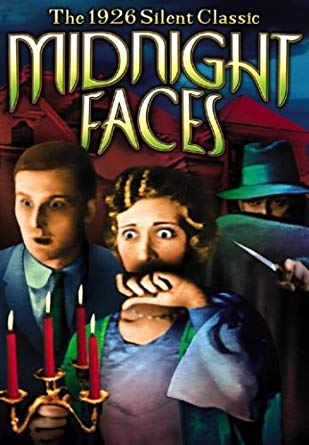
At under 55 minutes, Midnight Faces doesn’t appear to have a lot going for it on the surface. But if you’re a fan of the old dark house mystery type movies (old dark houses, reading of wills, secret passages, multiple suspects, etc), then I think you’d have a blast with this one.

The plot isn’t any better or any worse than any other dark house mystery, but the setting (a mansion in the Florida swamps) is decently fun. Mildly related, while the copy I saw had multiple issues (which I’ll expand on in a bit), I did like the greenish tint most of this movie had. Really helped the audience feel the more swampy atmosphere.

Despite being short, Midnight Faces has no lack of characters, with eleven individuals popping up now and again. Luckily, most of these people, despite the blurriness of the copy, are easily distinguishable. Francis X. Bushman Jr. does a good job as the main character, and despite the ever-present racial stereotypes of the times, his body man, a character named Trohelius Washington Snapp (played by Martin Turner) was occasionally amusing at times also.

The print I viewed, and I believe to be most common, has a multitude of problems, including color tinting fading from a lighter to a darker shade (at times, almost appearing black-and-white), cropped poorly, generally bad picture quality (even for a silent movie), and a repetitive score (it seemed to loop only three pieces of classical music). On the upside, one of the pieces was Johann Pachelbel’s Canon in D Major, which was pleasantly calming.

In short, the commonly available print may not be up to high standards, but if you got a kick out of movies like The Cat and the Canary, The Bat Whispers, One Body Too Many, The Monster Walks, or any number of old dark house mysteries, or if you’re into silent movies, I’d give this one a shot. After seeing this one a few times, I still enjoy it, so maybe others will too.

7.5/10