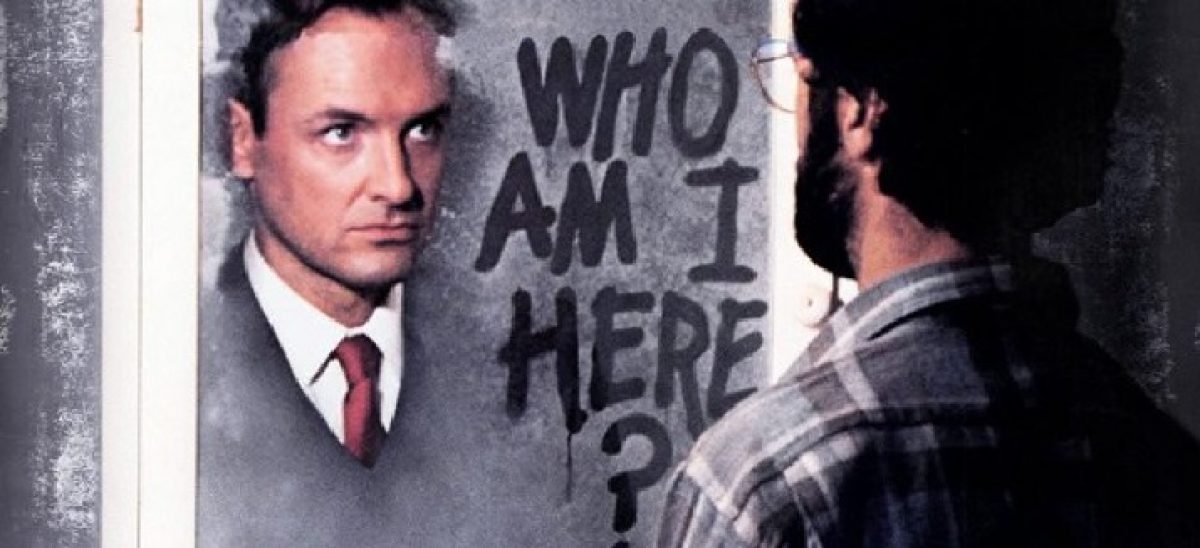
Orlacs Hände (1924)

Directed by Robert Wiene [Other horror films: Furcht (1917), Das Cabinet des Dr. Caligari (1920), Genuine (1920)]

This silent Austrian classic, known as The Hands of Orlac, has been a film I’ve honestly been avoiding. It’s one of the few popular silent horror films I’ve not seen, but I got the feeling that I wouldn’t care for it, and believe it or not, I take no delight in writing negative reviews for films often considered classics.

Alas, we all have to face our demons, and so in that spirit, here I am writing a negative review.

Here’s the thing – if you want to see this same story, based off the French novel Les Mains d’Orlac written by Maurice Renard, then I’d highly recommend watching Mad Love, which is a fantastic film; not only does it have some legit creepy scenes, it also, of course, stars Peter Lorre.

Sure, the story is here too, no doubt. But at an hour and 52 minutes, this is far too slow-moving to really be that engaging. Things pick up okay at about an hour and 30 minutes in, but getting there is a challenge that I don’t want to compete in again.

Having seen a decent amount of silent horror films, overacting isn’t something that’s too uncommon. I’d argue that most of the time, though, I don’t even notice it. I did here, though – as much as I love Conrad Veidt (Das Cabinet des Dr. Caligari, The Man Who Laughs, Das Wachsfigurenkabinett, and Unheimliche Geschichten), he just felt way too dramatic at times, and that goes double for Alexandra Sorina. It may have been intentional, but it just bothered me, For what it’s worth, Fritz Kortner (Schatten – Eine nächtliche Halluzination) did well in the end, but staying awake to see his performance may not be easy.

I can admit that perhaps I’m in the minority here. The movie feels so damn sluggish to me, but if most people see it as compelling, then so be it. I wish I felt the same, though, because as Mad Love later shows, this can be quite a decent story (especially during the blackmail sequence, which is okay here, but infinitely creepier in the 1935 classic).

All of this is to say that I avoided Orlacs Hände for a reason, and though I am happy to have seen it, if only to say that I’ve now watched most of the silent horror classics, this movie went about how I thought it would. It’s just way too slow and way too long, and that’s not a good combination.

4/10
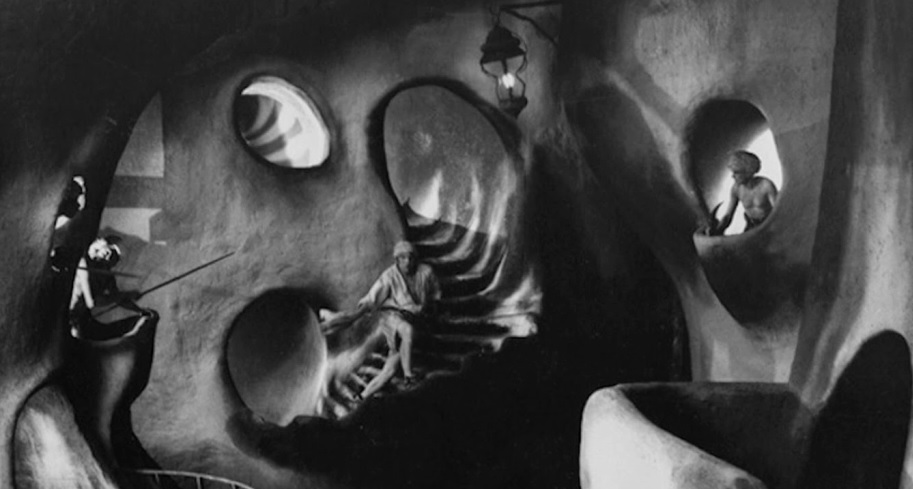
Das Wachsfigurenkabinett (1924)

Waxworks

Directed by Leo Birinsky [Other horror films: N/A] & Paul Leni [Other horror films: The Cat and the Canary (1927), The Man Who Laughs (1928), The Last Warning (1928)]

A far more well-known silent anthology than Unheimliche Geschichten (1919), this Paul Leni film (commonly known as Waxworks) has an entire different set of problems, but at the same time, still comes out a slightly better film.

With two stories comprising most of the hour and 23 minute film (each story an average of 38 minutes), the biggest issue with Das Wachsfigurenkabinett is that it’s tone isn’t that consistent. The first story is a bit of a light-hearted adventure, with jaunty sequences and music. The second was a much slower, almost somber, historical piece about Ivan the Terrible. And the last sequence was a mere six minutes or so, which is where most of this movie’s horror elements come from.

So an adventure/history/horror mix is certainly an interesting idea, and the framing story (a writer comes up with stories on some waxworks figures) is certainly decent, but how is the movie as a whole?

The first story, starring Emil Jannings (previously seen in the 1918 Die Augen der Mumie Ma) as a Caliph, was lot of fun, with some great looking set pieces and an enjoyable story. The second, with Conrad Veidt (from 1919’s Unheimliche Geschichten and 1920’s classic Das Cabinet des Dr. Caligari) was certainly more in the vein of horror, but the story didn’t do much for me until the pay-off at the end. And the third sequence, with Jack the Ripper/Spring-heel Jack was just too short to really warrant strong opinions one way or the other.

For any anthology movie, I feel that there should be a base of three to four stories, and not counting the framing story, Waxwork had two, all things considered. And while one of them was pretty fun, and many sequences looked cool (along with a fight on top of a temple), this movie didn’t have what I really look for in anthology films.

Paul Leni, who later directed such titles as 1927’s The Cat and the Canary, 1928’s The Man Who Laughs and The Last Warning (perhaps one of my favorite silent horror films), did an okay job, but again, the tone didn’t really work for me. That said, this is still considered a classic for a reason, and providing that you’re able to locate the right print, if you’re a fan of silent flicks, this is still worth a watch (if for nothing else, the expressionist set pieces), but all-in-all, it falls a bit below average for me.

6.5/10