The Town That Dreaded Sundown (1976)

Town that dreaded

Directed by Charles B. Pierce [Other horror films: The Legend of Boggy Creek (1972), The Evictors (1979), The Barbaric Beast of Boggy Creek, Part II (1984)]

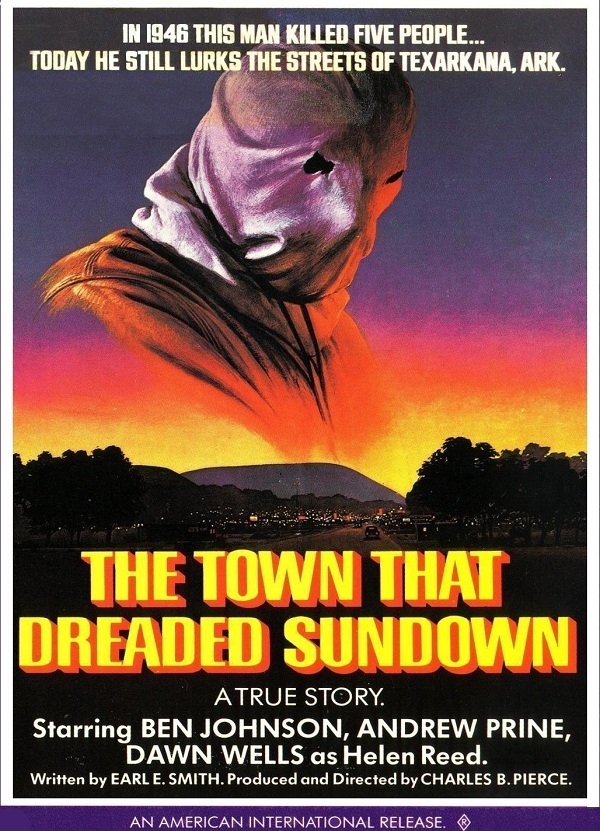
My opinion on this crime/horror hybrid hasn’t much changed since I last saw it. It’s a great little 70’s flick based off a real-life series of murders, and the dry documentary-style the movie partakes in (complete with the great narration of Vern Stierman) really does the story justice.

I think what I enjoy most about this is how focused it is on the procedure the police officers go through in order to capture the killer. Of course, we see many of the kills the police aren’t privy to at the time, but for most of the movie, we’re following Ben Johnson’s Captain J.D. Morales. The spotlight on the attempted detective work (truth be told, evidence was pretty much non-existent) was also helped out by the aforementioned documentary-style of the film. It really felt at times like I was watching an episode of Dragnet (which certainly isn’t meant in a negative way).

I suspect that my main complaint with the film is somewhat similar to many others’ views, and that’s that The Town That Dreaded Sundown is, at times, tonally inconsistent. Charles B. Pierce (the director of the film, as a matter of fact) played a character Patrolman Benson, or Sparkplug, who was almost entirely utilized as comic relief. In a 70’s documentary about savage crimes that have shrouded a community in fear, I thought that Pierce’s character was just too inconsistent. He just felt so out of place. Luckily, that’s one of the few flaws, as both Ben Johnson and Andrew Prine did quite well.

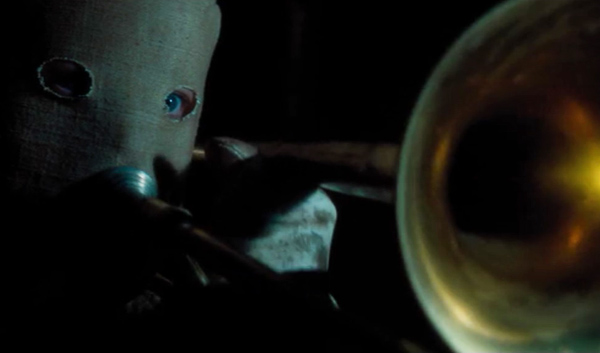
While this next comment isn’t necessarily a fair criticism, I have to say the kills, for a movie often considered a proto-slasher, were somewhat lacking. Much of it was death by gunshot, and the only really unique kill was with the trombone. Now, given this is based off true events, I understand how those comments could come across as tasteless, but there you go. The design of the killer, though, with the awesome hood, certainly stood out as a positive.

Many people have called this film somewhat dry, but I think that’s somewhat the point. The killer of the original crimes in the 1940’s was never caught (many people believe it to have been suspect Youell Swinney, but that’s certainly nowhere near proven or conclusive), which means that the movie doesn’t answer all the questions someone may want. It does, however, lead to the ending, which was just great.

Personally, as a fan of 70’s horror films and their often drier auras, I really like this one. I did when I first saw it, and that’s not changed. I think it’s a rather interesting movie, and while the tone is admittedly inconsistent at times, I definitely think this is a fine film, and probably made for a great drive-in experience.

8.5/10
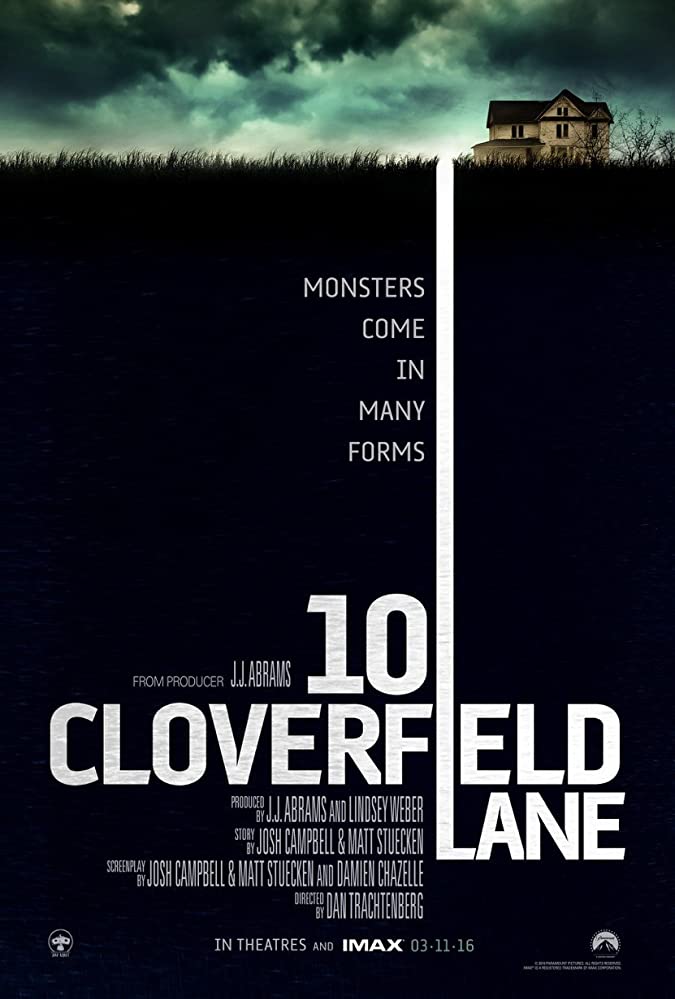
10 Cloverfield Lane (2016)

10 cloverfield

Directed by Dan Trachtenberg [Other horror films: Prey (2022)]

Talk about a rather masterfully-done film. A spiritual successor to the 2008 Cloverfield, 10 Cloverfield Lane is a damn good movie with a very competent cast and spectacular suspense.

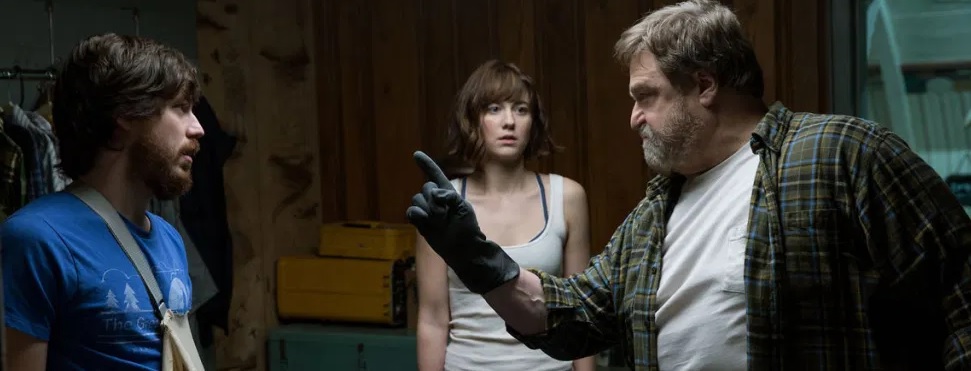
Much of this lies in the ambiguity of the situation Mary Elizabeth Winstead’s character finds herself in. Waking up in a doomsday bunker after being abducted by Howard (John Goodman), and told that there’s been some type of invasion, and she’s safer there, it’s a tense, tense movie with a lot of twists and turns.

John Goodman is an actor I’ve always appreciated. He was great in Roseanne, and pretty much everything else. He does look healthier here than he did in Red State (2011), which I’m grateful for. Here, his performance is superb, and he comes across both as genial and other times rather threatening and absolutely batshit. Mary Elizabeth Winstead is an actress I know from limited exposure (Final Destination 3, Live Free or Die Hard, and the short-lived series BrainDead), but she does great here, and totally feels right in the role. John Gallagher Jr. (from The Newsroom) is pretty solid also, and brings a little humor to the film.

The tense, suspenseful plot of this film is one that I can’t imagine easily being rivaled, and when you have such a great cast, everything comes nicely together. Toward the end, when some of the hard-asked questions finally have a light shined upon them, the movie loses a bit of it’s magic, but I rather like the final scene, so I think that some of the loss of suspense can be forgiven.

Given my somewhat lukewarm reaction toward Cloverfield, I am happy to say that you can definitely watch this as a stand-alone, and I’d highly recommend doing so, as this really is a damn good film with a lot going for it, such as Goodman’s great performance and the fantastically-crafted, tense story.

9/10

The Face at the Window (1939)

Face at the Window

Directed by George King [Other horror films: Sweeney Todd: The Demon Barber of Fleet Street (1936), The Crimes of Stephen Hawke (1936), Sexton Blake and the Hooded Terror (1938), Crimes at the Dark House (1940)]

While certainly not a well-known classic of the genre, The Face at the Window is a rather enjoyable romp from a time when there weren’t many releases in the genre, allowing it to stand out all the more.

The story here is more engaging than the usual old dark house movie (though make no mistake, I love those also), what with a serial killer known as the Wolf murdering people around Paris. After a bank robbery, things get even more involved, and everything ties in nicely at the end, which may not be surprising, given the time this came out.

For a lower-budget movie, The Face at the Window boasts a strong cast. Tod Slaughter (who starred in, among other things, the 1936 adaptation of Sweeney Todd: The Demon Barber of Fleet Street and 1948’s The Greed of William Hart) does pretty damn well here, with his over-the-top, hammy performance. He was masterful in every scene, and really stood out above all others. John Warwick (who never really appeared in a horror film before or after) did great as the main character, appropriately sympathetic and a solid individual to root for.

Marjorie Taylor was solid, too, in her role, though, as one can guess from the time period, she wasn’t given a whole lot to really do. Robert Adair (who appeared in classics such as The Invisible Man and 1931’s Dr. Jekyll and Mr. Hyde, uncredited in both) was good as the police chief, and really helped bring things together during the conclusion.

And what a fun conclusion it is. The ham-fisted way they threw in the mystery behind *cue dramatic voice * the Wolf was no doubt ridiculous, but was it fun? Very much so. And the laughable experiment with electricity, in which a dead body would incriminate his murderer, along with a twist, was rather enjoyable also.

The Face at the Window isn’t aiming to be in the leagues of such classics as Frankenstein, Doctor X, or Mystery of the Wax Museum, but for a cheap addition of late 30’s horror (one of the driest periods of the genre), I think this one is both deeply amusing and pretty fun. I love the whole terrifying face appearing at the window, followed by one getting stabbed in the back. Quality beginning. This movie, in my view, had style, and Slaughter’s performance was fantastic.

8/10

Graveyard Shift (1990)

Graveyard Shift

Directed by Ralph S. Singleton [Other horror films: N/A]

Though this is far from one of the better Stephen King adaptations, I think that Graveyard Shift carries with it some charm, much of it from a combination of the schlocky nature of the story and Stephen Macht’s overly enjoyable performance.

While it’s based off a short story from King’s first collection, Night Shift, not too much in this hour-and-a-half long film seems too unnecessary. Certainly, showcasing Warwick’s despicable nature more overtly here was a nice addition, which makes sense since they were trying to find some additional padding for the story, which was somewhat thread-bare in the original short story.

Without a doubt, Stephen Macht gave the best performance here. I don’t know what his accent was (sounds like a strong Louisiana twang), but he commanded attention in every single scene he was in. I really enjoyed Macht’s portrayal of Warwick, though it did get a bit much toward the end (more on that shortly). The main character, played by the milquetoast David Andrews, left naught a single impression whatsoever. Kelly Wolf had some gumption, but her character didn’t much amount to much, aside from hint at Andrews’ untold back-story.

Brad Dourif also appeared somewhat extensively in the film, but I thought his character was far, far too over-the-top. This isn’t to say that Macht’s character wasn’t, but Dourif took it to a new level, and I admit that while I usually enjoy his performances, this one turned me off somewhat.

A few things, such as the back-story of Andrews’ character, made Graveyard Shift feel somewhat incomplete. We’re literally never given any idea of what makes Andrews’ character tick – he was a blank slate, and we about never learn a thing about him. Another problem I had was that the conclusion felt as though it was escalating too quickly. It’s a shame, as otherwise, things were mostly plodding along fine.

One of the absolute best things about the film, though, was the setting. From an expansive cavern filled with bones to a flooded out, marshy graveyard, which stands next to an old, ominous mill, Graveyard Shift really knew how to use their settings, and it stood out as easily one of the most memorable parts of the film.

Ultimately, I enjoyed the clinical style of the short story more, but I appreciate how they attempted to flesh out Warwick’s character here, and I can’t say it enough: Stephen Macht’s performance is fantastic. I’d say that this is somewhat below average, but I will admit to enjoying it a hell of a lot more this time around as opposed to when I first saw it some years back, and while some aspects weren’t that great (including much of the conclusion), I suspect this has decent rewatchability.

6.5/10

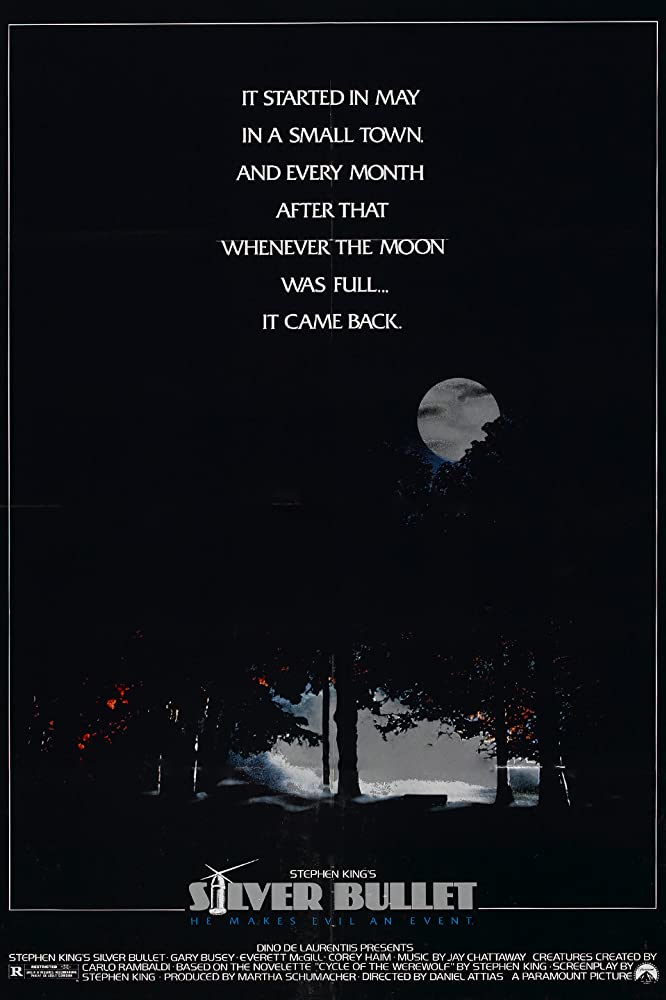
Silver Bullet (1985)

Silver Bullet

Directed by Daniel Attias [Other horror films: N/A]

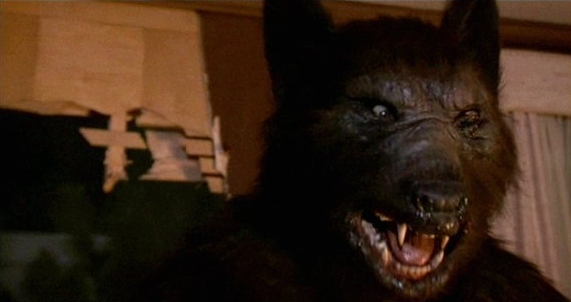
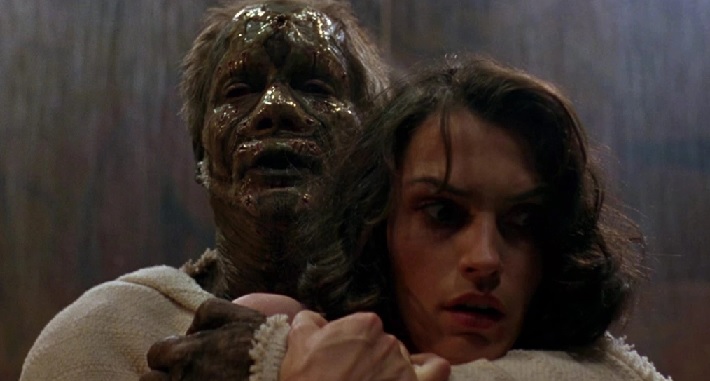
Having seen this one a couple of times now, I think that Silver Bullet is a decent werewolf flick with a somewhat nostalgic feel, but I don’t think it’s quite as good as many others seem to feel it is.

The story (based off the Stephen King novel Cycle of the Werewolf) is pretty fun, although I don’t really think it was necessary to have it be narrated by Megan Follows’ character. I enjoyed the mystery elements, however little they were used, in which the identity of the werewolf was trying to be ferreted out. The special effects, not to mention death scenes, were generally good (the decapitation near the beginning being a highlight for me), though the werewolf transformation was a bit lacking.

Silver Bullet did have a solid cast, though. I’ve never been overly fond of Gary Busey, but he does pretty good here, and his character is certainly memorable. Corey Haim does great with his role, and while Megan Follows (playing Haim’s sister) didn’t seem that relevant to the plot until the end, I really liked her also (though again, her narration of the events seemed somewhat pointless). Terry O’Quinn was rather fun as the sheriff, and it’s nice seeing him a few years prior to The Stepfather. I wasn’t completely won over by Everett McGill, though – he just seemed a bit much at times, and occasionally felt somewhat ridiculous.

I’ve not read the source material for this one yet, so I can look at this from a slightly less critical point-of-view than other King adaptations. The first time I saw it, I wasn’t overly impressed, but with a fresh viewing, I feel I understand the appeal of the movie a bit more. The 1980’s was one of the most important decades for werewolf movies, and while Silver Bullet’s no An American Werewolf in London, I definitely enjoy it more than The Howling.

I wish that they had done a little more with the whole mysterious identity of the werewolf before the reveal, and a few other things felt like they needed some expanding, but I still found this a somewhat enjoyable movie, one of the better werewolf films, and overall, I’d rate it somewhere around average, with the performances (especially those of Haim and Follows) being the highlights.

7/10

Day of the Dead (2008)

Day of the Dead

Directed by Steve Miner [Other horror films: Friday the 13th Part 2 (1981), Friday the 13th Part III (1982), House (1985), Warlock (1989), Halloween H20: 20 Years Later (1998), Lake Placid (1999)]

Oh joy. Another zombie movie. As a slasher fan, I don’t have an issue with some derivative plots, but zombie films take it to another level. There’s virtually nothing about this film that’s unique or worth seeing, and I just wasn’t feeling it.

None of which is to say the movie’s particularly atrocious, it’s just overly generic. The movie’s done in a serious manner, which is a bit of a relief, but at the same time, as the story doesn’t add anything all that special, it doesn’t really amount to much.

Only a handful of cast members really stood out to me, such as Mena Suvari (who played Heather in the American Pie movies) and Ving Rhames (though he wasn’t in the film for that long). Nick Cannon did okay, and probably had some of the better lines, while Ian McNeice (who appeared a bit in Doctor Who) was fun also. Most everyone else ranged from generic to bad, such as Matt Rippy, AnnaLynne McCord (who later starred in Excision), Michael Welch, and Stark Sands.

The special effects ranged from bad to awful. At worst, they were completely forgettable. There was, of course, some gore, but despite just having finished the movie, I can’t think of any particularly sequence that stood out at all. I guess zombies bit someone – that’s some solid gore, right?

In all honesty, this is just one of those generic zombie movies in which it’s hard to isolate all that much worth saying. It pales in comparison to the original Day of the Dead, which I didn’t even personally love. I didn’t care for what they did with the Bud zombie here, and overall, while the story is fine, with a twist (although if it surprised anyone, I’ll eat my shorts) thrown in, it’s utterly forgettable.

Also, a zombie popped up in the final millisecond and growled at the camera. I always love it when there’s a jump scare for the audience which has zero impact on the story being told. Great stuff. A+. Just kidding. This movie isn’t the worst zombie movie out there, but there’s literally no point to it, which is a damn shame, as it’s directed by Steve Miner, who directed classics such as Friday the 13th Part 2 and 3, House and Lake Placid. There’s no magic here, though.

5/10

Lord of Illusions (1995)

Lord of Illusions

Directed by Clive Barker [Other horror films: Hellraiser (1987), Nightbreed (1990), Clive Barker’s Salomé & The Forbidden (1998)]

After wanting to see this for some time, I have to admit I’m a bit underwhelmed. The story was decent, but I felt this sort of missed the mark, and ultimately wasn’t quite what I was looking for.

Portions were certainly enjoyable, though, particularly the detective work in trying to solve the mysteries Harry (Scott Bakula) was facing. I think it was during these sequences where I was most engaged, and I feel the movie did far better with showing us the mystery as opposed to the overly supernatural, more ridiculous parts of the story.

Bakula made for a pretty good main character. I’m not that familiar with him, but I definitely liked him here. Famke Janssen (who I know best as Jean Grey from the X-Men movies) was decent, but I didn’t care that much for her character. Barry Del Sherman shined here, and was perhaps the stand-out performance of the film, as his character seemed almost inhuman every time he was on-screen. I also enjoyed both Joel Swetow and Lorin Stewart. Daniel von Bargen didn’t do it for me, though, and his over-the-top character was pretty meh. Related, Kevin J. O’Connor didn’t wow me either.

Honestly, Lord of Illusions reminded me a lot of Wishmaster, albeit with far worse special effects (seriously, the special effects here, even for the 1990’s, are mostly awful). I had a lot more fun with Wishmaster than I did this one, though, and I can’t put my tongue on exactly why I kept thinking of that flick while watching this.

It’s true that the film ran a bit long (it’s about an hour and 50 minutes), but even if it was cut down a bit, I get the sense it wouldn’t do that much to boost my entertainment. The gore, when it popped up, was decently solid, and again, I thought the story itself was interesting (and the middle portion of the film pretty great), but overall, while I’d probably watch this one again, it wouldn’t be high on the list.

I’ll say this for it, though: Lord of Illusions had some strong ambitions, and it definitely had potential (that spinning sword trick and the resulting suspense was top notch). It just wasn’t what I was hoping for. It may still be worth a watch, though, if you’ve passed it up in the past.

6/10

Sometimes They Come Back (1991)

Sometimes They Come Back most likely or is it I dont really know but life is a shadow and whos image is casted on the wall I wonder

Directed by Tom McLoughlin [Other horror films: One Dark Night (1982), Friday the 13th Part VI: Jason Lives (1986), The Haunting of Helen Walker (1995)]

For a television adaptation of a Stephen King story, this early 90’s flick is okay. The problem is that, compared to the original story, this falls moderately flat.

See, the short story (which was first published in 1974, then released in King’s first anthology, Night Shift, from 1978) was written in a very succinct, almost clinical, manner. It’s not King’s best outing in Night Shift, but it is a pretty solid story, and also appropriately dark.

Partially because this is a television movie, though, Sometimes They Come Back strikes me as a lot more saccharine than anything, and it’s overly sentimental, almost sappy, portrayal, really takes away from what the story brought forth.

If you’ve not read the story, I suspect it might fair a little better, but I still think the movie would feel like the sanitized, 90’s flick it is. There are some solid sequences, and pretty solid performances, but it just doesn’t cut it for me.

I do have to give props to Nicholas Sadler, Bentley Mitchum, and Robert Rusler, who gave a fantastically exuberant performance as some greasers out for vengeance. Their over-the-top style, including the fun Big Bopper reference, made the film a lot more fun than it otherwise would have been. Those three brought a lot of heart to this film, and their antics added a lot. Rusler, by the way, played Ron Grady in the second A Nightmare on Elm Street, which was sort of fun.

Otherwise, the only other performance that stood out was the lead Tim Matheson. Brooke Adams, who was also in The Dead Zone (1983), was okay, but didn’t particularly do much for me. Matheson, of course, is a rather well-known name. I know him best from The West Wing, where he played the Vice President for a time, and he also starred in the television movie Buried Alive, which I’ve previously reviewed. He does a good job here, and he fit the role I imagined from the story pretty well. His dialogue, at times, was rather sappy, and his internal monologue was way too 70’s, but he was nice to see nonetheless.

Compared to the story, Sometimes They Come Back isn’t that great. It’s been years upon years since I last saw it, and it’s not really a movie I could see myself watching again any time soon. There are much better Stephen King adaptations out there, so I’d personally just recommend sticking to the story. Still, this is a harmless movie, with occasionally fun scenes, so if it sounds like your thing, give it a shot.

6/10

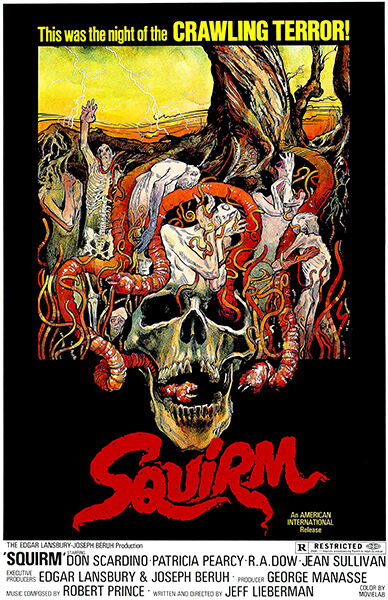
Squirm (1976)

Squirms

Directed by Jeff Lieberman [Other horror films: Blue Sunshine (1977), Doctor Franken (1980), Just Before Dawn (1981), Satan’s Little Helper (2004)]

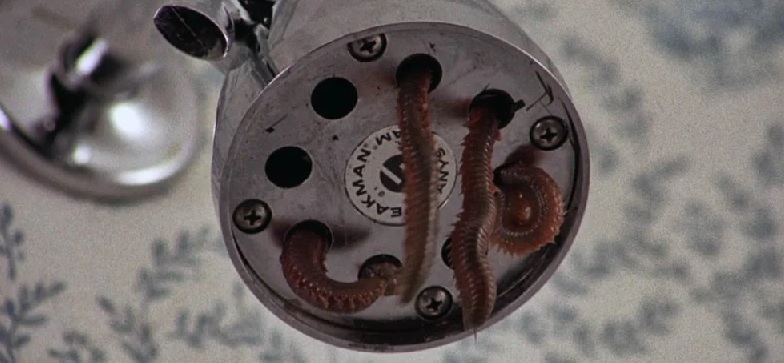
With a surprisingly somber tone (though perhaps not too surprising, given both the decade it came out and the strong influence The Birds had on this), Squirm actually stands out pretty well despite the plot initially sounding somewhat silly. Worms don’t particularly bother me, but during some sequences near the end, even I felt a bit uncomfortable.

Honestly, I think a lot of things worked in this film’s favor, from the local Georgia setting (complete with some nice, southern small-town scenery), to the performances throughout, and even the special effects. What otherwise could have been a somewhat ridiculous killer worm tale instead felt at times rather depressing, so Squirm did something right.

Don Scardino makes for a somewhat interesting lead, as he doesn’t really have the typical physique of a hero, but I generally liked his character, and he seemed pretty efficient. Patricia Pearcy was also solid, despite the somewhat annoyingly strong southern accent (she was born in Texas, so it may not have been that much an exaggeration). She later appeared in a little-known slasher called Delusion (or The House Where Death Lives), and stood out there too, so it’s a shame that she’s not done much else.

Many of the others did well also, especially Jean Sullivan (her character added much of the rather dreary atmosphere to some of the scenes), R.A. Dow (this is his single role, which is amazing, as I thought he did damn good here), and Peter MacLean. Fran Higgins (who played Pearcy’s younger sister) wasn’t amazing, but as this was her sole role, and she doesn’t seem a traditional actress, I can excuse that.

The worms themselves added a lot, of course. Like I said, I’m not particularly squeamish in regards to worms, but during the final 15 minutes when they started popping out everywhere (which was pretty well-done, in my opinion), they certainly grossed me out. It felt a little fake, just the sheer amount of them during some scenes, but given they were real worms, I’ll let some of that fly. When the worms were in one of the individual’s face, under the skin, that wasn’t pleasant either.

Another small thing I wanted to mention was a scene in which a tree falls onto a house, which was apparently done in a single shot with the actors/actresses actually present. They tied it into the movie, but given the strong damage the town had taken during the previous night’s storm, to me, it felt like a rather human element thrown in, something that seemed more real, and I rather liked that.

If Squirm has any faults, and it does, I’d say that they probably could have cut the film down a bit. The first half has a lot of running around, which, while adding a sort of ‘solving a mystery’ vibe, felt somewhat dry in the way that many 70’s movies tend to feel. I did appreciate the entirely serious way the story was handled, though perhaps the opening text was a bit overboard.

While director Jeff Lieberman didn’t do a lot for the genre, the movies he did direct (including this one, Blue Sunshine, which I’ve yet to see, Just Before Dawn, and Satan’s Little Helper) certainly had some flair. I think that this film has a lot going for it, and while it didn’t leave much an impression on me the first time I saw it (probably because it was during October, and remembering individual movies during that month is always hard), it definitely did this time.

8/10

Killing Spree (1987)

Killing Spreee

Directed by Tim Ritter [Other horror films: Day of the Reaper (1984), Twisted Illusions (1985), Truth or Dare?: A Critical Madness (1986), Wicked Games (1994), Creep (1995), Alien Agenda: Endangered Species (1998), Screaming for Sanity: Truth or Dare 3 (1998), Twisted Illusions 2 (2004), Deadly Dares: Truth or Dare Part IV (2011), Hi-8 (Horror Independent 8) (2013, segment ‘Switchblade Insane’), I Dared You! Truth or Dare Part 5 (2017), Trashsploitation (2018, segment ‘Truth or Dare’), Hi-Death (2018, segment ‘Dealers of Death’), Zombarella’s House of Whorrors (2019, segment ‘Cosmic Desires’), Sharks of the Corn (2021)]

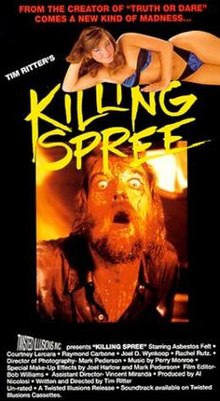
Dedicated to H.G. Lewis, Tim Ritter’s low-budget fourth film is overly inept but extraordinarily fun, and if SOV horror is something you’re a fan of, I think you’d find this a blast.

The story, if taken seriously, is actually somewhat tragic, what with a man believing his wife is cheating on him, and so he decides to kill the men ‘making’ his wife unfaithful. Of course, in as low-budget, gory ways as possible. Obviously, this isn’t a Hollywood film, and the acting is pretty awful across the board. That said, so many of the lines of dialogue are hilariously awesome that it doesn’t matter (such as a favorite of mine, “Why is she writing all of this down?”).

Asbestos Felt does fantastically great as the paranoid husband, with plenty of cheesy dialogue and overall a beautifully delicious performance. Courtney Lercara, the wife, wasn’t quite as memorable, but I did love her over-the-top scenes of her various lustful encounters. Pretty much everyone else was second tier, but that doesn’t stop individuals such as Raymond Carbone, Joel D. Wynkoop, and Rachel Rutz from standing out of the pack in their wacky, goofy ways (Rutz’ nonsensical dialogue just broke me up multiple times despite her short time on screen).

For a lower-budget flick, the gore effects are decent. They don’t really become great until the ending (such as the hammer in the jaw scene, perhaps my favorite kill, followed by the lawnmower sequence), but you can tell that Ritter definitely got his sensibilities from the Godfather of Gore, H.G. Lewis, who, like I mentioned at the beginning, this film is dedicated to.

I have a few issues, though, that hinder this film from reaching it’s arguably-rightful place of above average. One was a dream sequence which struck me as way too goofy, though the fact that it is clearly a dream sequence grants it some leeway. The other problem, though, is the conclusion, in which the movie shifts gears from a slasher to something else (and to avoid spoilers, I’ll just say it sort of comes out of nowhere). The final 15 minutes felt far more stale to me than the rest of the film, and I would have been okay with a 70 minute film, cutting out or changing the conclusion.

It’s a shame, as pretty much everything else is both amusing and deeply enjoyable (I always loved his random beach-rage sequence – for some reason, that’s always a scene that I remember the most from this flick). The twist, such as it was, came across as slightly more sophisticated than one might think from a film like this, but it certainly added a tragic twist to the film. If only the ending was better. It’s still a deeply enjoyable film, though, and despite my seemingly unenthusiastic rating, I’d recommend it to fans of lower-budget outings from the 1980’s.

6.5/10