Son of Frankenstein (1939)

Directed by Rowland V. Lee [Other horror films: Tower of London (1939)]

In truth, I can’t swear that I didn’t see bits and pieces of this growing up. My parents raised me on Universal classics, so I wouldn’t be surprised if I’d seen fleeting moments of this one. To my knowledge, though, this is my first time watching Son of Frankenstein, and I have to say that it was a bit of a treat.

For further context, I’ve never been a big fan of Bride of Frankenstein, for a variety of reasons. I was wondering if this would disappoint me, and when I saw the runtime was an hour and 40 minutes, I got more hesitant. I’m happy to say that such worries were all for naught, though, as Son of Frankenstein turned out a fine movie.

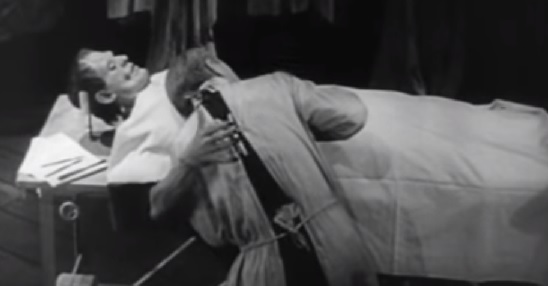
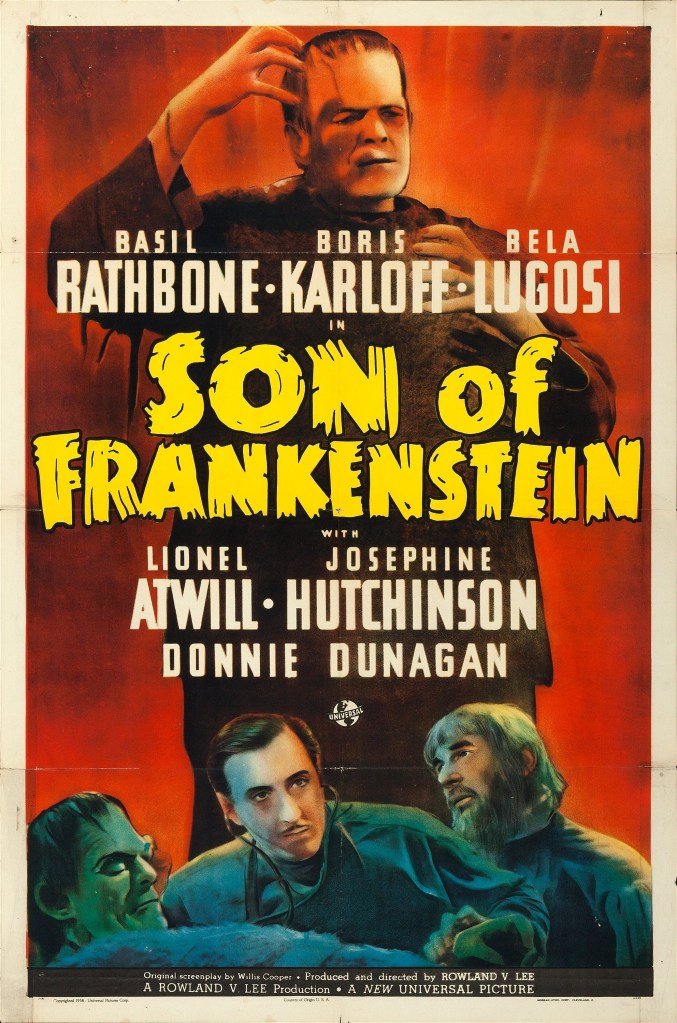
The opening was chock-full of atmosphere – the son of Henry Frankenstein (from both the 1931 classic and Bride), Wolf von Frankenstein (Basil Rathbone) returns to his family’s castle, and with him returns the dangers of the monster, albeit far more due to Ygor’s actions than Frankensteins’ own. It’s a very classic horror film in structure, and though it lacks much of the charm of the first movie in the series, it still has quite a bit.

It also has a surprisingly high level of tension. Things ratchet up throughout the film, and especially in the last 25 minutes, as Wolf von Frankenstein is increasingly worried for his family’s safety, and cracking under the suspicions of Inspector Krogh (Lionel Atwill) – for a movie of it’s time, I was pleasantly surprised by just how much I was still engaged come the end (especially given that there were portions in the middle of the film that I began to feel my interest waning).

Basil Rathbone (Queen of Blood, The Black Cat, The Hound of the Baskervilles, The Black Sleep) was great here, and his portrayal of a Frankenstein trying to redeem his family’s name was sympathetic. As Inspector Krogh, Lionel Atwill (Mystery of the Wax Museum, Mark of the Vampire, Doctor X, Man Made Monster, Secret of the Blue Room) was hella intense, and I really dug his character. Bela Lugosi (Murders in the Rue Morgue, The Devil Bat, Black Friday, Night Monster, Bela Lugosi Meets a Brooklyn Gorilla, The Return of the Vampire, The Body Snatcher) did great with a character who sort of popped out of nowhere (as Ygor is likely a replacement for Fritz), and he was certainly a dick.

Josephine Hutchinson, as expected, didn’t really have a ton to do in this movie, not to mention a lack of agency. Edgar Norton (Dr. Jekyll and Mr. Hyde, Dracula’s Daughter) was great here, as he usually is, and playing the Monster was again Boris Karloff (The Devil Commands, Frankenstein 1970, Voodoo Island, Grip of the Strangler, Bedlam, The Black Room, Curse of the Crimson Altar, The Walking Dead, Snake People, Die, Monster, Die!), and he did just as well as you’d expect him too.

I was never expecting to dislike Son of Frankenstein, but I have to admit that I didn’t know if I’d actively enjoy it, and was pleasantly surprised to find out that I did. It’s a fun movie, and the aspect of Ygor using the Monster as a form of revenge without the knowledge of Frankenstein adds a little spice to the film. I also loved that reference at the beginning – about how “nine out of ten” refers to the Monster simply as ‘Frankenstein.’ As someone who finds that constantly bothersome (though I understand the counterpoints), I appreciated that piece of dialogue.

No doubt that Son of Frankenstein is a strong Universal classic – one that I personally find superior to Bride of Frankenstein – and though I think many might be turned off by a third movie in a franchise, I think that if they take the time with this one, as I did, they’d have a pretty good time too.

8/10

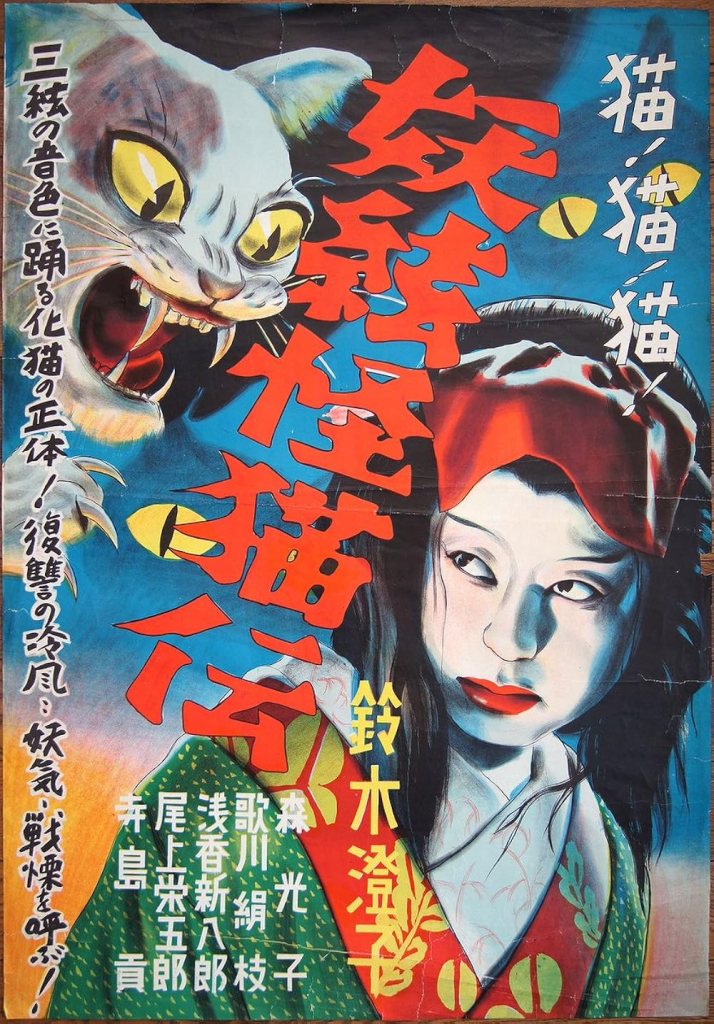
Kaibyô nazo no shamisen (1938)

Directed by Kiyohiko Ushihara [Other horror films: Nijiotoko (1949)]

There was generally a dearth of horror films in the late 30’s, and some of the films I personally count as horror, others don’t (such as Sh! The Octopus, The Terror, and Riders of the Whistling Skull), so to come across a late 30’s Japanese film, beautifully subtitled on YouTube, was a treat that’s hard to beat.

Known as The Ghost Cat and the Mysterious Shamisen, the story here strikes me as somewhat engaging. A jealous woman (Sumiko Suzuki) kills a cat, along with a young woman (Kinue Utagawa), because she’s awful (the jealous woman, to be clear; I’m sure the cat was kind). Of course, things in Japan never stay truly dead, and revenge strikes like a monkey’s dance.

Which makes more sense if you’ve seen the finale of this one.

First off, I guess I should mention that I had absolutely no idea what a shamisen was until I watched this. It’s a traditional Japanese musical instrument, sort of like an acoustic guitar, only infinitely different. The instrument plays a big part in this movie, as Shinpachirô Asaka’s character plays one, and gives the prized instrument to Kinue Utagawa’s character before her untimely demise. And like the cat that came back, the instrument slowly finds it’s way to the hands of Mitsuko Mori, who played the sister of Kinue Utagawa’s character.

Some scenes aren’t that easy to fully gauge – not only is the movie from 1938, but the print is rather scratchy at times – and I didn’t understand the final scene whatsoever, but it seems like both the spirit of the cat that was killed, along with the spirit of the woman, come back for revenge. At times it almost seems like the cat is the woman – or the woman is the cat; however it went, that wasn’t clear.

What was clear were the solid performances. Shinpachirô Asaka wasn’t quite as in focus as I expected, and even his part toward the finale seemed limited, but he definitely did well with his character. Playing a highly jealous and awful woman, Sumiko Suzuki did stellar, and though I never cared for her character, her performance throughout was good.

The stand-outs, though, would be both Mitsuko Mori and Kinue Utagawa. I honestly wasn’t expecting Mori to take a more central role, but toward the end, she does, playing a huge part in an act of revenge against Suzuki’s character. More to the point, there’s a conversation that Mori and Utagawa have that’s quite emotional, and that showed great promise.

The finale here is rather tense. It lasted around 15 minutes, all during a play-type deal, and though it felt a little rushed and hectic just at the moment where I’d have preferred more clarity, it was a solid finale, even possessing a few interesting camera tricks that I don’t have the vocabulary to describe.

Perhaps the most memorable scene would be when a cat’s face is sort of superimposed on a woman’s face, which was decently effective. I mean, none of the scares here are like to amaze most modern-day audiences, but there was a scene or two that had a solidly spooky atmosphere, such as the first time the ghost cat arises, so there is fun to be had.

One of the earliest Japanese horror films I’ve seen (aside from the silent A Page of Madness, which I abhor), The Ghost Cat and the Mysterious Shamisen isn’t an amazing movie, but it was perfectly adequate. I can say I thought it was almost special. What it really is, though, is an old Asian horror film many probably haven’t heard about, and it’s an okay watch, so if it sounds like your type of thing, give it a go.

7/10

The Mummy (1932)

Directed by Karl Freund [Other horror films: Dracula (1931), Mad Love (1935)]

I won’t keep people in suspense: I’ve never been a big fan of The Mummy. It’s a decent movie, but I think the 1959 Hammer version is fresher, and while I definitely appreciate aspects of this film, it’s always been one of my least favorite classic Universal films.

Like both Dracula and Frankenstein, my parents owned The Mummy on VHS. In fact, though I’ve not watched it via that medium, I still own the VHS tape. Like Dracula and Frankenstein, I saw this when I was a kid. Unlike Dracula and Frankenstein, I was somewhat bored even then.

Look, it’s a dry film, even for the time. Hand on heart, I truly believe the opening is as classic as anything from Frankenstein or Dracula – the muttering of a spell, Karloff’s mummy slowly coming back to life, his hand dragging across the table, Bramwell Fletcher’s character seeing the mummy, and laughing hysterically, the mummy’s bandages trailing out the door as he shambles off. “He went for a little walk. You should have seen his face.” I think that opening is fantastic.

And the rest of the film is okay. I never really cared for the whole “you have the soul of a woman I loved over three thousand years ago and so I’ll make you love me like you did back then” thing, which is why I don’t often find mummy-related films that compelling. I like the idea of mummies, but like scarecrows, there’s so few mummy movies I dig (and most of the ones I do tend to be the Hammer films).

Certainly Boris Karloff (The Devil Commands, House of Evil, The Invisible Ray, The Body Snatcher, Voodoo Island) does a great job in his role. I love his slow movements throughout the film, and I can buy that he’s quite old. Arthur Byron and Edward Van Sloan (Dracula, Before I Hang) were fun in their scenes, and though generic, David Manners (Mystery of Edwin Drood, Dracula, The Black Cat) was serviceable. As discussed, Bramwell Fletcher (The Undying Monster) has one of the most classic scenes from Universal horror, and though I don’t love the character arc, Zita Johann was solid.

It’s not a matter of performances, of course, as most of them are great. It’s just that I don’t love the story. It’s not even a bad story – it’s just not a story I care for, nor find that engaging, where I find most of the 1959 Hammer film otherwise.

Even so, The Mummy is a classic, even if I personally consider it a lesser classic, and though it’s not a film I’d go to watch nearly as often as most other Universal classics, it still has it’s place and certainly has it’s fans.

6.5/10

Bride of Frankenstein (1935)

Directed by James Whale [Other horror films: Frankenstein (1931), The Old Dark House (1932), The Invisible Man (1933)]

There is a sizable constituency out there that believes Bride of Frankenstein to be one of the best sequels ever made, and not only that, but believes the film to be better than the 1931 classic. I never understood this. The movie is okay, but I don’t think it even cracks average. It’s not a bad film, but it pales in comparison to the first movie.

So with that blasphemy out of the way, I’ll try to explain why.

For one, the first forty or so minutes of the film feel quite aimless. Frankenstein’s monster survives being burned down in the windmill, travels the countryside, gets caught, escapes, and travels the countryside again, while Henry Frankenstein, healing from his injuries sustained at the end of the 1931 film, is goaded into working with Doctor Pretorius after the good doctor shows him some small people in jars.

It’s at that scene, I should add, that my disinstest grew. I understand the mechanics, however impossible, of Frankenstein’s creation – just stitch together body parts of multiple dead people, and add electricity to make the heart beat and the creature live. I get it. Apparently Pretorius used cultures from a seed to grow those small people (or homunculi).

Do those homunculi have any self-awareness or agency? The king was lusting after the queen, and the clergyman was chiding the king for doing such, but is that actually the extent to what those people are? Can they write books? I understand the science, such as it is, behind Frankenstein’s creation of the creature, but I don’t get Pretorius’ experiment at all. Where did he get the seed he used for the cultures from? I just didn’t see any relation between what he accomplished and what Frankenstein accomplished – they created two fundamentally different things.

Is that nitpicky? I don’t know, but I can’t take Pretorius’ character seriously as I fail to see the science in what he did. Overall, he’s a fun character, and I got a kick of his using Frankenstein’s creation against him, forcing the scientist to work with him, but those fantasy/comedy homunculi always felt so damn out of place to me, and took me away from the movie entirely.

Of course, things do pick up with the final twenty minutes. Really, the finale is strong, and we also finally get to see the titular character (for all of a minute or so) and her interactions with the creature. It’s tragic, and it leads to a good conclusion, but it’s not enough.

The only part of the film that I’d say was nailed would be the creature’s slowly becoming more humanized after being socialized by a blind hermit (O.P. Heggie). I thought those scenes were quite touching, and I got a kick out of the hermit teaching the creature to both smoke and drink. The hermit was such a good character, and I loved him and his sequences.

O.P. Heggie in fact is my favorite performance in the film. No doubt I think Boris Karloff did great, and though I didn’t get his character, Ernest Thesiger was solid as Pretorius. It was nice seeing both E.E. Clive (Dracula’s Daughter, The Invisible Man) and Una O’Connor (The Adventures of Robin Hood, The Invisible Man) not to mention Dwight Frye (The Vampire Bat, Dracula), but Valerie Hobson (replacing Mae Clarke as Elizabeth) and Colin Clive were just sort of there, and didn’t do much for me.

The 1931 Frankenstein is iconic in so many ways. Aside from the hermit and his growing connection with the creature, which was heart-warming, I don’t really see anything iconic here. I loved the design of the new female creature – those white stripes in the hair a nice choice – but she never got any time to really do anything aside from hiss and shriek, and overall, I can’t pretend I think this is anywhere near as good as the first movie.

6.5/10

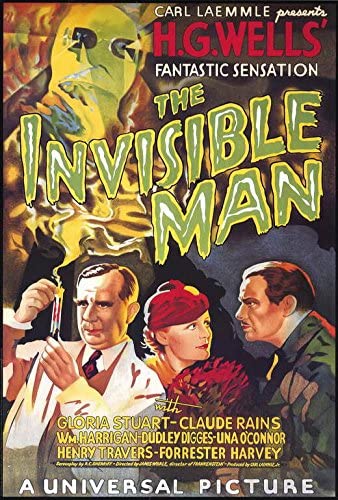
The Invisible Man (1933)

Directed by James Whale [Other horror films: Frankenstein (1931), The Old Dark House (1932), Bride of Frankenstein (1935)]

As far as Universal horror goes, The Invisible Man stands tall as a strong film. In fact, I think it’s one of the best – the story is quick-paced, the special effects are amazing even to this day, and the movie is just so damn fun.

It’s amazing just how much personality Claude Rains puts into his character of the Invisible Man. One of the drugs that allows him to become invisible also chips away at his sanity, and when he’s screaming about creating invisible armies after selling his secrets to the highest bidder, or robbing banks and throwing the money around (Money Money Money Money Money!) or causing train derailments just because he can, you know he’s lost it, and Rains gives the character so much, which is a big reason why the film is stellar.

Another is simply the design – obviously, when he’s invisible, there’s not much design there (though I’ll touch on the special effects in a second), but during the opening, when he’s in the hat and long-coat, wrapped with surgical bandages and wearing those glasses, it’s such an iconic look. The opening as a whole is A+ material – a lively inn going quiet as a mysterious bandaged fellow comes in from the snow. Great look, great opening.

And those special effects. I’m a big movie fan (which may go without saying), but when it comes to how films are made, I’ve got nothing. I don’t know much about how some effects are done, how some shots are filmed, any of that stuff. I’m not a big behind-the-scenes guy, in short. All I can say for certainty is that the effects in this film from 1933 amaze me – it looks so damn good throughout the whole film. Every time I see this movie, I’m so impressed by what a movie of this age was able to do.

I said before Claude Rains did a fantastic job, and he really did – it’s no doubt in my mind that Rains’ performance is one of the reasons I think the movie is as good as it is. He played a character losing his sanity fantastically, and I just loved it. We only see his face for a couple of seconds, but he made this movie his bitch, as the kids say.

Others have to be mentioned, though. It’s not even the larger characters, such as those played by Gloria Stuart (The Old Dark House, Secret of the Blue Room, and Titanic), William Harrigan, and Henry Travers. They all do fine, sure, but it’s performances by Una O’Conner and E.E. Clive that gave this movie more spirit. E.E. Clive (Bride of Frankenstein and Dracula’s Daughter) is a classic, and his line “He’s all eaten away,” comes to mind often, as does the shrieks of Una O’Connor, which always gets me cracking up. While she’s been in plenty of other films, I see her face and hear her voice and immediately remember her role in The Adventures of Robin Hood (1938), which is one of the best non-horror films in history.

Because of it’s quick pace and lack of any tedious portions (which is something that, as good as they are, movies like Frankenstein and Dracula can’t honestly boast), The Invisible Man is a fantastically digestible and fun movie. I’ve loved it ever since I first saw it, and I find the Invisible Man an iconic character with an iconic design, and I really find this movie pretty much perfect.

10/10

Night of Terror (1933)

Directed by Benjamin Stoloff [Other horror films: The Hidden Hand (1942), The Mysterious Doctor (1943)]

Through not quite the horror classic you might think of when considering 30’s horror, Night of Terror is a fun little movie that’s entirely a product of it’s time, and like many of the films around this time period, I enjoy it quite a bit.

With secret passages, suspicious servants, and wills, this film has a lot of what you’d expect from dark house murder mysteries, the best of which include The Cat and the Canary, The Bat Whispers, and The Monster Walks. This one is obviously not as good as those attempts, but there’s still fun to be had if you’re a fan of this type of horror.

Amusingly, Bela Lugosi has a largish role as a servant named Degar, and of course I enjoyed his overly serious demeanor. Most of the main cast was just as fine, including Wallace Ford (The Rogues’ Tavern, The Mummy’s Hand), Sally Blane, George Meeker, Tully Marshall, and Edwin Maxwell (Mystery of the Wax Museum, The Ninth Guest). For comedic relief, we had Oscar Smith, who portrayed a cowardly chauffeur – unfortunately, not an uncommon role for black actors back in those days.

The story isn’t special in any way, but it was decently fun, what with people holed up in a house while a killer with quite a large body count (prior to the story proper, he’s apparently killed 12 people) prowls around, and what’s even better, maybe there are multiple killers, and some of the deaths have to do with a recently-read will.

This is all typical stuff for the time period, including the amusing conclusion, in which a character rises from the dead to warn the audience against spoiling the finale. In fact, I was so moved, I’ll quote the fella himself verbatim:

“Take heed, I am talking to you, and you, and you. If you dare tell anyone how this picture ends, if you dare reveal who the murderer really is, I’ll climb into your bedroom window tonight and tear you limb from limb.”

These were always charming whenever they popped up (most immediate example that comes to mind is The Bat Whispers), and this is no different.

I don’t think many people would call Night of Terror a terrific film, but it does check many of the boxes I look for from these types of movies. It’s a very competent movie, and does have a nice little twist (which I think most modern-day audiences would see coming, but even so), and having seen it twice, it holds up nicely.

7.5/10

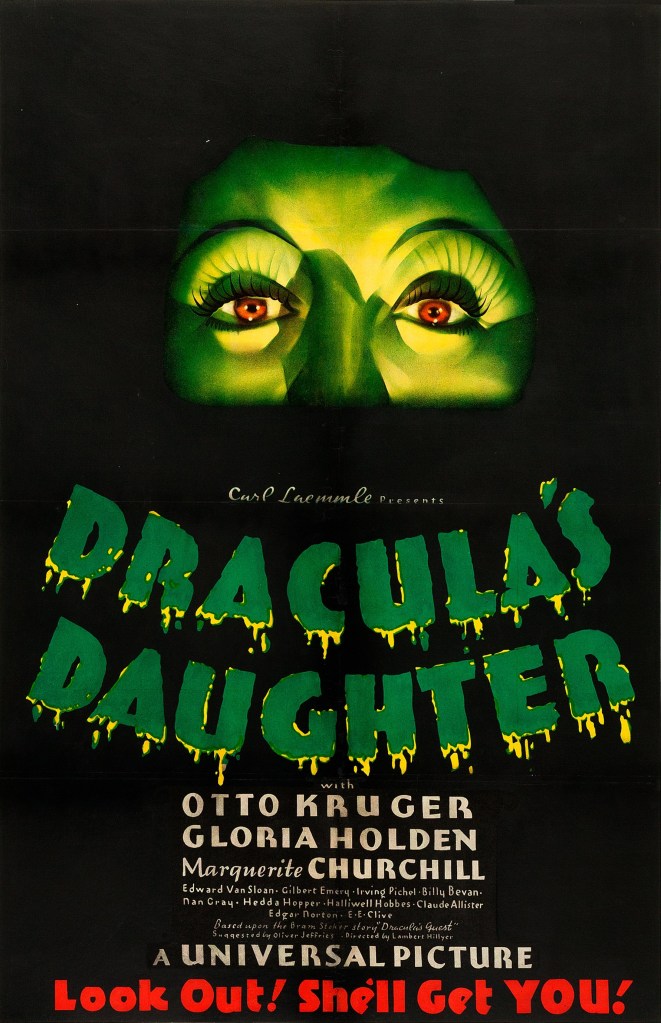
Dracula’s Daughter (1936)

Directed by Lambert Hillyer [Other horror films: The Invisible Ray (1936)]

Despite the fact my love of horror partially originated from being raised on the Universal classics such as Dracula, Frankenstein, and The Invisible Man, I’ve a rather woeful record of watching the sequels to those classics. Never having seen, nor honestly thought much of, Dracula’s Daughter, I was definitely curious as to how they pushed on, and was quite happy with the result.

Taking place immediately following the events of Dracula, this film follows Edward Van Sloan’s Von Helsing (in the 1931 movie, his name was Van Helsing, but for some reason, they changed it up here) as he’s arrested for staking someone through the heart. Throw in a mysterious woman who steals Dracula’s corpse and shenanigans on the foggy streets of London, and you’re in for a good time.

I was rather pleased with a lot of this movie. Never having seen it, I didn’t know if it would be that connected to the 1931 classic, so seeing the film pick up right where that left off, with characters such as Renfield being mentioned (though I do wish they had name-dropped Harker, or thought to confirm Von Helsing’s story with anyone in the first movie), was a pleasant surprise. It’s nice to have that continuation when you don’t necessarily expect it.

The plot overall is pretty decent. I didn’t personally care about Dracula’s daughter wanting to fight her natural urges to go a-killin’, but it did give her more personality to work with. Also, the fact she’s a low-key lesbian is sort of fun. Apparently part of this story may be influenced by a classic gothic horror novel titled Carmilla, written by Sheridan Le Fanu, so if you do notice potential lesbian subtexts, that may be why.

Gloria Holden is no Bela Lugosi, but I thought she did admirably with her character, and definitely had a solid presence to her. Otto Kruger made for a pretty good lead, and seemed to work well with Marguerite Churchill. Speaking of chemistry, Gloria Holden had great chemistry with Nan Grey, who did a decent amount with her role. Edgar Norton (who I recognize from the 1931 version of Dr. Jekyll and Mr. Hyde) was nice to see in a single scene, and though he’s not the focal point, it is great that Edward Van Sloan returned, as he’s the only face from the first movie that’s here.

Like many of the Universal classics, this is a pretty digestible movie, and it has that fun atmosphere that you’d come to expect from these films. I was personally impressed by how much I enjoyed this, and while I wouldn’t say it’s better than the 1931 movie, I would put forth that it’s perhaps around equivalent.

7.5/10

Mystery of the Wax Museum (1933)

Directed by Michael Curtiz [Other horror films: Alraune (1919), The Mad Genius (1931), Doctor X (1932), The Walking Dead (1936)]

I can’t say for sure how long it’s been since I’ve last seen this one, but I definitely know it’s at least been six years. I think I’ve seen it twice before, making this my third time watching this classic, but from my faulty memory, you wouldn’t know it.

Part of this may come from the fact that House of Wax, a 1953 remake of this movie, is just naturally fresher in my mind. Not only have I seen it moderately recently, but the story itself is a bit more striking (in that film, Price’s character has a wax house of horrors – here, it’s more beautiful wax figures without the horrific charm).

All that said, I was deeply interested in revisiting this one, and while it didn’t quite hold up as much as I was hoping it would, I had a decent time. I think the story is a little bit more streamlined in the 1953 movie, and of course, they had Vincent Price, so that’s going to be hard to beat anyway.

What Mystery of the Wax Museum did have, though, was beautiful color. To be sure, we’ve seen color before (in fact, the director of this film, Michael Curtiz, also directed Doctor X, another early horror film in color), but it looked a lot fresher here, and I imagine that’s partly due to the restoration the print has had done to it.

Though not all of the elements of the story come together (I’d have liked more background on the revenge Lionel Atwill’s character got on Edwin Maxwell’s), the little mystery here is pretty solid, and having a reporter running around and trying to figure things out does keep things decently engaging. Of course, the main problem then becomes that the woman running around, being Glenda Farrell, wasn’t playing the most likable character.

Which isn’t to say that Farrell didn’t do a great job. As a snappy, witty reporter, she did quite well, but her character irked me far more than she endeared me. Somewhat amusingly, though, Fay Wray bothered me more – she was no doubt a beautiful woman, but honestly, 90% of what she did in this movie was scream. It wasn’t her choice, I imagine, but the point remains. Lionel Atwilln (Murders in the Zoo, Doctor X, The Vampire Bat, etc.) did great as the tragic character that was Ivan Igor, and I definitely felt for him.

It’s hard for me to quantify the nature of my issue with this one. I don’t dislike it – Mystery of the Wax Museum possesses a good, quick story, and things move along at a nice pace with occasionally great scenes (not to mention beautiful color) – but I didn’t love it either. I think it stood out to me more positively the first time I saw it than it did this time around.

As rough as the Technicolor looked in Doctor X, I think that story was perhaps just a bit more fun. And while I ultimately might enjoy House of Wax more than this original story, Mystery of the Wax Museum is still worth seeing, but personally, at least with this viewing, I wasn’t overwhelmed with glory.

7/10

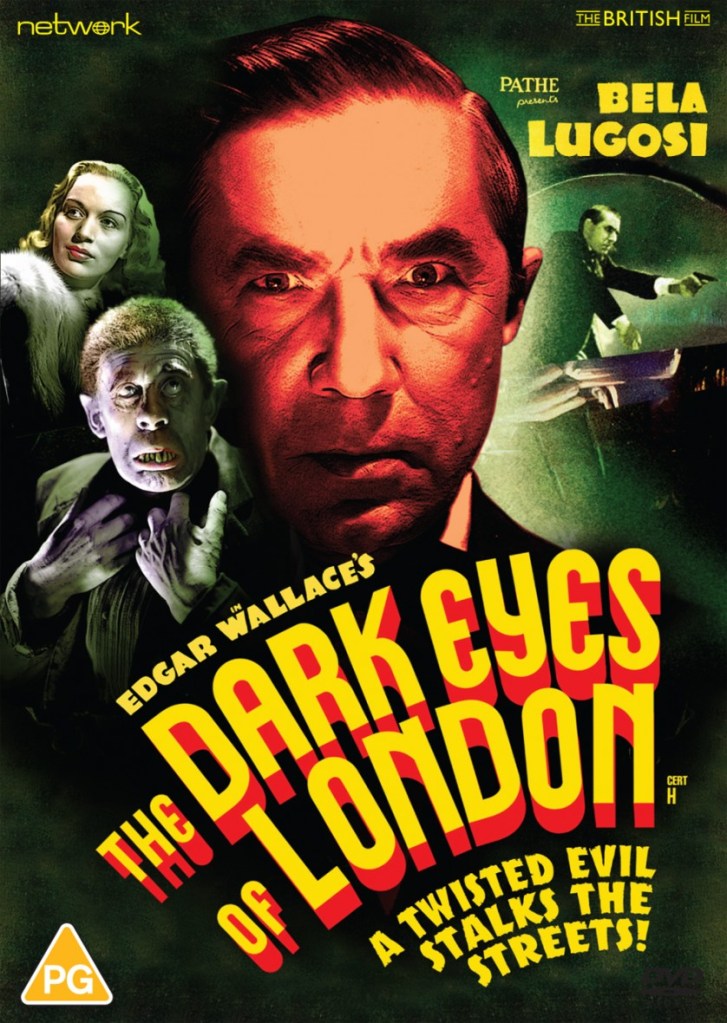
The Dark Eyes of London (1939)

Directed by Walter Summers [Other horror films: Chamber of Horrors (1929)]

Perhaps better known under the title The Human Monster, this British horror film from the late 1930’s certainly possesses some interesting ideas, and even a few decently thrilling scenes, but I don’t think it’s enough to really stand out amongst the other films that were coming out around the same time.

Certainly Bela Lugosi (Dracula, Mark of the Vampire, The Devil Bat) gave a great performance, and his character Dr. Orloff even had a sort of surprising development toward the end, but his good performance, and the solid performances of others, wasn’t really enough to pull the story past the finish line.

Hugh Williams made for a somewhat generic lead. I didn’t have an issue with him, but he struck me as somewhat uninspired. That’s not quite as bad as Edmond Ryan’s character, though, who was pretty much only here to crack jokes, which has it’s place, but I never felt his character really deserved to be there. Greta Gynt was as solid as any other leading actress of the time, and Wilfred Walter was pretty good as a hulking, deformed menace.

At times, the plot does seem a bit muddled, what with a bunch of insurance policies, underwriters, and potential forgeries going on, but once the movie got going, it got going, and we got some good scenes, such as a man being drowned in his bathtub, another man getting electrodes shoved into his ears (this was off-screen, of course, but we did hear the scream), and a great donnybrook at the end with deadly consequences.

The movie isn’t without it’s charm. A lot of this comes from Lugosi, who is just fun here, and some of it comes from the fact the film’s British (a scene toward the end, with a police car racing to help a damsel in distress, was cool, as it was a first-person view, swerving in-and-out of double-decker buses), but the charm alone, even with the memorable scenes, don’t save it.

I still think that, if you’re a fan of classic horror, The Dark Eyes of London is worth a shot, but I do think there are better movies from around the same time, such as The Face at the Window or The Devil Bat, and this just ends up rather forgettable.

6/10

Frankenstein (1931)

Directed by James Whale [Other horror films: The Old Dark House (1932), The Invisible Man (1933), Bride of Frankenstein (1935)]

Perhaps one of the most beloved of the Universal classics, Frankenstein is undoubtedly a great film, and while it may not necessarily impress viewers of more modern-day movies, it really is a treat to see once again.

I can’t really fathom exactly how long it’s been since I’ve seen this one – I know it’s at least been seven years, but likely closer to ten. Regardless, this is one of the films that my parents owned on VHS when I was a kid, and as such, this probably went a long way into getting me into the genre to begin with (along with Dracula and The Wolf Man). I don’t doubt I have some strong nostalgia tied to this one, but if the overwhelming positive reaction to Frankenstein is to be believed, my kind opinions are not at all odd.

Of course, the story does deal a bit with a pet peeve of mine, being the same basic idea that Dr. Jekyll and Mr. Hyde presupposed – that man shouldn’t attempt to unlock the secrets of God. Science should, of course, be done carefully and with consideration of proper protocol, but the idea that certain ideas are too dangerous to be delved into just strikes me as ludicrous. As Dr. Frankenstein, Colin Clive probably took it a bit far, but even so, under the proper conditions, his experiment might have had better consequences.

And on Clive, what a performance. He died young in 1937, having also been in Bride of Frankenstein and Mad Love, and this is clearly a strong performance. Just his emotion and dialogue alone during the famous “It’s alive!” scene are off-the-charts fun. “In the name of God, now I know what it feels like to be God!” Quality line – I use it twice a week at least.

Elsewise, everyone else puts in a great performance also. John Boles does sort of get lost in the crowd, but Edward Van Sloan (Van Helsing from Dracula, a fact I honestly didn’t know until today) was fantastic, and even after disavowing Frankenstein’s experiments, I deeply respected how he hung around and tried to help Frankenstein out. Frederick Kerr (just two years before his death in 1933) was great as Frankenstein’s father, and was a lot of fun whenever he was on-screen.

Lionel Belmore (The Vampire Bat) only had one scene of note, and Kerr sort of stole it, but regardless, he was still enjoyable. Mae Clarke was sort of trapped in the stereotypical role that women had in these movies, but with what little agency she had, I thought she was compelling. Dwight Frye (of both Dracula and The Vampire Bat) was great as Fritz, though we never do learn much about his character. As the Monster, Karloff is just amazing – he’s as much the victim as the antagonist (and actually, much more the victim), and his story here is just sad, especially as he never really had a chance to grow whatsoever.

The atmosphere of this one is quality, from the opening during the funeral service to the finale at the windmill – there’s just a lot here to look forward to. The famous “it’s alive!” scene is great, and so are many of the sequences here, such as Fritz breaking into the university to steal a brain, or the Creature’s tortuous shouts as it’s chained in Frankenstein’s cellar, or the Creature’s fateful meeting with Maria. Even the manhunt sequences at the end hold appeal, especially the mountain portions, as I couldn’t personally imagine trying to locate a murderer in such rocky and dangerous conditions.

As to the violence, honestly, for the time period, it’s not that bad. Just the idea of a body being made of bits and pieces of others, all stitched up, is gruesome enough, but you also have the tragic death of a young girl (and even better, the scene where her grief-stricken father is carrying her corpse through the village’s celebrations in silent shock) and a rather painful scene of a man hitting on of those windmill wind-thingys (predating the famous Titanic propeller blade scene by over 50 years).

I also love the beginning, which is warning from the movie-makers, telling us that it may thrill, shock, and horrify us, and indeed, subtly suggesting if someone can’t take the horrors in store, they may wish to leave the theater. It’s a wholly charming beginning, and I totes enjoy it brahs.

I grew up on this film, and that VHS tape that I mentioned earlier, I still have it. It’s a great movie, and while not my favorite of the time period, Frankenstein is definitely up there.

8.5/10