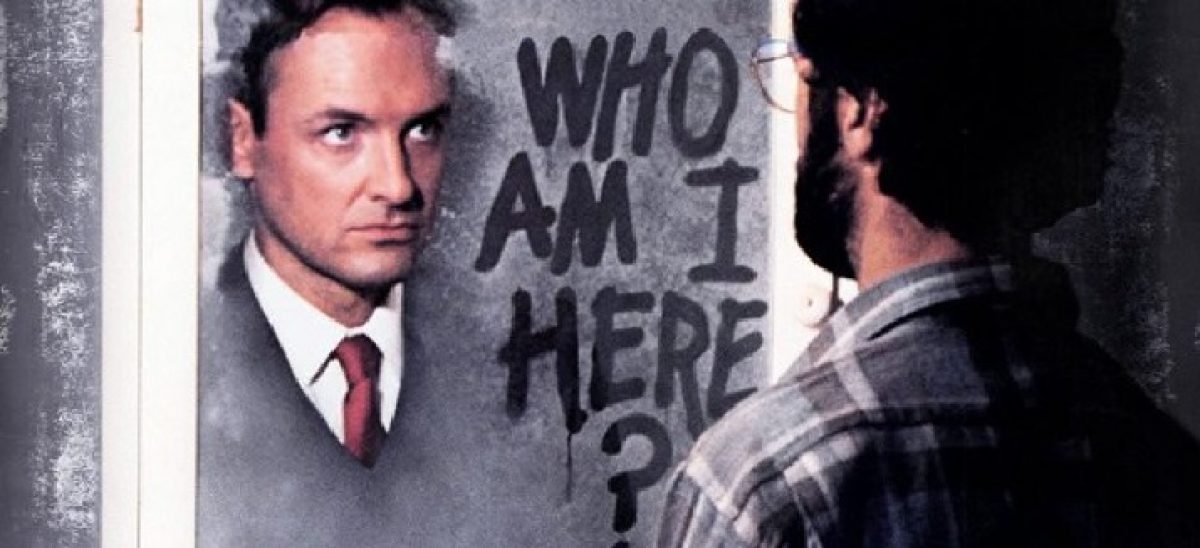
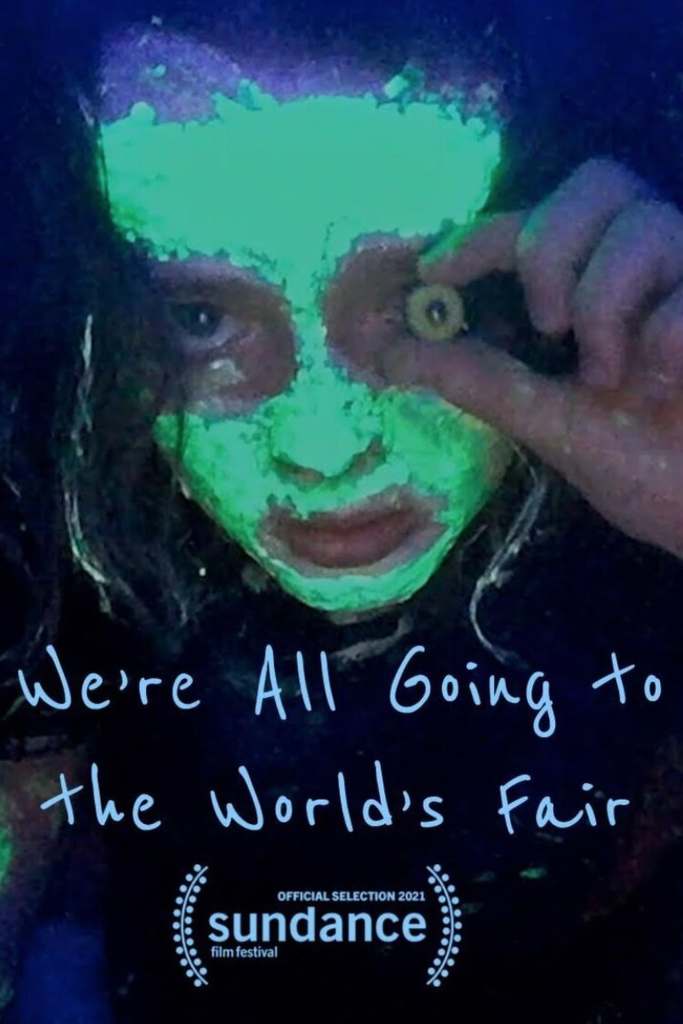
Directed by Jane Schoenbrun [Other horror films: A Self-Induced Hallucination (2018), I Saw the TV Glow (2024)]
This movie has been on my radar since the beginning of 2022 (currently writing this on October 8th, 2022 – God knows when it’ll be published), and was one of the movies I was interested in seeing for my annual marathon of horror films for the previous year (which is why I watched films such as The Power, In the Earth, The Land of Blue Lakes, and Broadcast Signal Intrusion).
Alas, early on this year, it wasn’t available for easy viewing. Luckily, it hit HBO Max, and since I love spending money I rarely have on streaming services I rarely use, I have a subscription to HBO Max, and so was quite eager to watch this one.
Going in, I didn’t know much – I had read the plot outline on IMDb, but didn’t look any further, as it seemed to me the type of movie that might be quite the treat going in blind. After having watched it, I certainly think that We’re All Going to the World’s Fair is an interesting movie, but unfortunately, I don’t think it’s great.
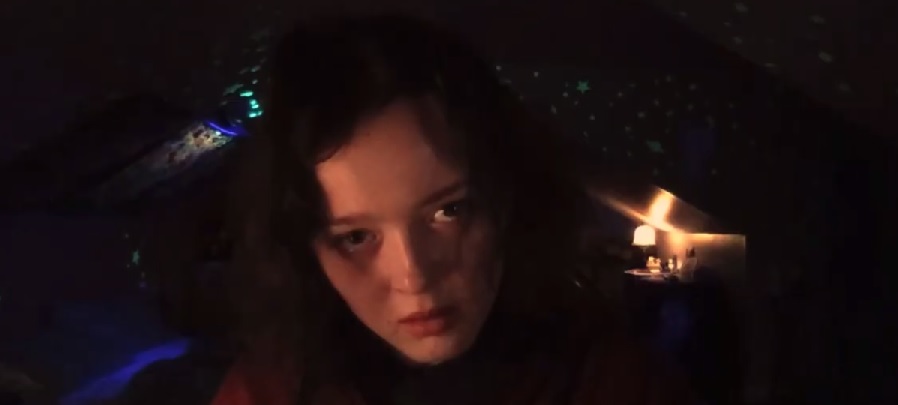
The narrative is a bit unconventional in that there’s only two characters of relevance, being Casey (played by Anna Cobb) and JLB (Michael J Rogers). The story is simple enough – a socially awkward and isolated teen girl takes an online challenge, and seems to be going through some type of change in her mental state.
I will say, as flawed as the final product might be, I do think this is a solid showcase on how mental illness could impact teens, especially lonely, isolated kids who spend much of their time on the internet. I was never much for Reddit or 4chan, or wherever kids went back in the early-to-mid 2000’s (I was born 1993), but the type of isolation – while technically, with the internet, much of the world is at your fingers, but you still feel just as disconnected as always – this movie portrays is something I personally struggle with also.
It’s the final 15 minutes, though, that I found somewhat troubling. While I do think the film suffers from a rather anticlimactic finale, it’s something that we find out right toward the end which, in a way, takes a bit of feeling and meaning away from the movie. I’m not saying it ruins the whole thing, because it doesn’t, but had they approached things differently, it might have done more for me.
All of which I know is rather vague. There were a few small things I found difficult to reconcile given what we know toward the end, which was another problem, but I just think the movie loses a bit of it’s impact once we hit the final 15 minutes.
No doubt in my mind, though, that Anna Cobb gave a great performance (in her first film). She did stellar showing how isolationing and lonely life can be, not just in general, but especially for teenagers. Again, things are given a different light toward the end, which does harm the character in my view, but Cobb’s performance was great. I wanted a little more from Michael J Rogers’ (Beyond the Black Rainbow, Children of the Corn: Revelation, Demonic) character, but it was a film focused on Cobb, so I can’t be too bitter.
While disturbing in some aspects, this isn’t at all a gory movie. There might be some minor elements of body horror – in a video that Casey watches, a man pulls ticket stubs out of his arm – but far more than that, it’s the horrors of mental illness. During one sequence, Casey is recording herself singing a song called ‘Love in Winter,’ and toward the finale, apropos of nothing, she starts shrieking. This lasts for perhaps five seconds, and then, without reaction, she goes back to singing the song.
The character of Casey is a self-professed horror fan, and name-drops Paranormal Activity in the film. I should add, on a side-note, that I’m an old fogey, and it amazes me to think that there are kids born who, when they think of the horror films of their childhood, they go to Paranormal Activity. Obviously, if someone was born in the late 1990’s or early 2000’s, it makes sense, but even so, it shows how fleeting this life is.
I should also add that much of this film is inspired by Creeypasta subcultures. I’ve never really understood the Creepypasta thing (I don’t even know if it should be capitalized) – they’re just scary stories, are they not? In the film, the World’s Fair Challenge is sort of a Creepypasta thing, in which there’s multiple videos online of people taking the Challenge and in different, disturbing ways, they change.
Not much is touched on this exact topic – we do hear from Michael J Rogers’ character a bit about different theories, such as what the fair is, or how Loop Theory might mean life itself is all, more or less, not true reality, but this type of stuff is on the periphery, and not at all the focus (really only popping up in a single conversation). Still, it’s interesting, especially as we see a clip of a sort of text video game that could be related to the origins of this thing/Creepypasta/Challenge.
We’re All Going to the World’s Fair isn’t an easy movie to discuss. It can often be uncomfortable, with Cobb’s character just staring into the camera, or making her awkward videos, and may even seem dull to some. I was never disengaged, but I know this movie won’t be for everyone. I certainly liked portions of it (and was reminded a bit of ‘The Sick Thing That Happened to Emily When She Was Younger,’ the only segment worth anything from V/H/S), but it’s definitely a movie that’s plenty flawed.
6/10

 Jiggy's Horror Corner