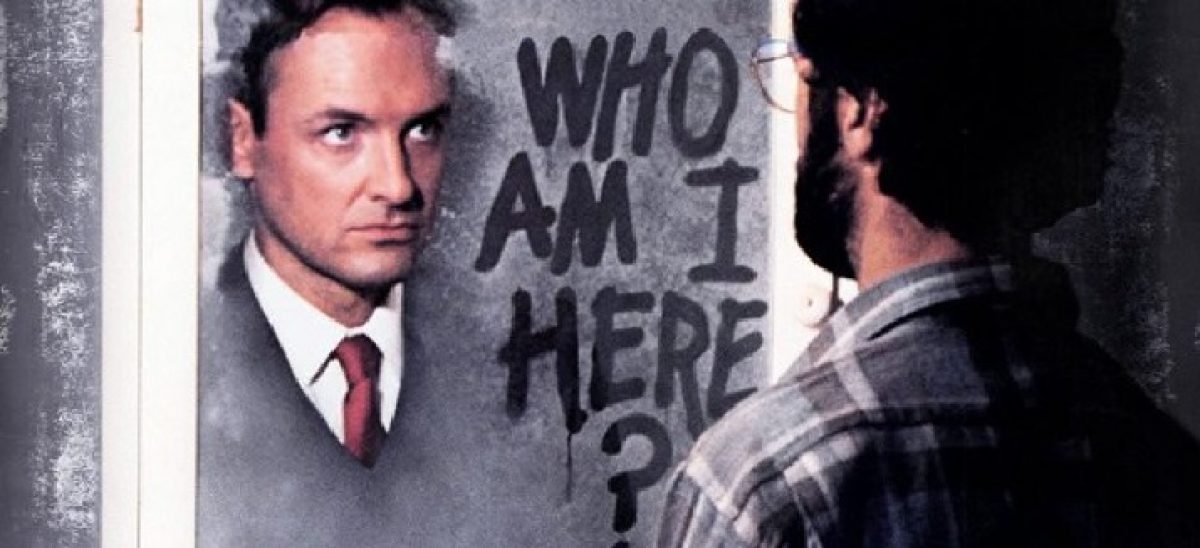


Directed by Russell Mulcahy [Other horror films: Tale of the Mummy (1998), Resurrection (1999), The Curse of King Tut’s Tomb (2006), Resident Evil: Extinction (2007)]
I’m never quite sure what to make of many of the Australian horror films I’ve seen. While some can be perfectly normal, so much of the output I’ve seen from Australia tends to be, for lack of a better word, odd.
Certainly that could be a label placed on Razorback also, but I think in this case, that’s not at all a problem.
To be clear, I can’t honestly say I enjoyed Razorback in a traditional sense – it’s quite a dusty, dirty movie, sometimes rather bleak, and portions don’t always enthrall me. That said, I did rather appreciate a lot of it, and though it’s not a film I personally enjoyed a whole lot, it’s definitely a movie that’s worth seeing, and I can understand why I see primarily positive posts about the film.
One thing really allows the movie to stand out, which is the occasionally stellar cinematography. There are two sequences in particular that – after I saw them – I immediately rewatched, one being a dream sequence, the other, shots of a man lost and potentially delirious in the middle of the Outback. Captivating doesn’t begin to describe just how stellar that second sequence was, and I truly thought it possessed some of the most beautiful and desolate scenery I’ve seen in a horror film in recent times.
There’s also a surprisingly shocking dream jump scare at one point – I wasn’t at all expecting it, and I’m not too proud to admit I jumped a bit, so kudos to that scene.
As for the story, it’s not overly original – it’s a giant animal that’s going around killing people, and some characters hunt it down – but the approach taken here does lend a certain je ne sais quoi to the final product. Maybe it’s the scenery – the Australian location is used wonderfully throughout. Maybe it’s the aforementioned dusty and desolation, sometimes grimey, feel. Whatever it is, Razorback does have some feeling to it, and I don’t think it’s a movie, as generic as the plot may sound, that’ll easily be forgotten and discarded.
At first, I thought Judy Morris (The Plumber) was going to have a more central role, but that wasn’t quite to be. She did well early on, though, and when Gregory Harrison (1996’s Summer of Fear) takes the reins, he’s pretty compelling. I can’t say I loved Arkie Whiteley’s character, but Bill Kerr (House of Mortal Sin) has that Australian ruggedness I’ve come to appreciate. David Argue and Chris Haywood (Sweet River and The Tale of Ruby Rose) did well with two rather atrocious characters.
One thing that might be worth knowing before going into Razorback is that an uncut version with a bit more brutality exists. Now, I happened to watch the most-commonly available cut version, but found the missing scenes elsewhere online after I finished the film. Unlike movies such as Cut and Run, I don’t think missing the uncut version of this would be a disaster, but it is something that you may want to watch out for.
I’ve known about Razorback for a long time, and while I’ve always been mildly interested, it’s never been a movie that I’ve been dying to see. After having finally seen it, I can say that I wasn’t blown away by the overall product, but the scenes which did bring something special, being the two sequences I refer to above, are utterly stellar, and I don’t say that lightly. I don’t think Razorback is above average – if it is, it’s not by a lot. Even so, it’s certainly worth seeing, especially for Australian horror.
7/10

 Jiggy's Horror Corner
3 thoughts on “Razorback (1984)”